Market Correction Has Likely Ended, Says JP Morgan
J.P. Morgan suggests that the worst of the current market correction may be over. However, plenty of other analysts disagree with that assessment.

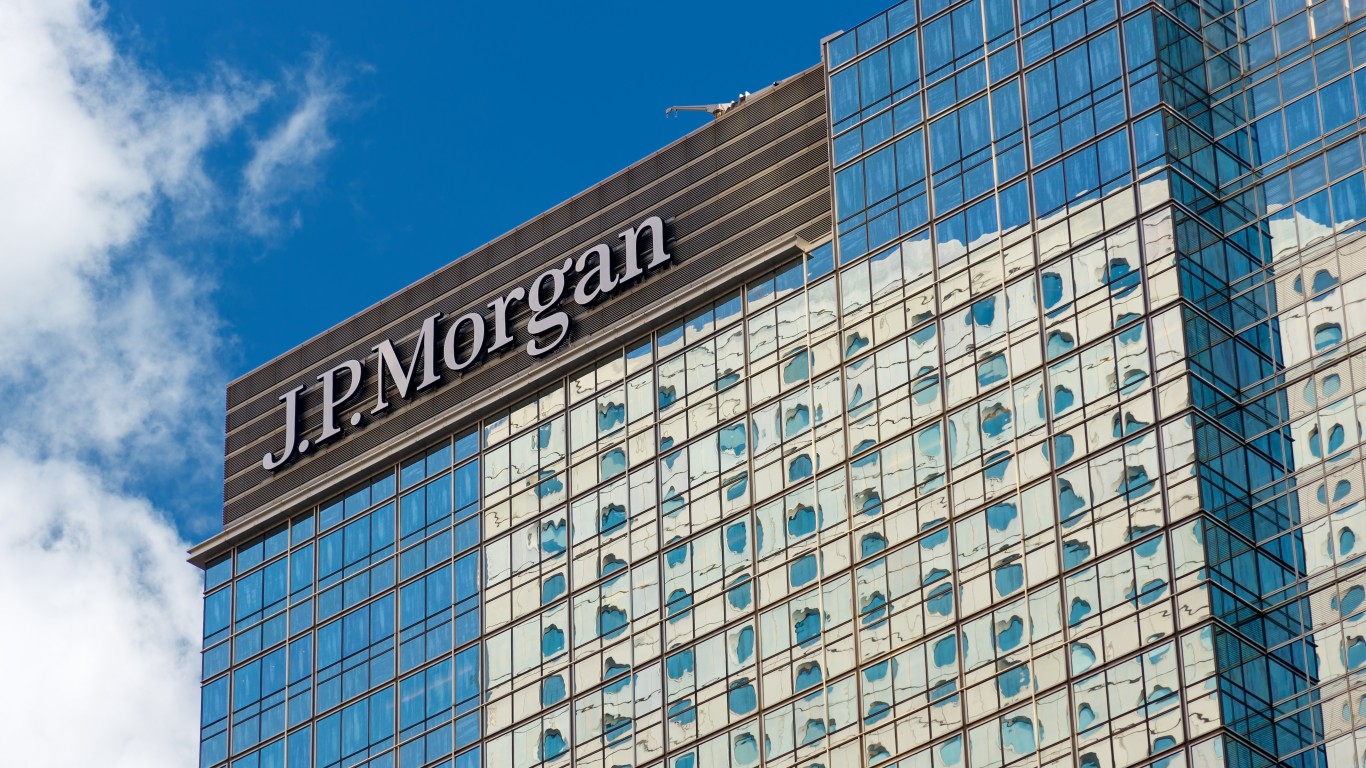
Leading investment bank JPMorgan Chase & Co. says the worst of the market correction is over. The analysis is based on a drop in the chances of recession.
According to Bloomberg, analysts at the bank commented, “Credit markets, which were proven right on multiple occasions over the past two years, ‘are once again more dismissive of US recession risks than equity or rate markets.’” This contrasts the view of other analysts at the bank who said the risk of a recession has risen to 40%. Moody’s Analytics has put the risk at 35%, commenting that tariffs would slow the U.S. economy.
Which forecast is right depends on an analyst’s view of tariffs. The Trump administration has imposed a 25% tariff on steel and aluminum imports. The president said he would raise those tariff levels if Canada and the EU decided to retaliate. He commented, “Whatever they charge us, we’re charging them.”
There remains a chance of a major global trade war, which would likely start with massive tariffs on imports from Canada, China, and Mexico. Mexico has 14.5% of the U.S. trading partner market share, Canada has 13.5%, and China has 10.7%. Yale’s Budget Lab reports that tariffs would be a major drag on gross domestic product.
Another argument that the market correction is not over is that it has risen so fast over a short period. The S&P 500 was up over 20% in both 2023 and 2024. Since 1980, the market has dropped by 10% every 1.2 years.
J.P. Morgan’s forecast may be right, but a large body of opinions say it is wrong.
Recession Could Be Coming: 5 Strong Buy High-Yield Dividend Stocks That Will Still Outperform
Contact [email protected] for any questions or corrections.
Douglas A. McIntyre is the co-founder, chief executive officer and editor in chief of 24/7 Wall St. and 24/7 Tempo. He has held these jobs since 2006.
McIntyre has written thousands of articles for 24/7 Wall St. He is an expert on corporate finance, the automotive industry, media companies and international finance. He has edited articles on national demographics, sports, personal income and travel.
His work has been quoted or mentioned in The New York Times, The Wall Street Journal, Los Angeles Times, The Washington Post, NBC News, Time, The New Yorker, HuffPost USA Today, Business Insider, Yahoo, AOL, MarketWatch, The Atlantic, Bloomberg, New York Post, Chicago Tribune, Forbes, The Guardian and many other major publications. McIntyre has been a guest on CNBC, the BBC and television and radio stations across the country.
A magna cum laude graduate of Harvard College, McIntyre also was president of The Harvard Advocate. Founded in 1866, the Advocate is the oldest college publication in the United States.
TheStreet.com, Comps.com and Edgar Online are some of the public companies for which McIntyre served on the board of directors. He was a Vicinity Corporation board member when the company was sold to Microsoft in 2002. He served on the audit committees of some of these companies.
McIntyre has been the CEO of FutureSource, a provider of trading terminals and news to commodities and futures traders. He was president of Switchboard, the online phone directory company. He served as chairman and CEO of On2 Technologies, the video compression company that provided video compression software for Adobe’s Flash. Google bought On2 in 2009.