The 4 Biggest Risks to Altria’s (MO) 7.2% Yield
Altria (NYSE:MO | MO Price Prediction) offers a tantalizing 7.2% dividend yield, paying $1.02 per share quarterly, making it a popular stock for income investors. With a $95 billion market cap and a 55-year streak of dividend hikes, this tobacco…

This post may contain links from our sponsors and affiliates, and Flywheel Publishing may receive compensation for actions taken through them.
Altria (NYSE:MO | MO Price Prediction) offers a tantalizing 7.2% dividend yield, paying $1.02 per share quarterly, making it a popular stock for income investors. With a $95 billion market cap and a 55-year streak of dividend hikes, this tobacco giant, which owns the Marlboro brand and a 10% stake in Anheuser-Busch InBev (NYSE:BUD), seems a stalwart.
Yet, its high yield, far above the S&P 500’s 1.2%, signals risks beneath the surface. Here are the four biggest threats to Altria’s 7.2% payout.
1. Declining cigarette volumes and market share
Altria’s core business — cigarettes — faces a relentless decline. U.S. smoking rates have fallen from 21% in 2005 to 11.5% in 2023, per the U.S. Center for Disease Control, with Altria’s cigarette volumes dropping 11.2% in 2024 alone. Marlboro’s retail share slipped from 43.1% to 42.5% last year, losing ground to cheaper brands and illicit vapes flooding from China, which now account for 11% of the market.
This erosion hit revenue, which fell 2.2% to $20.5 billion in 2024, while adjusted operating income fell 3.8%. With $4 billion in annual free cash flow (FCF) covering the $3.8 billion dividend, coverage is tight at 1.05x. If volumes keep sliding, that buffer could vanish, threatening the payout.
2. Regulatory and legal overhang
Tobacco’s regulatory noose tightens yearly, and Altria’s no exception. The FDA’s push for a menthol cigarette ban (only just recently abandoned) loomed over Marlboro Menthol, which represented 35% of its volume. If administrations change parties in the future (which they undoubtedly will at some point), a ban could be back on the table and slash sales by 10% to 15%, hammering cash flows.
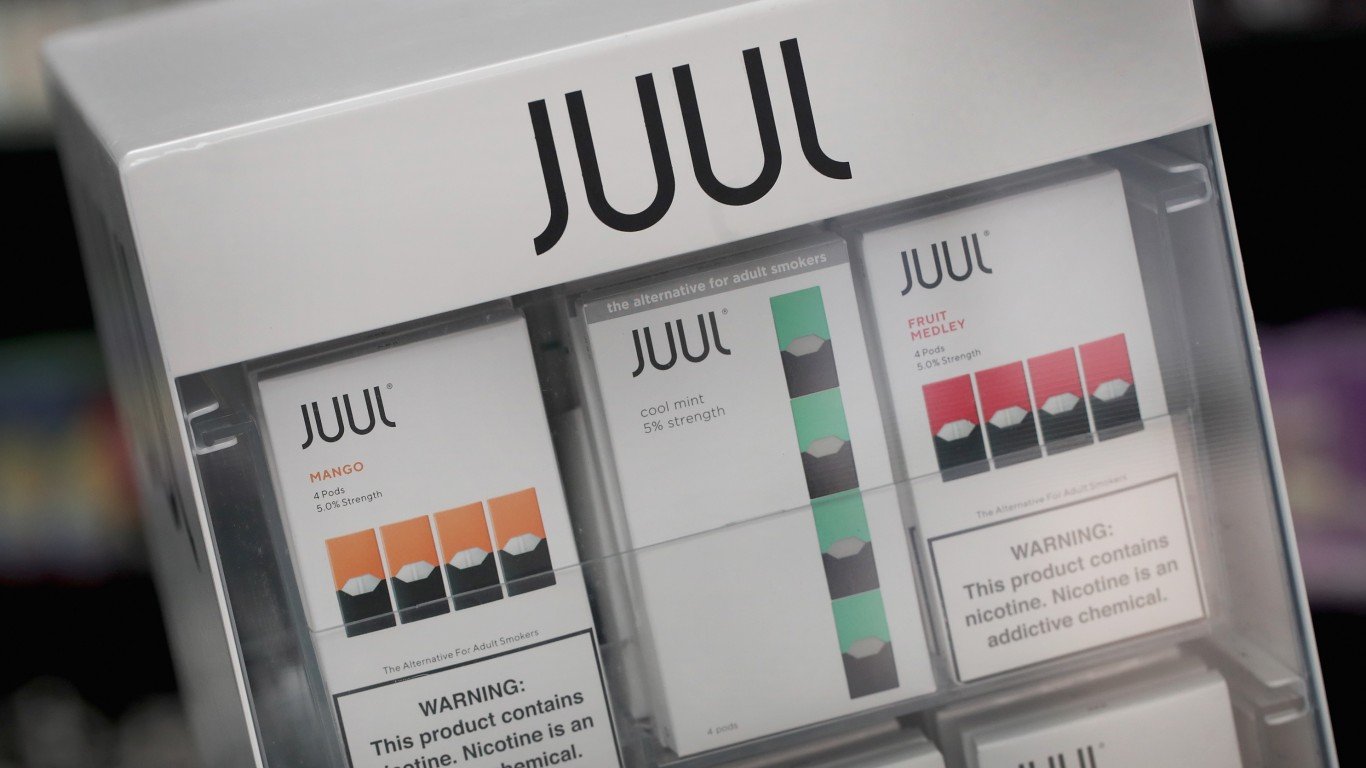
Litigation risks persist too. Altria’s $2.7 billion JUUL settlement in 2023 drained reserves, and it’s a crapshoot with vaping-related claims. With $23.4 billion in long-term debt and just $3.1 billion in cash, legal or regulatory shocks could force Altria to tap debt markets at higher rates (10-year yields hit 4.515% on tariff worries), squeezing funds for dividends.
3. Transition to alternatives falters
Altria’s pivot to “smoke-free” products like vapes, oral nicotine, and heat-not-burn devices, aims to offset cigarette losses, but it’s stumbling. Its $12.8 billion JUUL stake was completely written down and the 2024 NJOY $2.8 billion vape acquisition struggles against dominant players like British American Tobacco‘s (NYSE:BTI) Vuse, which ha a 42% vape share versus NJOY’s 3%.
Oral nicotine grew 30% in 2024, but it’s just 4% of revenue, and it could be too little, too late for the tobacco giant. Fourth-quarter results showed smoke-free volumes were flat If these don’t scale fast, cigarette declines could outpace diversification, pressuring the $4 billion FCF needed for that 7.2% yield.
4. Interest rates and debt costs
Altria’s debt load stands at 2x its $12.4 billion EBITDA and becomes riskier as rates rise. The bond market’s freakout the other day, with Treasury yields spiking to 4.515% before easing to 4.362% in the post-tariff pause, hints at refinancing pain.
Altria’s average debt cost is 4.2%, but new bonds could hit 5% to 6% if yields climb, adding $200 million to $300 million in annual interest. With $1 billion in bonds due in 2025, and only $3.2 billion in cash, higher costs could divert FCF from dividends.
The stock’s 10% rally since October investor hope amid tech worries, but a P/E of 8.6 — below peers like Philip Morris International (NYSE:PM) with a 33.6 market multiple — shows market wariness of this leverage in a volatile rate environment.
Conclusion
Altria’s 7.2% yield is a smoker’s dream — juicy and backed by decades of reliability. But shrinking cigarette sales, regulatory guillotines, a shaky shift to alternatives, and debt costs in a rising-rate world threaten its glow.
The payout is safe for now as FCF just covers it and management vows to maintain it, but the margin is razor-thin. Investors banking on MO’s dividend must watch these risks closely, as yesterday’s $5.5 trillion market surge won’t shield tobacco from its structural woes forever.
Contact [email protected] for any questions or corrections.
After two decades of patrolling the dark corners of suburbia as a police officer, Rich Duprey hung up his badge and gun to begin writing full time about stocks and investing. For the past 20 years, he’s been cruising the markets looking for companies to lock up as long-term holdings in a portfolio while writing extensively on the broad sectors of consumer goods, technology, and industrials. Because his experience isn’t from the typical financial analyst track, Rich is able to break down complex topics into understandable and useful action points for the average investor. His writings have appeared on The Motley Fool, InvestorPlace, Yahoo! Finance, Money Morning, and, of course, 24/7 Wall St. He has been featured in both U.S. and international publications, including MarketWatch, Financial Times, Forbes, Fast Company, and USA Today.