Like Dividend Growth? Try These 60% and Higher 5–Year Dividend Growth Stocks
Despite the latest digital analytics tools and Ivy League degrees in economics and other related fields, the myth of the stock picking analyst whose crystal ball is never wrong is still a myth. The elements that comprise the stock market…


Despite the latest digital analytics tools and Ivy League degrees in economics and other related fields, the myth of the stock picking analyst whose crystal ball is never wrong is still a myth. The elements that comprise the stock market are a broad mix of financial data, rumor, geopolitical maneuvers, governmental and legislative manipulation, and a host of other components.
Even reliably correlative principles, such as an increase in dividend growth and comparably proportional corporate earnings, may still result in a stock price that either is overblown or underwhelming. This can be due to a host of disparate factors, such as the sudden death of a CEO, a short squeeze scenario, a symbol similarity with another stock that reported negative news, etc.
Below are three (3) stocks with 5-year dividend growth rates over 60%. However, not all of them are necessarily viewed bullishly by analysts, although the past performance, on the surface, is mathematically appealing.
SM Energy Company

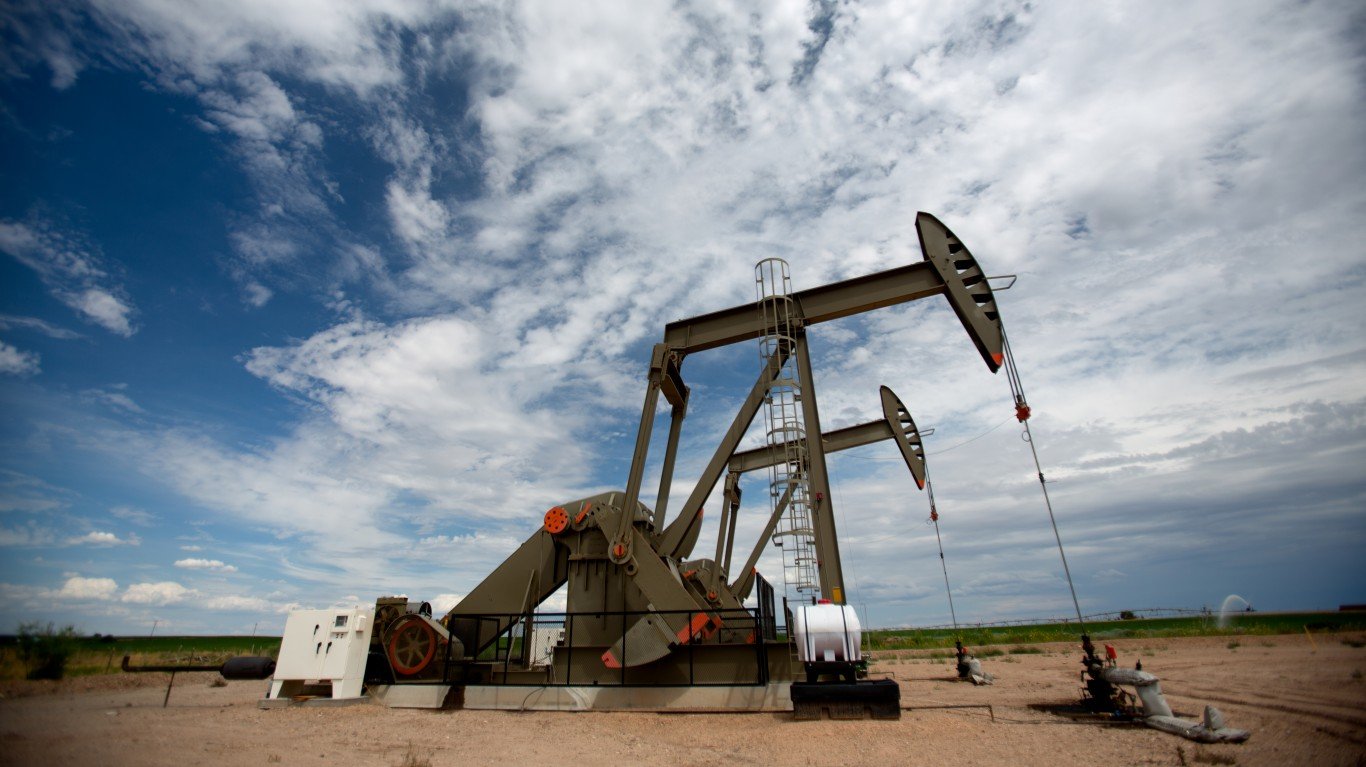
With its drilling and exploration operations in South Texas, Midland Basin, and Uinta Basin, Denver, CO based SM Energy Company (NYSE: SM | SM Price Prediction) brings state-of-the-art digital technology into play. The company’s use of IT and digital technology has been incorporated in such operational processes as:
- Fracture simulation and geo-mechanical modeling to optimize well performance.
- Use of seismic inversion data to optimize efficient use of drilling equipment, minimize drilling time, and curtail spill and injury rates.
- Utilizing the latest IT for maximizing returns on oil and gas portfolio assets.
Midland Basin: SM Energy holds a 111,000 acre position in the Midland Basin
South Texas: The 155,000 acres of the South Texas Maverick Basic controlled by SM Energy is the locale for the voluminous Eagle Ford natural gas source, as well as the recently discovered Austin Chalk liquid hydrocarbon play.
Uinta Basin: SM Energy’s most recent acquisition from last October is 63,300 acres of high oil-content production.
Zacks reports that SM Energy’s 5-year dividend growth rate is 193.58%. In 2020, the company was paying $0.04 cents per share. At the time of this writing, it is now paying $0.80 per share for a 2.80% yield. The stock’s commensurate rise during the same period went from $2.45 to a high of $53.26 in 2Q 2024. Failure to exceed analyst predictions caused a stock pullback to the mid $20’s, from where it is now rising and approaching $30.
While earnings may not have matched analyst expectations, it is helpful to keep in mind that SM Energy’s payout ratio is an extraordinarily low 11%. The subsequent cash stash is the source of the dividend increases and can fuel any other capital expenditures needed to further develop any of SM Energy’s assets as its geothermal analysis warrants.
Given the combination of revenues, low payout ratio and consistent dividend increases, analysts are still bullish, albeit now as much as previously. Among the most optimistic over recent months:
- Mizuho Securities and TD Cowen have a price target of $42
- Roth MKM has a price target of $41.
- JP Morgan has a price target of $35 to $38.
- RBC has a price target of $34.
Vertiv Holdings, Co.

One of the biggest external causes of data errors are due to heat and temperatures above 75 degrees Fahrenheit. The proliferation of data center construction has further escalated the demand for thermal management systems. Vertiv Holdings, Co. (NYSE: VRT) traces its origins to Ralph Liebert, the inventor of the air conditioner in 1946. Its interior climate control equipment and related services makes it a prime go-to company for such companies as:
- Verizon
- TenCent
- Alibaba
- AT & T
- Siemens
- Ericsson
- Telefonica
- Vodaphone
Based in Westerville, Ohio, Vertiv Holdings has an annual dividend growth rate of 104.98%. In 2020, the company was paying $0.04 cents per share. At the time of this writing, it is now paying $0.15 per share for a 0.11% yield. The stock’s commensurate rise during the same period has gone from $13.56 to $137.47.
With an extremely low 5% payout ratio and an insignificantly small 0.11% yield, Vertiv’s dividend is only perfunctory, since it has been on a strong growth track. Its 2023 252% upside price rice topped all other S&P 500 companies, and joined the Fortune 500 this year at #471.
Wall Street analysts are understandably very bullish on Vetiv Holdings. The highest recommendations come from:
- Melius Research – price target of $134 – $165.
- Evercore ISI – price target of $150.
- Bank of America – price target of $140 to $150.
- Mizuho Securities – price target of $125 to $150.
- Citigroup – price target of $130 to $149.
GeoPark Limited
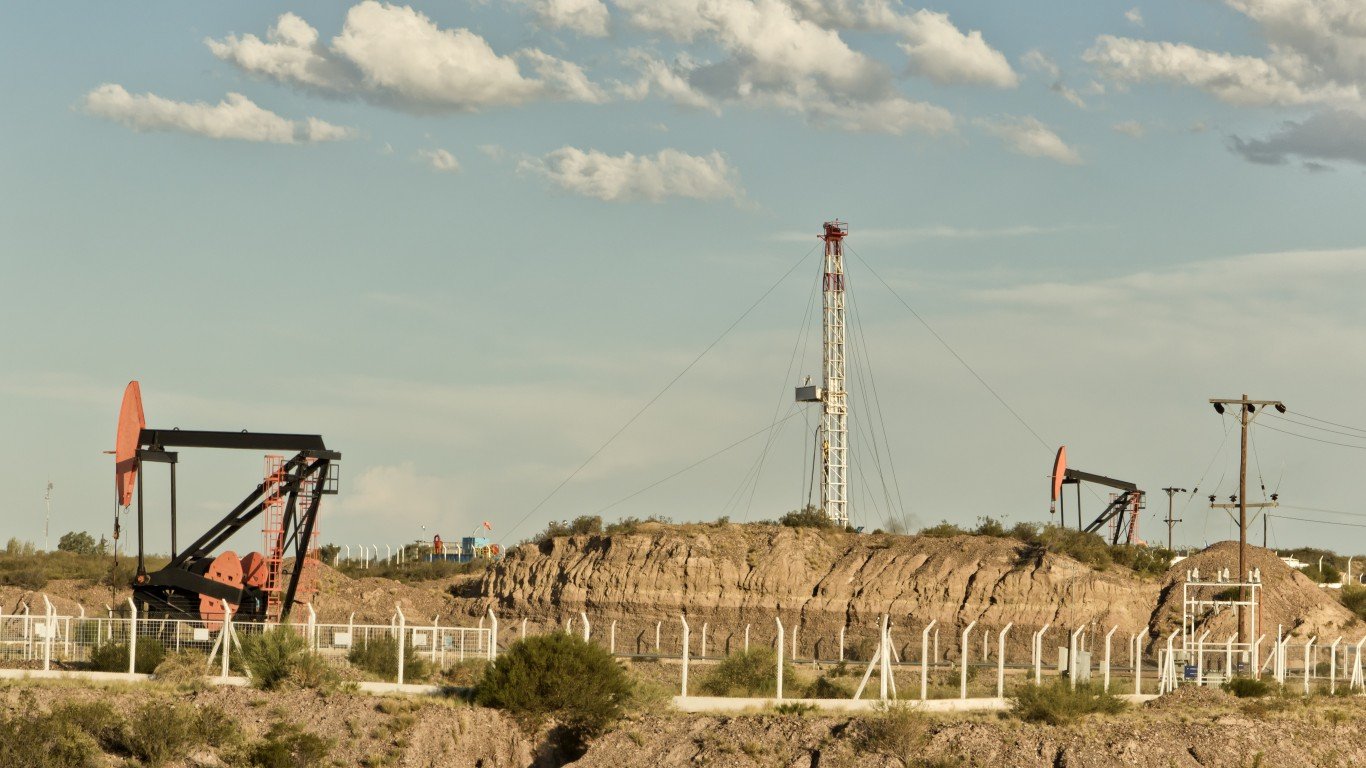
Since 2002, GeoPark Limited (NYSE: GPRK) has been exploring and developing oil and gas reserves in energy-rich Latin America. Starting in Argentina and Chile, With the World Bank taking an equity interest in the company, GeoPark has expanded with strategic international relationships for further resource development and distribution. The company’s current portfolio is focused on the following three (3) regions:
- Colombia: GeoPark has 3.2 million acres of production and exploration territory. This area includes the Llanos 34 block, which already contains 235 active and profitable wells. The Putamayo Basin includes current production in the Plantanillo block, along with proven untapped reserves and a crude oil pipeline connecting to Ecuador.
- Ecuador: Consisting of 33,000 acres in the Oriente Basin, the Perico and Espejo blocks have 1.6 million barrels of untapped proven reserves that are in line to follow the Jandaya 1 well in Perico, which is the first of what is anticipated to be many more.
- Brazil: With current natural gas production from the Manati Field, GeoPark has 61,400 acres of exploration to follow. Manati Field has been geologically established as the second largest hydrocarbon producing field in all of South America.
GeoPark Limited has an annual dividend growth rate of 60.18%. During that period, GeoPark raised dividends 9 times. In 2020, the company was paying $0.08 cents per share. At the time of this writing, it is now paying $0.59 per share for an 8.74% yield. The stock’s commensurate change during the same period reached a $15.75 high in 2023 from $9.56 2020 start, only to go down to $6.79. Apparently, this was the result of several reasons, but two in particular:
- New CEO Felipe Bayon may be the answer to what was a period of executive management uncertainty about former head Andres Ocampo’s future, which led to his stepping down for undisclosed personal reasons.
- Delays in Colombian operations, including a temporary blockade of the CPO-5 block and unforeseen drilling delays in the Llanos 34 block. Both of these issues have since been rectified through targeted and efficient waterflooding programs.
With a comfortable 37% dividend payout ratio and millions of untapped barrels of product awaiting extraction, GeoPark is considered by a number of analysts to be underpriced at its $6.79 level, as its book value is much closer to $9 by consensus estimates. Out of 5 analysts from Wall Street who cover GeoPark, the average price target estimate is $11.20, with the highest at a target of $18.00. JP Morgan’s estimate target is $10.50 – $12.50.
Dividend growth is but one of several criteria that analysts will deploy to calculate future stock performance predictions, but as these examples demonstrate, extenuating circumstances and unforeseen situations can cause stock prices to skew away from the dividend growth trajectory. However, if the dividend payment and increases proceed unaltered with minimal to zero impact to dividend ratios, then temporarily lower stock prices may represent buying opportunities.
Contact [email protected] for any questions or corrections.
After 15 years on Wall Street with 7 of them as Director of Corporate and Municipal Bond Trading for a NYSE member firm, I started my own project and corporate finance consultancy. Much of the work involves writing business plans, presentations, white papers and marketing materials for companies seeking budgetary allocations for spinoffs and new initiatives or for raising capital for expansion or startup companies and entrepreneurs. On financial topics, I have been published under my own byline at The Motley Fool, 247wallst.com, DealFlow Events’ Healthcare Services Investment Newsletter and The Microcap Newsletter, among others. Additionally, I have done freelance ghostwriting writing and editing for several financial websites, such as Seeking Alpha and Shmoop Financial. I have also written and been published on a variety of other topics from music, audiophile sound and film to musical instrument history, martial arts, and current events. Publications include Copper Magazine, Fidelity (Germany), Blasting News, Inside Kung-Fu, and other periodicals.