Inside Costco Hides A Massive Dividend Dynamo
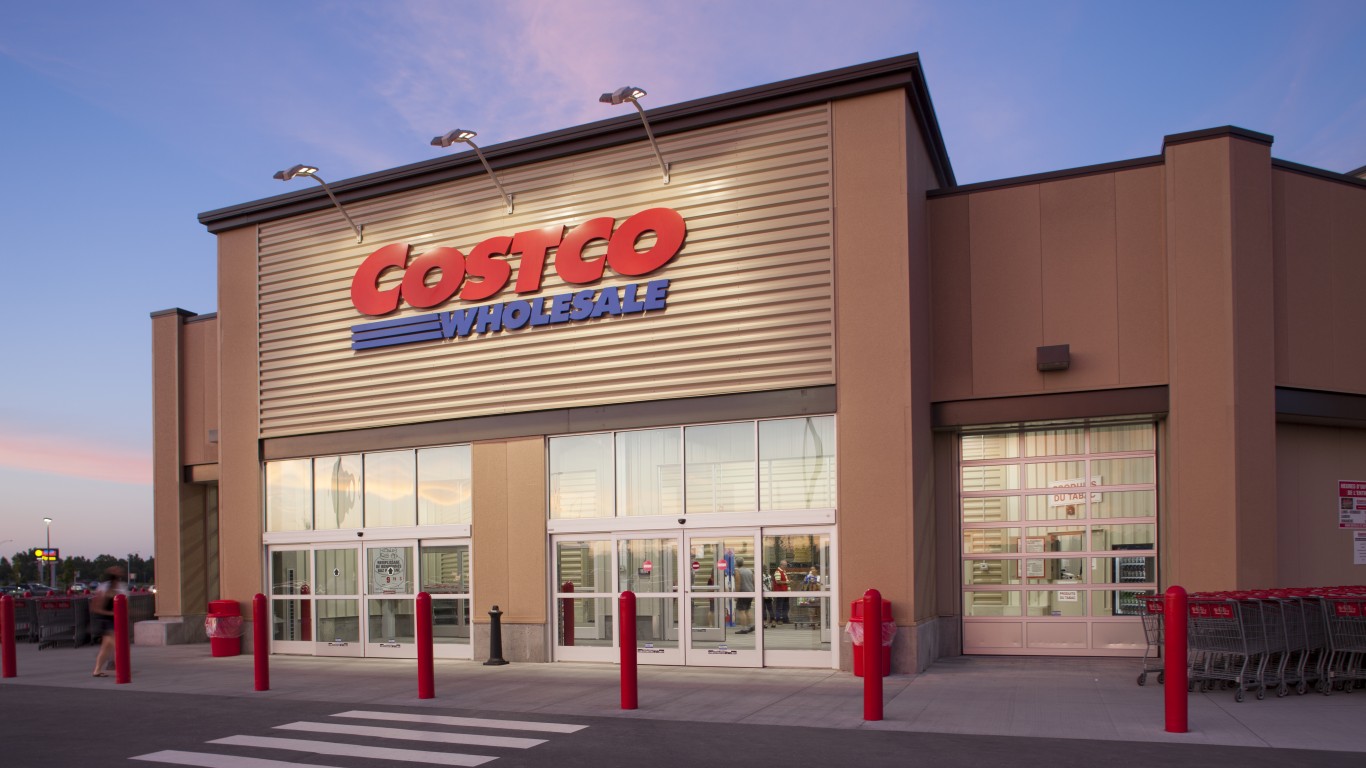
Costco (NASDAQ:COST | COST Price Prediction) is a retail giant known for its sprawling warehouses, bulk discounts, and loyal membership base. But beneath its reputation for value shopping lies a lesser-known strength: a robust dividend program that rewards long-term investors. …


Costco (NASDAQ:COST | COST Price Prediction) is a retail giant known for its sprawling warehouses, bulk discounts, and loyal membership base. But beneath its reputation for value shopping lies a lesser-known strength: a robust dividend program that rewards long-term investors.
While the company’s dividend yield may appear modest at first glance, its consistent growth transforms it into a powerful wealth-building tool, making it a compelling investment for patient shareholders.
The Power of Costco’s Dividend Growth
Costco’s dividend strategy is built on steady increases and occasional special payouts. The company has raised its regular dividend annually for over two decades, a testament to its financial discipline and strong cash flow.
In 2025, the warehouse club’s annual dividend stands at $4.64 per share, offering a yield of about 0.5% based on its current stock price. At first, this yield seems underwhelming compared to high-yield stocks like AT&T (NYSE:T) at 4.3% or even Target (NYSE:TGT) at over 5%. However, Costco’s secret lies in its dividend growth rate, which has averaged around 12% annually over the past decade.
This consistent growth means that investors who bought Costco shares years ago are now earning significantly more on their initial investment. For example, a shareholder who purchased Costco stock 10 years ago when the dividend was $1.42 per share would now receive $4.64 per share annually.
This growth pushes the yield on cost — a measure of the dividend relative to the original purchase price — to an impressive 3.3%. The result is a dividend that feels far more substantial than the headline yield suggests.
Understanding Yield on Cost
Yield on cost is a critical concept for dividend investors. It measures the current dividend payment as a percentage of the stock price at the time of purchase, rather than the current market price. For Costco, this metric highlights the power of holding a stock with consistent dividend increases.
As the company raises its payout, the effective yield for long-term shareholders grows, even if the stock price rises. This dynamic makes Costco particularly attractive for investors with a decade-long horizon or more, which you should have.
For instance, if you invested $10,000 in Costco 10 years ago at $140 per share, you’d own about 71 shares. Back then, the annual dividend of $1.42 per share would have generated $100.82 in yearly income. Today, with the dividend at $4.64 per share, those same 71 shares produce $329.44 annually. That’s a 3.3% yield on your original investment, far surpassing the 0.5% yield new investors see today.
This growth showcases how Costco turns a modest starting yield into a dynamo over time.
A Special Bonus for Shareholders
Costco also occasionally sweetens the pot with special dividends. These one-time payouts, often tied to excess cash, have occurred five times since 2012, with the most recent in 2023 at $15 per share. While not guaranteed, these bonuses significantly boost returns for shareholders.
For long-term investors, combining regular dividend growth with these periodic windfalls creates a compelling total return profile, blending income with capital appreciation.
Why Costco’s Dividend Shines
Costco’s ability to grow its dividend stems from its resilient business model. The company generates nearly $5 billion in membership fees annually, providing a stable revenue stream that supports consistent payouts. Its low-margin, high-volume sales strategy ensures steady cash flow, even in economic downturns.
Additionally, Costco’s global expansion and e-commerce growth position it to sustain dividend increases for years to come. For investors seeking a blend of growth and income, Costco’s dividend program is a hidden gem.
Contact [email protected] for any questions or corrections.
After two decades of patrolling the dark corners of suburbia as a police officer, Rich Duprey hung up his badge and gun to begin writing full time about stocks and investing. For the past 20 years, he’s been cruising the markets looking for companies to lock up as long-term holdings in a portfolio while writing extensively on the broad sectors of consumer goods, technology, and industrials. Because his experience isn’t from the typical financial analyst track, Rich is able to break down complex topics into understandable and useful action points for the average investor. His writings have appeared on The Motley Fool, InvestorPlace, Yahoo! Finance, Money Morning, and, of course, 24/7 Wall St. He has been featured in both U.S. and international publications, including MarketWatch, Financial Times, Forbes, Fast Company, and USA Today.