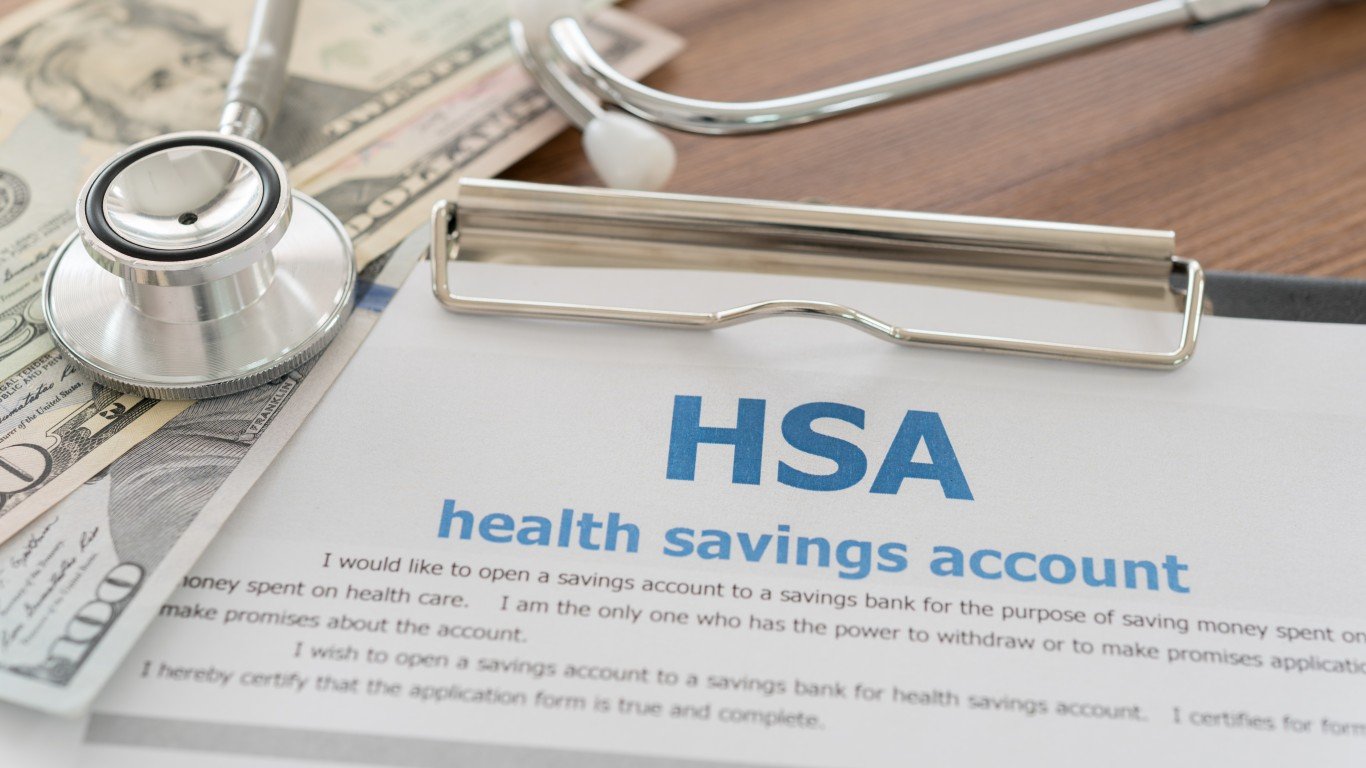
Healthcare costs explode when your income falls: Why most retirees underestimate medical expenses
On NerdWallet’s Smart Money Podcast episode How to Put $200K to Work and The Truth About Generational Spending, the guest framed the retirement healthcare problem in one line that should reshape how people approaching 65 build their savings target: “typically…

This post may contain links from our sponsors and affiliates, and Flywheel Publishing may receive compensation for actions taken through them.

On NerdWallet’s Smart Money Podcast episode How to Put $200K to Work and The Truth About Generational Spending, the guest framed the retirement healthcare problem in one line that should reshape how people approaching 65 build their savings target:
“typically occur during a time of rising income. So yes, those costs go up, but your income on average typically rises faster. But healthcare’s different. Those costs kind of explode while your income is falling.”
The framing rests on a NerdWallet analysis of 650 rows of consumer spending data. Most big-ticket expenses (mortgages, childcare, college tuition) hit during peak earning years. Healthcare hits when the paycheck stops. For readers within a decade of retirement, the difference between a workable plan and a leaky one usually comes down to whether they planned for this asymmetry.
The advice is correct, and the math is worse than most plans assume
Federal data confirms the squeeze in dollar terms. Healthcare services accounted for $3.7 trillion of U.S. personal consumption in April 2026, or 16.8% of total spending. The medical care CPI sat at 591.2 in April 2026, up from 580.5 a year earlier. Services inflation consistently outpaced headline PCE by 1 to 1.7 percentage points through most of 2024 and 2025.
Now layer in retiree balance sheets. The average 401(k) balance for households age 60 to 64 is $246,500, and Baby Boomers carry median household retirement savings of $270,000. Apply a 4% withdrawal rate to a balance in that range and you generate roughly $10,000 a year of pretax income, which combined with Social Security puts most retirees in a typical annual income band.
Against that, Medicare does not cover dental, vision, hearing aids, most long-term care, or premium creep on Part B and supplemental policies. A single hospitalization, a knee replacement, or a year of home health aides can knock five figures off the principal that funds groceries and the electric bill. The personal savings rate has already compressed from 6.2% in Q1 2024 to 3.7% in Q1 2026, leaving thinner cushions for the medical events most people assume Medicare will fully absorb. Consumer sentiment sits at 49.8 as of April 2026, below recessionary thresholds, which tells you households already feel the strain before the medical bill arrives.
Transamerica’s research is blunt about the after-the-fact discovery: 38% of retirees say healthcare expenses turned out higher than expected, and 56% of workers say healthcare costs are already hurting their ability to save.
The factor that decides whether the squeeze breaks the plan
The single variable that matters most is whether you fund healthcare as its own line item rather than treating retirement savings as one undifferentiated bucket.
Scenario A: A 62-year-old retires with $400,000 in a 401(k), no HSA, and draws 4% annually. A $30,000 medical event pulls from the same account funding the mortgage. That single bill cuts the income-generating principal by 7.5%, and the withdrawal floor permanently drops.
Scenario B: Same retiree, but $75,000 sits in a Health Savings Account built over a decade of triple-tax-advantaged contributions. The $30,000 bill pulls from money earmarked for it. The retirement account keeps compounding. Same income, same expense, different outcome.
Three moves that harden the plan against the healthcare squeeze
- Price your own healthcare floor. Use Medicare.gov’s plan finder and Fidelity’s retiree health cost estimator to project a household number. Plan for lifetime out-of-pocket costs in the six figures per person, separate from long-term care, which is its own category.
- Fund an HSA aggressively if you have a high-deductible plan. Invest the balance and let it compound. After age 65, HSA funds can be used for any purpose without penalty, with medical withdrawals remaining tax-free. Check IRS.gov for current contribution limits.
- Stress-test your withdrawal rate against rising medical costs. If your 4% plan only works when healthcare inflation stays flat, the plan is fragile. Model what happens when medical costs grow 4% annually while Social Security COLA lags.
Retirement plans built on income-replacement ratios understate the one expense that breaks them. Build the target around the actual bill itself.
Contact [email protected] for any questions or corrections.
Don Lair writes about options income, dividend strategy, and the kind of boring-but-durable investing that actually funds retirement. He's the founder of FITools.com, an independent contributor to 24/7 Wall St., and a former writer for The Motley Fool.