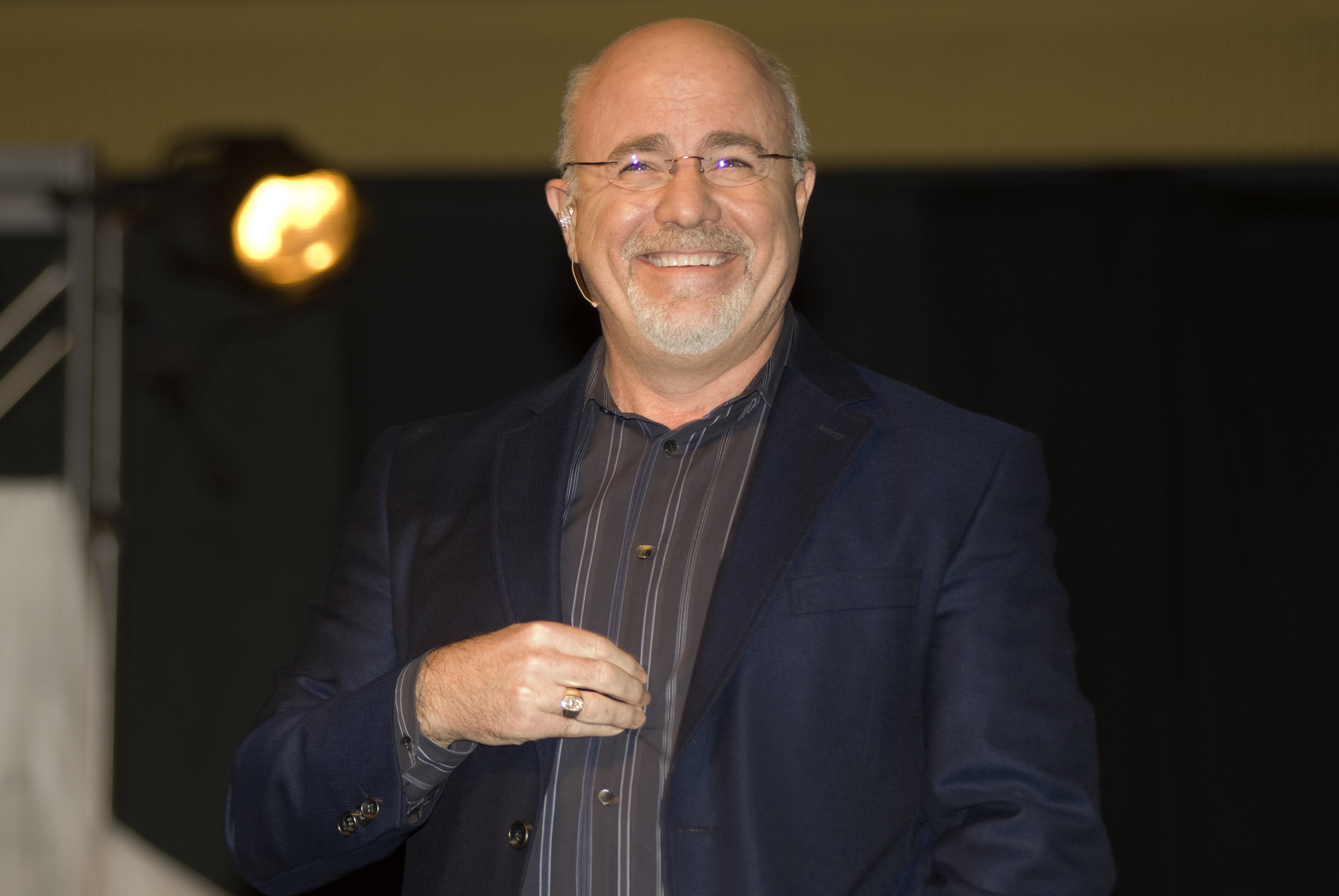
Dave Ramsey vs. Suze Orman: Who’s Right About the New Retirement Math?
If you asked someone to pick out two online personalities that have large followings around financial advice, there is a better than good chance that Dave Ramsey and Suze Orman are going to be mentioned. These two individuals, with their…


If you asked someone to pick out two online personalities that have large followings around financial advice, there is a better than good chance that Dave Ramsey and Suze Orman are going to be mentioned. These two individuals, with their larger-than-life personalities, have created legions of fans with their strong financial advice spanning everything from buying a home, car, and how to retire properly.
The real question isn’t whether people are listening to Dave or Suze, as we know they are, in many cases, very literally, but there is a question among the fans of these two individuals as to who is really worth listening to. Do you agree with Dave that says $1 million is enough, or Suze, who believes you need a number 10 times this amount in order to be truly comfortable while retired?
The Dave Ramsey Playbook
Whether you are a fan of his or just a casual listener, it won’t come as any surprise to learn that Dave Ramsey has built his financial empire on optimism and a math story that assumes America’s long-term growth story isn’t going to end anytime soon. Dave believes that retirees can safely withdraw 8% per year, which is double the traditionally accepted 4% rule, as long as they are heavily invested in mutual funds that he believes can deliver an average annual return of around 12%.
To Dave’s point, he doesn’t believe you need anything near what Suze Orman might say, as he thinks a $1 million nest egg, when properly invested, could generate more than $80,000 per year in income. At this income level, most middle-income families could safely retire, and it’s likely enough to replace a strong percentage of their working income. Add to this pensions, Social Security, and the like, and there is every reason to believe that Dave’s plan could work for many American retirees.
Ultimately, Dave is trying to give you the confidence and a tangible goal that most people can relate to. The challenge is that Dave’s entire proposition hinges on market performance that can generate at least 10-12% every year. When you look at the 10-year average of the S&P 500 being closer to 10%, you’re teetering on the very edge of Dave’s planned annual growth, with only a few percentage points to spare on having enough money to last.
The Suze Orman Playbook Is All About Safety and Security
Now, when you try to see things from Suze Orman’s point of view, you can quickly see how she differs from Dave Ramsey. In her world, the approach is to call the 4% rule “very dangerous,” and she looks to warn her follower base that drawing 3% annually is the best path, especially if you stop working in your 60s.
What really makes Orman’s approach different is her belief that you need about $10 million to retire comfortably, a figure that is arguably unattainable for most Americans.
Orman’s logic is sound, in that life expectancy is longer and that health care costs are growing while inflation is eroding your buying power, so more money is a necessity to retire comfortably. The challenge is that, since $10 million isn’t realistic for most, Orman really needs to say it outright. This said, she does a better job explaining to her legion of followers that retiring at 67 with $3 million is better than 60 at $1 million.
Why Both Orman and Ramsey are Right, Depending on Who You Are
Here’s the real truth: while I recognize that fans of Ramsey and Suze Orman are going to swear by their approaches, the reality is somewhere in the middle. My take on this is that both of these individuals are right, but it depends on who you are as to which approach is better for you. If you are an investor with a high risk tolerance, minimal debt, and a steady head through volatile market times, you can comfortably adhere to Ramsey’s approach.
On the other hand, I would argue that Orman’s approach is far better for someone who is closer to retirement and wants to guard their principal and not chase wild growth. In Orman’s favor, the market doesn’t move in a straight line, and retirees trying to bank on a 12% return every year are in for a rude awakening. The “right number” is going to depend far less on a financial personality’s opinion and more on your personal math around what kind of lifestyle you want to live, location, risk tolerance, and income needs.
So, Who Should You Actually listen to?
At the end of the day, I would say that you shouldn’t listen to Ramsey or Orman, while also listening to them both. If that doesn’t make sense, let me explain that the better question isn’t who you should listen to, but which of their takes is right for you?
The magic number shouldn’t be $1 million or $10 million, but it should be whatever number allows you to make annual withdrawals without losing sleep every night. If you’re conservative and want to travel and tackle rising medical costs, Orman’s larger safety net is ideal. Alternatively, let’s say you just want to live debt-free and aren’t losing sleep over market volatility, then by all means, go with Ramsey’s smaller dollar amount and congratulate yourself on being able to retire earlier.
Contact [email protected] for any questions or corrections.
David Beren has been a Flywheel Publishing contributor since 2022. Writing for 24/7 Wall St. since 2023, David loves to write about topics of all shapes and sizes. As a technology expert, David focuses heavily on consumer electronics brands, automobiles, and general technology. He has previously written for LifeWire, formerly About.com. As a part-time freelance writer, David’s “day job” has been working on and leading social media for multiple Fortune 100 brands. David loves the flexibility of this field and its ability to reach customers exactly where they like to spend their time. Additionally, David previously published his own blog, TmoNews.com, which reached 3 million readers in its first year. In addition to freelance and social media work, David loves to spend time with his family and children and relive the glory days of video game consoles by playing any retro game console he can get his hands on.