Disney Is America’s Worst Entertainment Company
Disney is America’s worst-run entertainment giant. Efforts to keep the company afloat have not impressed investors, as its stock chart shows.


Maybe Warner Bros. Discovery Inc. (NASDAQ: WBD | WBD Price Prediction) was America’s worst-run entertainment company. At least it has the decency to auction itself off and get some money for desperate shareholders. AT&T was smart enough to dump its media properties onto David Zaslav’s Discovery. Zaslav was naive enough to do a deal that built an empire of ancient media businesses.
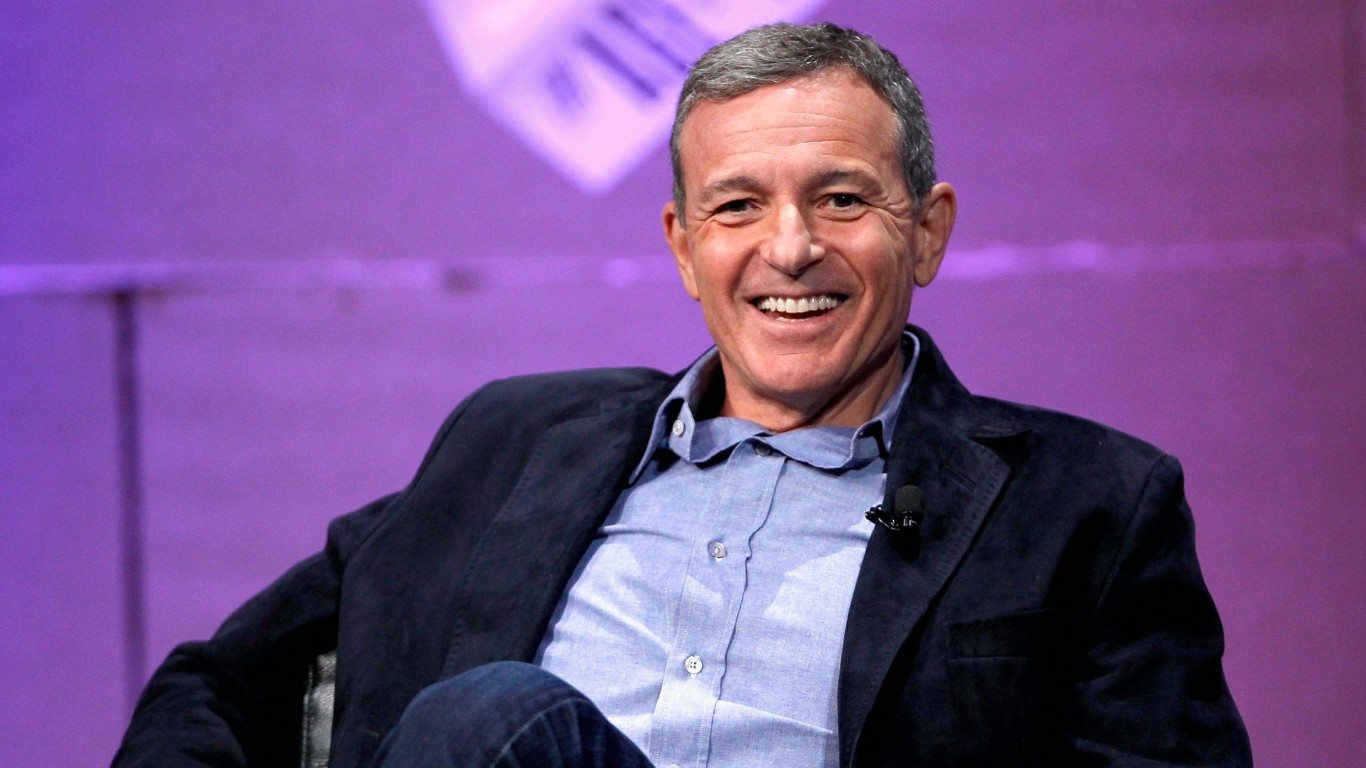
Now that Warner Bros. Discovery is on its way out the door, the mantle of the worst entertainment company falls to Walt Disney Co. (NYSE: DIS) and its savior is Bob Iger. He ran the company from 2005 to 2020. His handpicked successor, Bob Chapek, lasted a couple of minutes. The board threw him out in 2022. Iger came back and said he would leave next year. Maybe “yes” and maybe “no.” A successor has not been named.
What Went Wrong?

Iger is famous for building Disney through a series of mergers and acquisitions. These included ABC Television, Pixar Animation Studios, Marvel Entertainment, Lucasfilm, and 21st Century Fox. The deals looked good at the time, but all Iger was doing was creating a legacy media giant, mostly of TV and studios. New and huge streaming services, including Netflix and Amazon Prime Video, flanked Disney’s old-world assets.
Many people do not remember who launched Disney’s ill-fated streaming service, Disney+. Iger did in November 2019. It is a valuable asset now, but the company spent billions of dollars to get there.
When Disney released its most recent earnings, the market hammered the shares, as the numbers missed consensus forecasts. The stock sank 8% the minute the figures were announced. Revenue was about flat at $23.5 billion. What Disney refers to as “segment opening income” decreased 5% to $3.5 billion. Segment operating income is the bottom line of each of its divisions.
The company had some good news to share regarding its Hulu and Disney+ subscriber numbers, which have now reached 196 million. However, it operates in a highly competitive business, which YouTube has also entered. YouTube’s success is bad news for every other streamer.
Another positive is the money Disney is investing in its theme parks, which are steady contributors to the company’s financial health.
Across Disney’s big segments, revenue was steady. These include Entertainment, Sports, and Experiences. Entertainment’s operating income was in trouble. It dropped 35% to $691 million.
Disney does not have much of what business schools call a moat. A lot of companies can and do compete with each of its businesses, other than their parks and cruises.
Disney keeps a stock price chart on its Investor Relations page. The five-year trend it shows is ugly. The stock was $202 in March 2021. Today it trades at $107.
Disney should put itself up for sale.
Walt Disney Stock Price Prediction and Forecast 2025-2030
Contact [email protected] for any questions or corrections.
Douglas A. McIntyre is the co-founder, chief executive officer and editor in chief of 24/7 Wall St. and 24/7 Tempo. He has held these jobs since 2006.
McIntyre has written thousands of articles for 24/7 Wall St. He is an expert on corporate finance, the automotive industry, media companies and international finance. He has edited articles on national demographics, sports, personal income and travel.
His work has been quoted or mentioned in The New York Times, The Wall Street Journal, Los Angeles Times, The Washington Post, NBC News, Time, The New Yorker, HuffPost USA Today, Business Insider, Yahoo, AOL, MarketWatch, The Atlantic, Bloomberg, New York Post, Chicago Tribune, Forbes, The Guardian and many other major publications. McIntyre has been a guest on CNBC, the BBC and television and radio stations across the country.
A magna cum laude graduate of Harvard College, McIntyre also was president of The Harvard Advocate. Founded in 1866, the Advocate is the oldest college publication in the United States.
TheStreet.com, Comps.com and Edgar Online are some of the public companies for which McIntyre served on the board of directors. He was a Vicinity Corporation board member when the company was sold to Microsoft in 2002. He served on the audit committees of some of these companies.
McIntyre has been the CEO of FutureSource, a provider of trading terminals and news to commodities and futures traders. He was president of Switchboard, the online phone directory company. He served as chairman and CEO of On2 Technologies, the video compression company that provided video compression software for Adobe’s Flash. Google bought On2 in 2009.