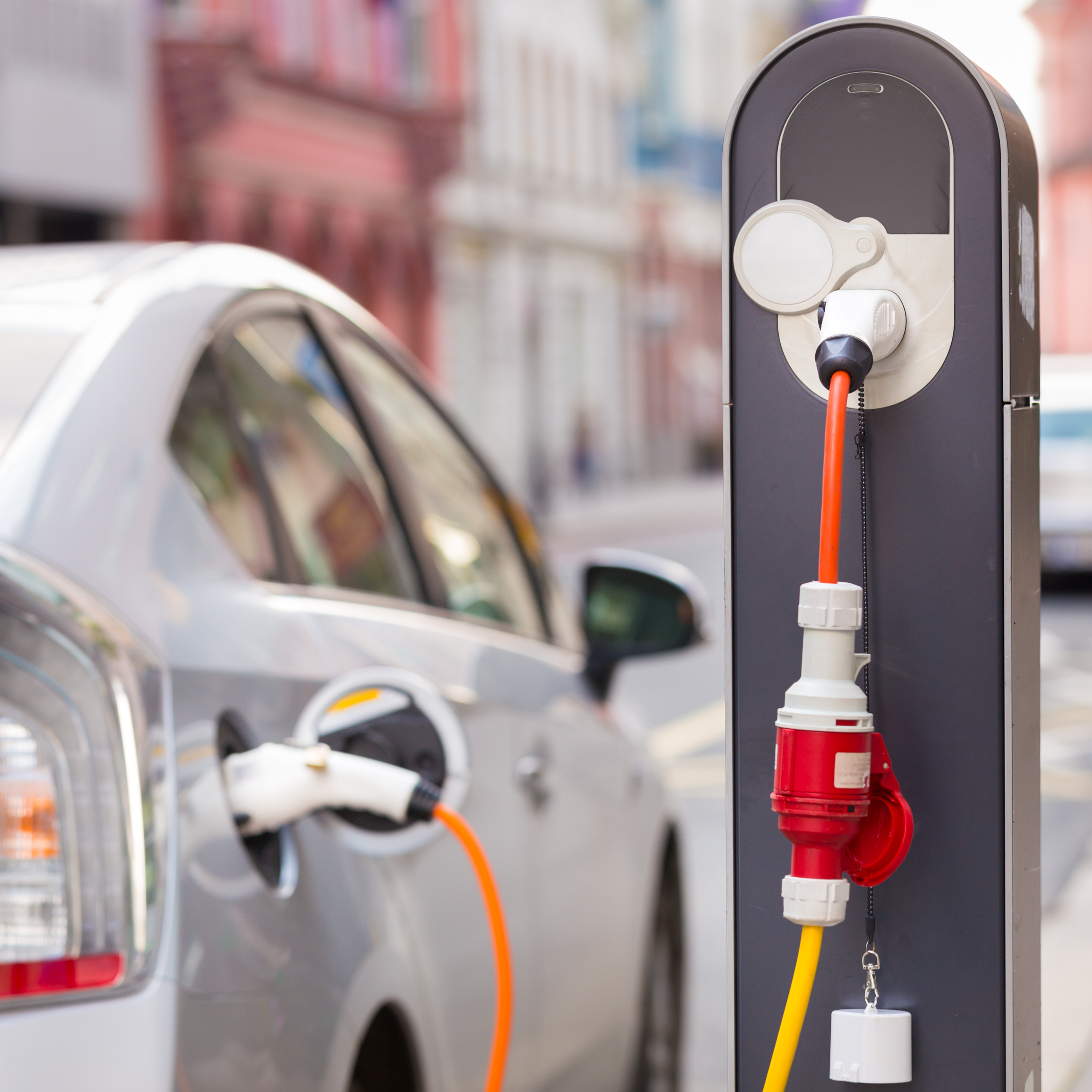
Ford, GM Race Ahead of the Market
Ford and GM stocks are outperforming the S&P 500 this year. They were supposed to be losers as the companies lagged Tesla in EV market share.


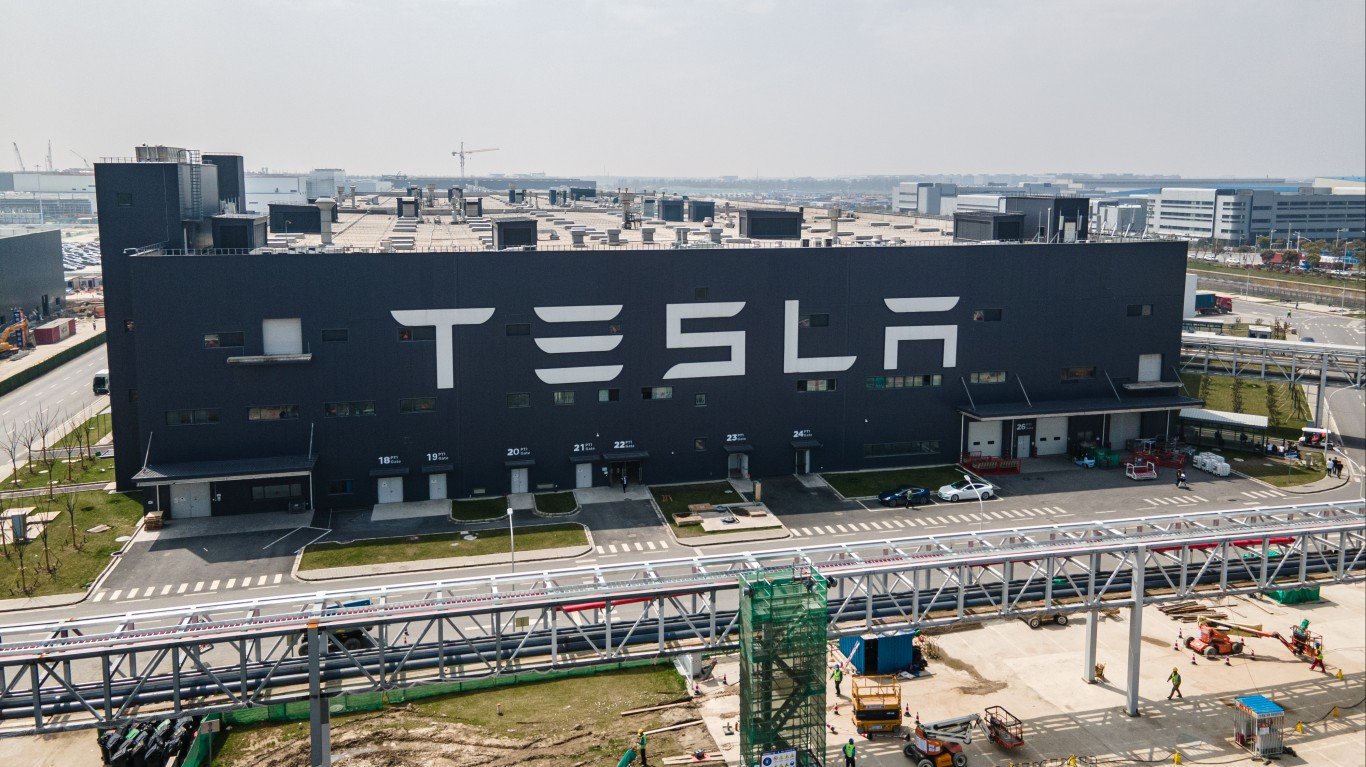
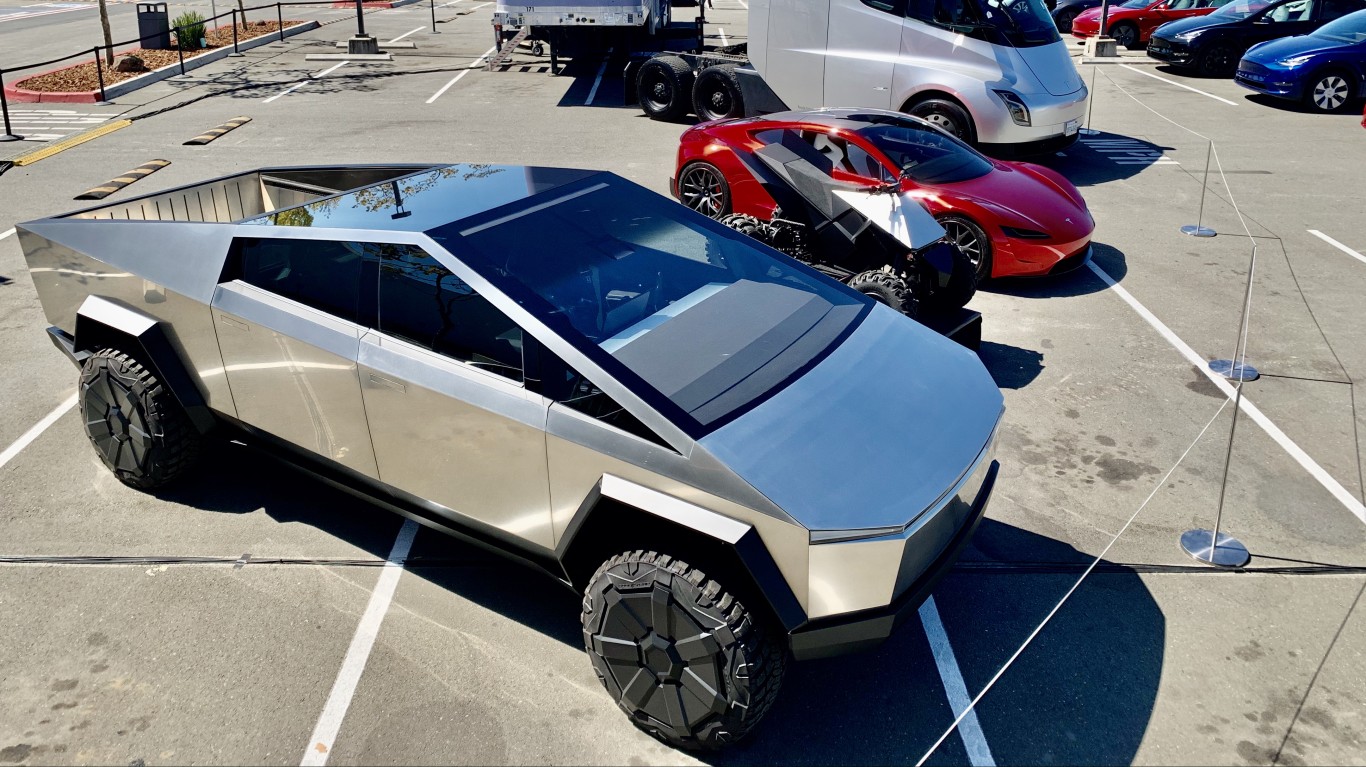
Ford Motor Co. (NYSE: F | F Price Prediction) stock is up 33% this year, and General Motors Co. (NYSE: GM) is 41% higher. The S&P 500 has increased 16% in that time. The two companies were supposed to be losers as they continued to lag behind the wounded Tesla Inc. (NASDAQ: TSLA) in the U.S. electric vehicle (EV) market, and they have the most modest presence in China and the European Union. Tesla may be hurting, but it still has about a 45% EV market share in the United States. GM and Ford are closer to 10% each. In China, the world’s largest EV market, the two U.S. car giants have almost nothing at all.
The “win” for Ford and GM is that they are fossil-fuel kings in a fossil-fuel nation. The EV market has died, thanks mostly to the end of the federal $7,500 EV tax credit. iSeeCars research says that EV sales as a percentage of total U.S. new car sales dropped from 8% in the third quarter to 4% in the fourth quarter. It will stay at that level through 2026, the research firm forecasts.
GM and Ford have spent billions of dollars on EV development, only to find their legacy businesses are extremely healthy. In fact, their lead products are full-sized pickups, symbols of America’s gasoline-loving drivers.
Among the reasons that GM and Ford were wrong about EVs was that buyers still worry about range (at 300 miles for most EVs) and the number of charging stations. Excess tire wear and engines that do not take a full charge in very cold temperatures are also concerns. Some Americans don’t know how EVs work, which is another drawback.
On the other hand, the average price of a gallon of regular gasoline has dropped to $3. One of the selling points for EVs is that they save money on fuel. While that may be true, it is not as true as it was when gas was $5 a gallon, about the same time Russia invaded Ukraine. The world is awash in cheap oil, with prices falling toward $60 a barrel.
Add to the gas argument that there are, by some estimates, 175,000 gas stations in the U.S. (many of which have convenience stores). Filling a car with gas takes 10 minutes. EVs take longer to charge—if people can find a charger.
As a bonus, the dislike many Americans have for Tesla CEO Elon Musk has caused some people who might have bought Tesla cars to stick with combustion engine ones instead.
Gasoline-powered cars are the clear U.S. market winner. So much for gambling on EVs in America.
Ford Stock Price Prediction and Forecast 2025–2030
Contact [email protected] for any questions or corrections.
Douglas A. McIntyre is the co-founder, chief executive officer and editor in chief of 24/7 Wall St. and 24/7 Tempo. He has held these jobs since 2006.
McIntyre has written thousands of articles for 24/7 Wall St. He is an expert on corporate finance, the automotive industry, media companies and international finance. He has edited articles on national demographics, sports, personal income and travel.
His work has been quoted or mentioned in The New York Times, The Wall Street Journal, Los Angeles Times, The Washington Post, NBC News, Time, The New Yorker, HuffPost USA Today, Business Insider, Yahoo, AOL, MarketWatch, The Atlantic, Bloomberg, New York Post, Chicago Tribune, Forbes, The Guardian and many other major publications. McIntyre has been a guest on CNBC, the BBC and television and radio stations across the country.
A magna cum laude graduate of Harvard College, McIntyre also was president of The Harvard Advocate. Founded in 1866, the Advocate is the oldest college publication in the United States.
TheStreet.com, Comps.com and Edgar Online are some of the public companies for which McIntyre served on the board of directors. He was a Vicinity Corporation board member when the company was sold to Microsoft in 2002. He served on the audit committees of some of these companies.
McIntyre has been the CEO of FutureSource, a provider of trading terminals and news to commodities and futures traders. He was president of Switchboard, the online phone directory company. He served as chairman and CEO of On2 Technologies, the video compression company that provided video compression software for Adobe’s Flash. Google bought On2 in 2009.