AIQ Let’s You Profit From The AI Arms Race Without Picking Winners
The AI infrastructure buildout is accelerating across semiconductors, cloud computing, and software applications. Identifying which companies will dominate five years from now is nearly impossible, exposing investors to concentration risk as competition intensifies. Global X Artificial Intelligence & Technology ETF…


The AI infrastructure buildout is accelerating across semiconductors, cloud computing, and software applications. Identifying which companies will dominate five years from now is nearly impossible, exposing investors to concentration risk as competition intensifies.
Global X Artificial Intelligence & Technology ETF (NASDAQ:AIQ) addresses this by spreading exposure across 86 AI companies. The fund holds $7.0 billion in assets and charges a 0.68% expense ratio. The company summarizes the appeal by stating:
The Portfolio Role: Broad AI Exposure Without Picking Winners
AIQ provides comprehensive AI participation without concentrating capital in a handful of names. The fund combines appreciation from companies building AI infrastructure (semiconductors, cloud computing) with those deploying AI applications (software, automation, consumer tech).
No single position exceeds 4.5% of the portfolio. Alphabet (NASDAQ:GOOGL | GOOGL Price Prediction) leads at 4.44%, followed by Samsung Electronics at 3.92% and Advanced Micro Devices (NASDAQ:AMD) at 3.63%. Even NVIDIA (NASDAQ:NVDA) represents just 2.84% of assets.
This equal-weight approach extends across geographies, including Taiwan Semiconductor, Tencent Holdings, and SK Hynix alongside U.S. tech giants. Information technology represents 52.3% of holdings, with communication services and consumer discretionary adding another 16%.
Performance: Strong Returns With Expected Volatility
AIQ has delivered 26.29% returns over the past year and is up 30.89% year-to-date through December 12, 2025. Since inception in May 2018, the fund has generated 17.91% annualized returns.
Recent volatility is evident: the fund traded near $53.76 in late October before pulling back to $47.33 in mid-November, a 12% drawdown. It has since recovered to $50.52, with the RSI at 48.91 indicating neutral momentum.
The Tradeoffs: Cost and Sector Concentration
The 0.68% expense ratio exceeds broad market index funds by roughly 0.65 percentage points annually. An investor holding $100,000 for 20 years would pay approximately $15,000 more in fees compared to a fund charging 0.03%.
Sector concentration presents another risk. With over 70% allocated to information technology and related sectors, AIQ offers limited protection during tech selloffs. The fund’s 20.20% standard deviation confirms elevated volatility compared to diversified equity indexes.
Who Should Avoid This ETF
Conservative investors seeking income should look elsewhere. AIQ’s 30-day SEC yield sits at negative 0.10%, with semi-annual distributions offering minimal amounts. Retirees requiring steady cash flow would find better options in dividend-focused funds.
Investors with short time horizons also face challenges. Technology sectors can experience prolonged drawdowns, as evidenced by AIQ’s 36.45% decline in 2022. Anyone needing capital within three years should avoid thematic ETFs with this volatility profile.
Alternative: BOTZ for Robotics Focus
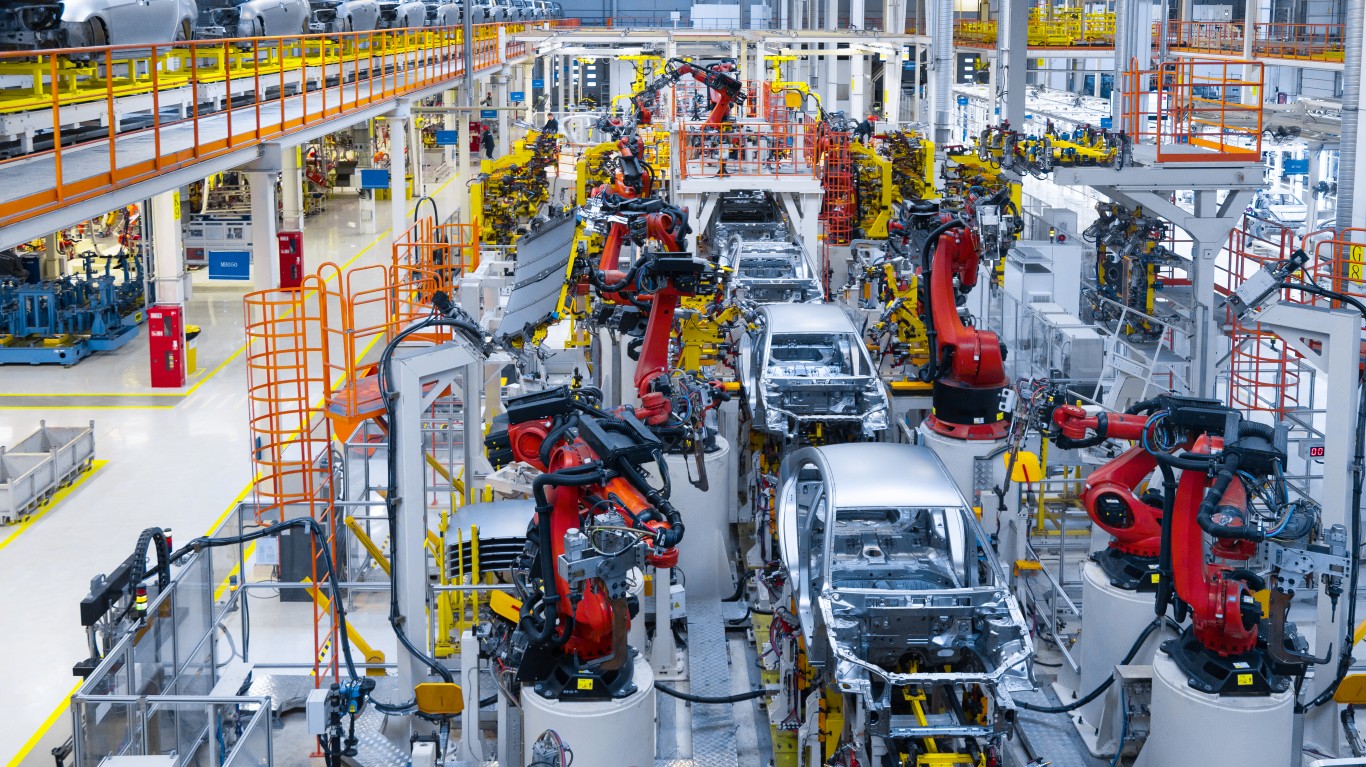
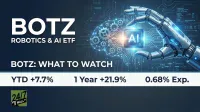
Global X Robotics & Artificial Intelligence ETF (NASDAQ:BOTZ) offers a more concentrated approach. With $3.15 billion in assets and the same 0.68% expense ratio, BOTZ focuses specifically on industrial robotics, automation systems, and healthcare applications rather than the broader AI ecosystem.
BOTZ dedicates over 25% of holdings to Japanese automation leaders like FANUC and Keyence, providing targeted exposure to industrial robotics. The fund also maintains significantly higher trading volume than AIQ, resulting in tighter bid-ask spreads.
AIQ works best as a 5% to 10% satellite position for investors with five-year-plus time horizons who want diversified AI exposure without picking individual winners, accepting higher costs and volatility in exchange for avoiding single-stock risk.
Contact [email protected] for any questions or corrections.
I am a long time investor and student of business, and believe finding good companies that can become great investments is the best game on earth. After 20 years of writing and researching the public markets it is clear that individuals have never had more tools and information to take control of their financial lives. From ETFs and $0 commissions to cryptos and prediction markets there has never been a greater democratization of access to investing.
I write to help people understand the investments available to them so they can make the best choice for their portfolio, whether they're starting out or looking for income in retirement.