Gold Is up 70% But Investors Are Overlooking The Refiner Stocks That Could Pop Next
Before the end of the year sell-off for tax purposes in which millions of investors engage, gold prices were up as high as 70% before closing out the year up +62.31%. Nevertheless, 2025, saw new highs and 2026 expects the…


Before the end of the year sell-off for tax purposes in which millions of investors engage, gold prices were up as high as 70% before closing out the year up +62.31%. Nevertheless, 2025, saw new highs and 2026 expects the trend to continue, since central banks are driving much of the buying on the current bullish run. A similar trend, with triple figure (+137.39) final 2025 gains from silver, are also running a concurrent bullish trajectory.
Gold, in particular, is a reflection of currency, and its purity standards for good London delivery for trade swap and storage purposes are universally accepted and acknowledged. Gold ore on its own, not unlike crude oil, does not realize its true market value until it can undergo the refining process required to meet international acceptance criteria. Therefore, while gold mining stocks are more than likely to continue to appreciate, those that have their own refinery operations will be protected from any mining interruptions, whether they come from geological or geopolitical reasons. Therefore, the following stocks that have refining capabilities bear consideration for 2026:
- Barrick Mining Corp (NYSE: B)
- Rio Tinto Plc (NYSE: RIO | RIO Price Prediction)
- Glencore ADR (OTC: GLNCY)
Fiat Currency Fears
Although gold ended 2025 +62% after a high of +70%, the bull run is actually a continuation of 2024, where gold gained +26%. This surge was remarkable, and more akin to biotech or digital technology stock gains. However, gold has long been the “flight to safety asset”, and 2024 exhibited some unprecedented geopolitical turbulence that certainly justified that maxim:
- October 7 and the subsequent war in Gaza
- Ukraine War
- Genocide of Christians in Nigeria by Islamist terrorists
- Currency devaluation
The last one is obviously of particular concern to central bankers, who have been engaged in the printing of fiat currency for many decades. The ratio of fiat currency to gold continues to increase, as interest debt monetization and interest rate manipulation creates an ongoing devaluation of currency. In order to prevent another Weimar Republic or Venezuela scenario, the central bank hoarding of gold to hedge their profligate money printing has been the primary impetus towards large scale gold purchases.
With US debt at roughly 120%, it has pulled ahead of debt-ridden France at 117%. US Treasuries are now viewed as higher risk than in the past half century, and Japan’s recent interest rate rise no longer offers a carry trade platform used by many institutions since the 1990s. The central banks of China and many European nations have subsequently been stocking up on gold bullion, more than doubling in 2025 their normal acquisition intake levels.
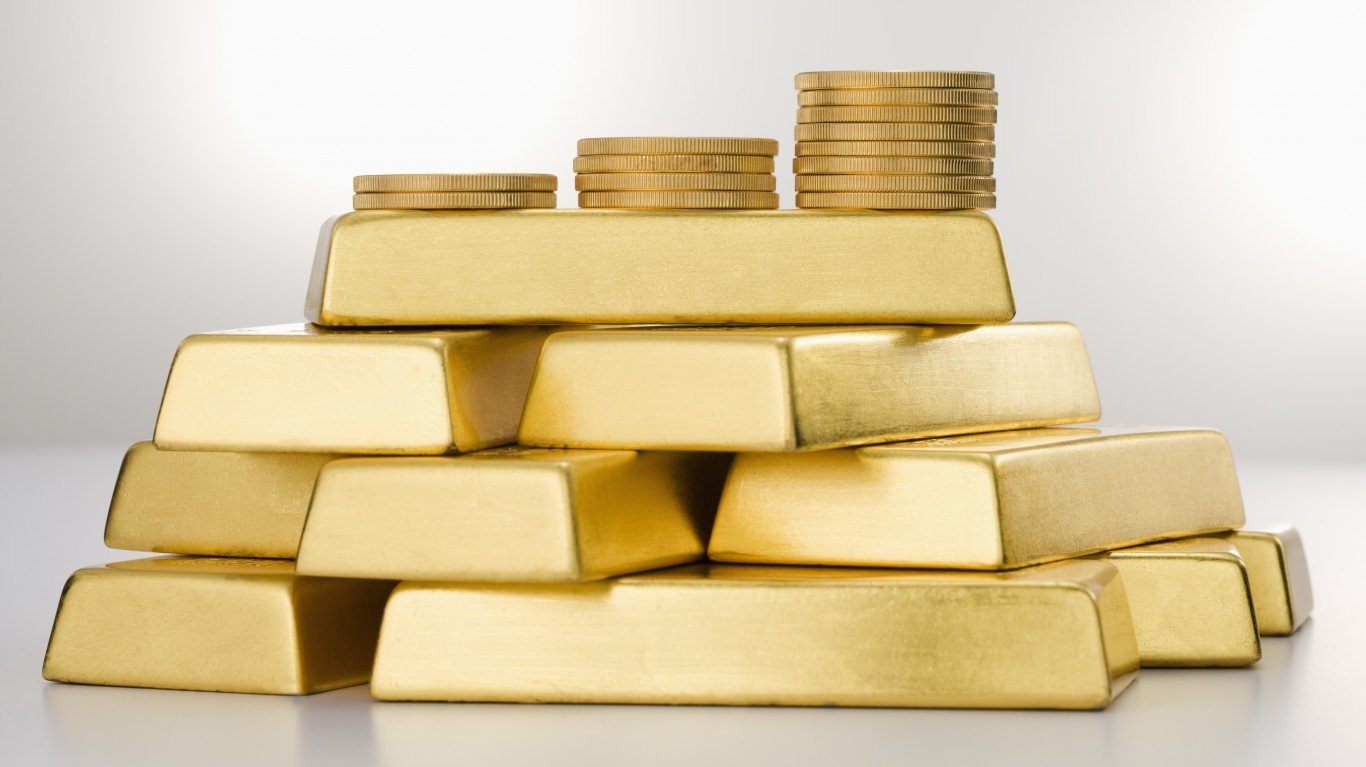
Given that internationally hallmarked gold bullion bars are the standard configuration usually required by banks for vault safekeeping, gold refiners hold particular power over the future price of gold. Regardless of any increased ore production, banks cannot buy it for currency purposes unless it’s in 99.9% hallmarked bars. Therefore, these well known gold mining and refining stocks that have in-house refining operations should be worth watching in 2026.
Barrick Mining
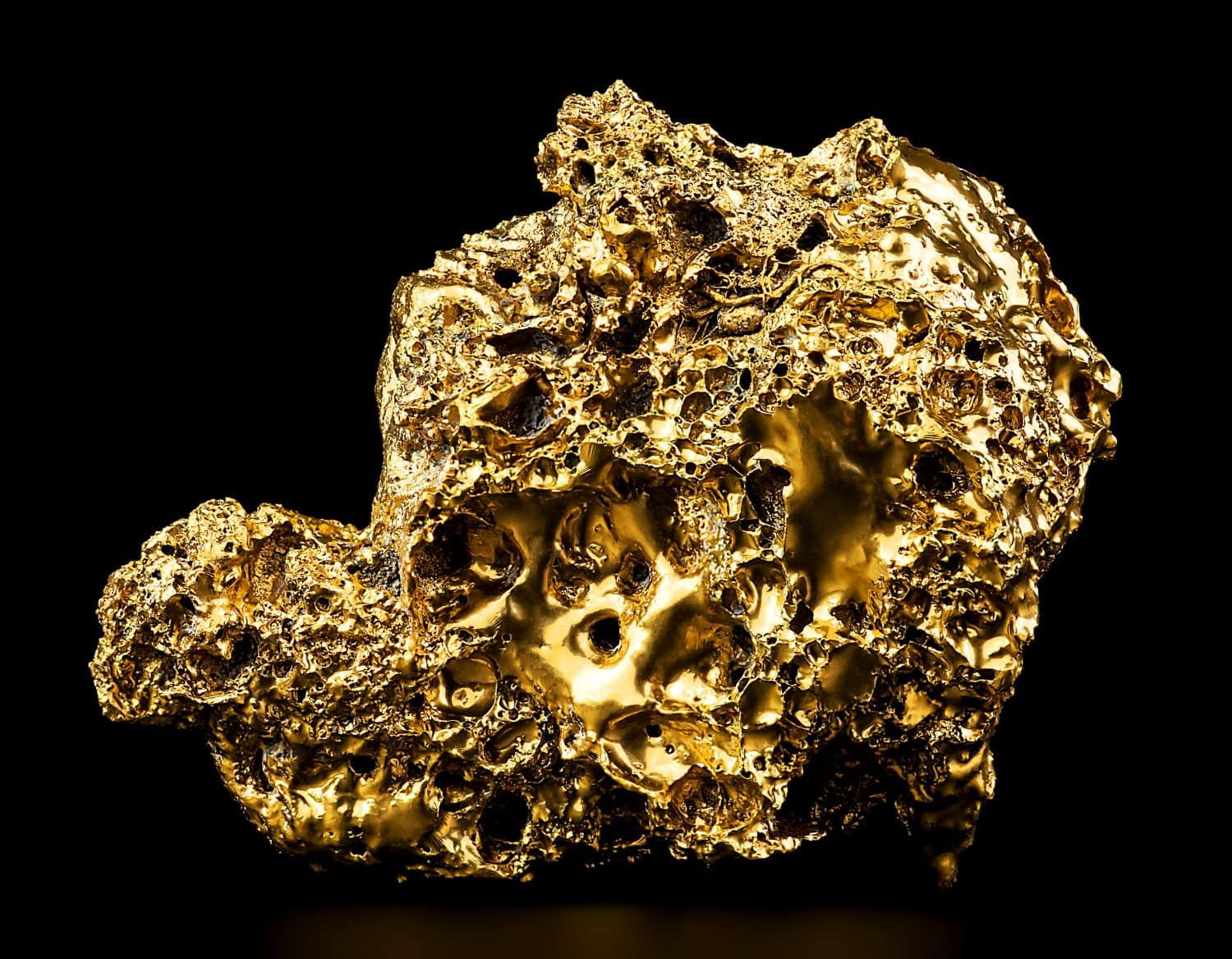
Barrick Gold is ranked #2 in the world in terms of gold production, closely behind Newmont Corp. It was #1 until Newmont acquired Goldcorp in 2019. Barrick’s operations stretch from North and South America, to Africa, to the Middle East, Asia, and Southeast Asia. Headquartered in Toronto, Canada, Barrick’s primary mining targets are gold and copper. The company’s 2025 gold production output is anticipated to be 3.15 to 3.5 million oz. depending on 4Q results, which are usually the highest. Barrick’s gold refining in Africa is processed through its joint venture with Rand Refinery in South Africa, while its North American gold processing is refined through its Nevada Gold Mines joint venture with Newmont. Barrick’s operations incorporate the full gamut of the mining process from exploration and extraction to processing, refining, and delivery.
Rio Tinto Plc
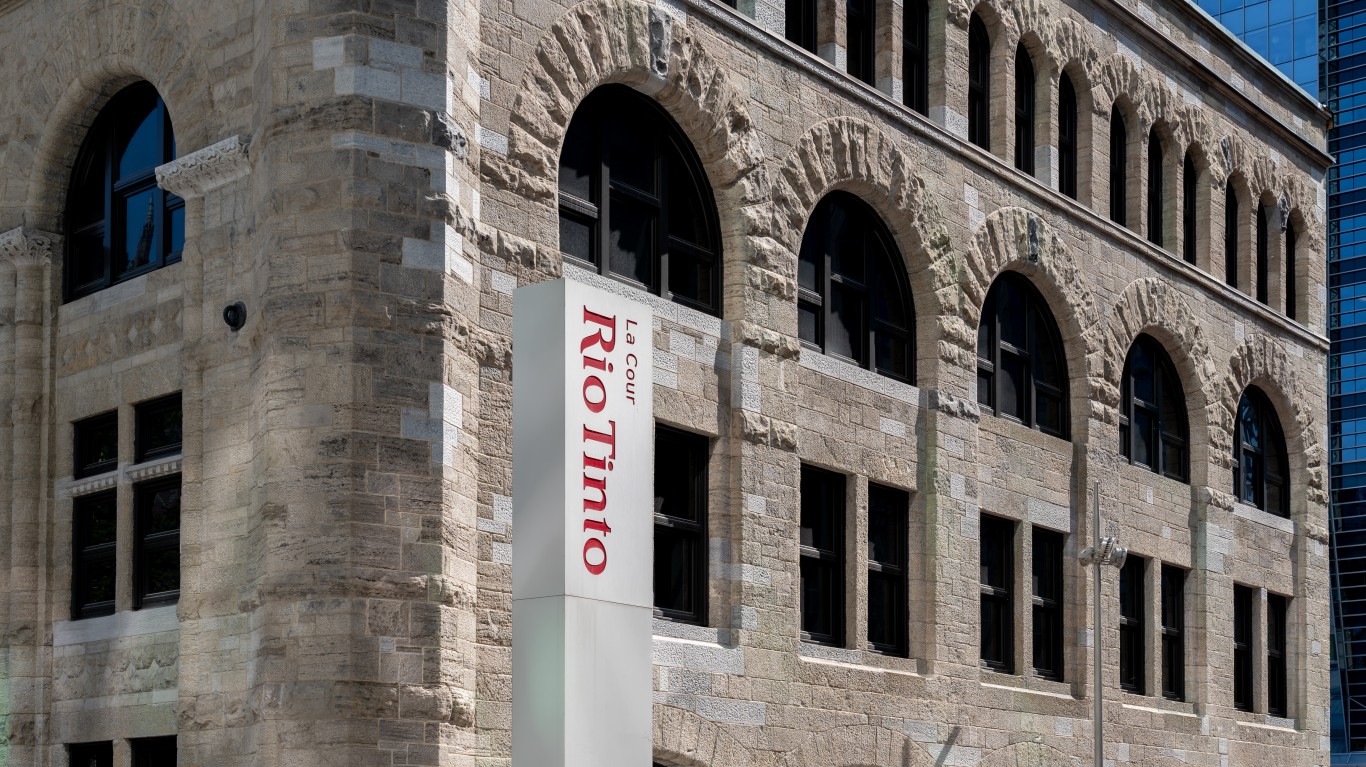
Headquartered in London, UK, Rio Tinto’s mining operations include gold and silver, as well as its primary focus on iron ore, copper, aluminum, and molybdenum, in addition to lithium and diamonds. Its refining operations are at its Kennecott facility in Utah. Although primarily engaged in copper refining, gold, silver, platinum, palladium, selenium and tellurium processing also fall under Kennecott’s auspices. Rio Tinto’s 99.99% purity gold bars and 99.95% purity silver bars are accredited by the London Bullion Market Associates (LBMA) for traceability and hallmark source reliability. Rio Tinto is acknowledged as one of the top 10 precious metals refineries in the 2025 Global Precious Metals Recycling and Refining Market Share Report.
Glencore

Founded in 1974 by the notorious Marc Rich. Rich flaunted US sanctions to trade with Iran during the hostage crisis, and was indicted on racketeering, tax evasion, and wire fraud charges, only to be pardoned by Bill Clinton after some hefty campaign donations to Hillary Clinton’s Senate campaign and various Clinton organizations. Formed by Rich as a successful commodities trading entity, Glencore was the largest company in Switzerland in 2010, with a commanding global market share of copper and zinc, among other commodities.
Glencore refines gold to 99.99% purity at its Montreal based Canadian Copper Refinery (CCR). Although gold is not its core business and the company does not own any gold mines, it is a significant refiner of gold as a by-product result of its huge copper refining and electronic scrap recycling operations. As a result, although its other commodities businesses are its main bread and butter, the scale of Glencore’s gold refining operations rank in as the second largest in all of Canada.
Contact [email protected] for any questions or corrections.
After 15 years on Wall Street with 7 of them as Director of Corporate and Municipal Bond Trading for a NYSE member firm, I started my own project and corporate finance consultancy. Much of the work involves writing business plans, presentations, white papers and marketing materials for companies seeking budgetary allocations for spinoffs and new initiatives or for raising capital for expansion or startup companies and entrepreneurs. On financial topics, I have been published under my own byline at The Motley Fool, 247wallst.com, DealFlow Events’ Healthcare Services Investment Newsletter and The Microcap Newsletter, among others. Additionally, I have done freelance ghostwriting writing and editing for several financial websites, such as Seeking Alpha and Shmoop Financial. I have also written and been published on a variety of other topics from music, audiophile sound and film to musical instrument history, martial arts, and current events. Publications include Copper Magazine, Fidelity (Germany), Blasting News, Inside Kung-Fu, and other periodicals.