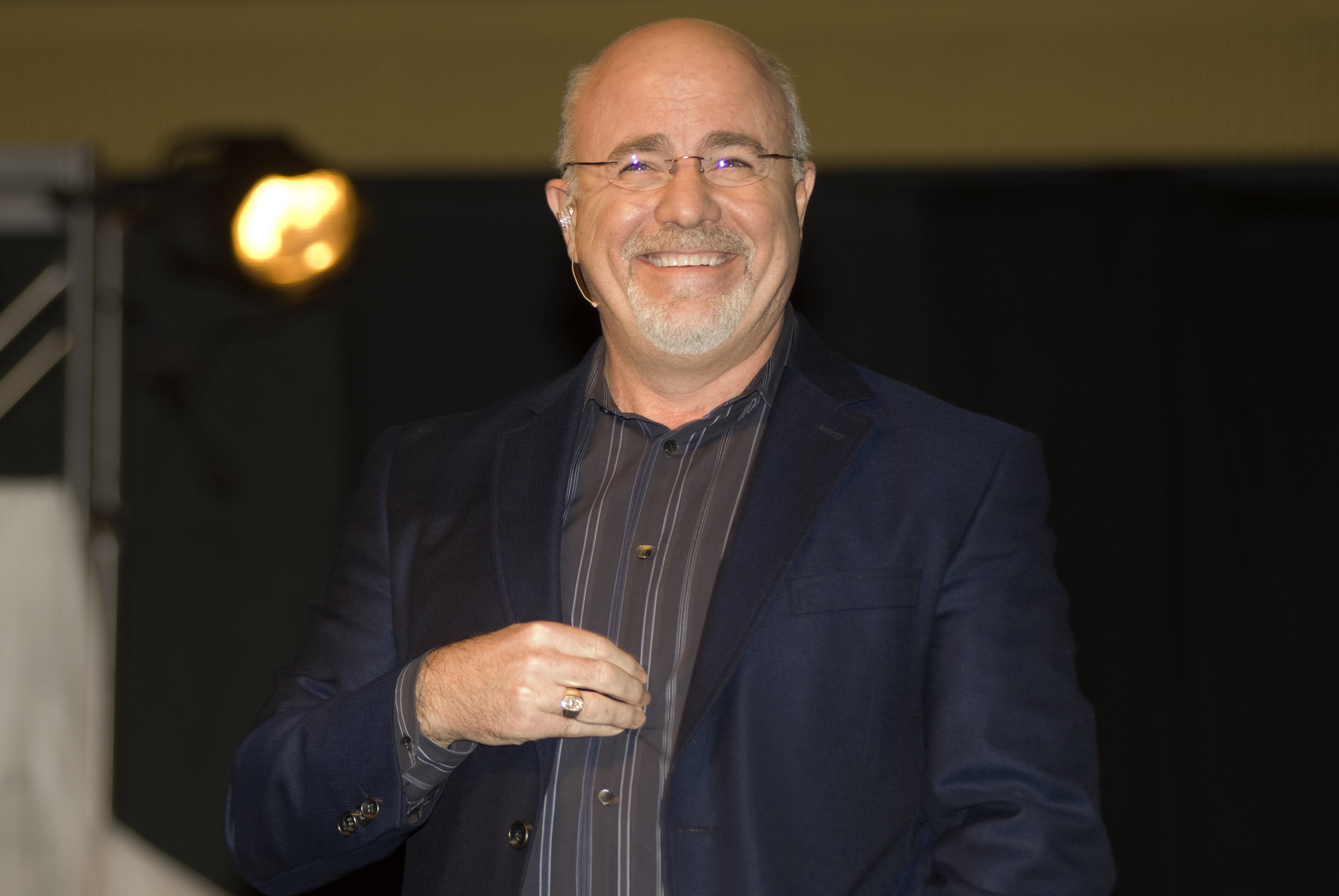
Data Shows Dave Ramsey Is Dead Wrong About When to Claim Social Security
Dave Ramsey has been very clear on when you should claim Social Security. Both on his podcasts and on the Ramsey Solutions blog, the personal finance personality has staked out a consistent position on the single claiming age he believes…


Dave Ramsey has staked out a clear and consistent position on Social Security: claim at 62, the earliest possible age, and put every check straight into the market. Both his podcast episodes and the Ramsey Solutions blog carry the same message. The trouble is that independent research almost uniformly contradicts him, and the financial stakes for retirees who follow his advice have grown considerably as new legislation reshapes Social Security’s finances and the program’s trust fund moves closer to a critical threshold.
Ramsey is recommending the age that most academic studies identify as one of the worst choices for maximizing lifetime income. For anyone who can afford to wait, following his advice could leave a substantial amount of money on the table. It is worth comparing what he actually says against what the data shows.
What Ramsey says to do about claiming Social Security
Ramsey’s case rests on three related arguments. First, he believes you should claim early and invest the proceeds, because he expects diversified mutual funds to return 10% to 12% annually, a rate he thinks would outpace the benefit increase the government awards for waiting. Second, he points out that checks stop when you die, so grabbing them early hedges against dying before collecting much. Third, he argues that most people’s life expectancy means they will come out ahead by starting at 62 rather than delaying. His position has been consistent across years of content: as he once put it, “Social Security dies when you die…so you might as well get all you can get as fast as you can get.”
The “invest the difference” argument falls apart under scrutiny
The central weakness in Ramsey’s strategy is that it pits a speculative market return against a guaranteed government benefit. Delaying Social Security past your full retirement age (FRA) earns a guaranteed 8% annual increase in your monthly benefit for every year you wait, up to age 70. To beat that, a retiree would need to consistently achieve comparable risk-adjusted gains while simultaneously drawing down a portfolio during retirement, a period when sequence-of-returns risk is at its peak. A guaranteed government check, with annual cost-of-living adjustments built in, sidesteps that risk entirely.
There is also a practical barrier that Ramsey’s podcasts rarely address. In 2026, anyone who claims at 62 while still working loses $1 in benefits for every $2 earned above $24,480. That earnings test makes the “claim early and invest it” plan impractical for most people who have not yet fully retired. The withheld benefits are eventually recalculated upward at FRA, but in the meantime the strategy cannot be executed as described.
Claiming at 62 also triggers the maximum early-filing penalty. For anyone whose FRA is 67, which applies to everyone born in 1960 or later, claiming at 62 permanently reduces the monthly benefit by 30%. That reduction is locked in for life. According to AARP, the break-even point for someone who claims at 62 versus waiting until FRA does not arrive until age 78 and 8 months. For those willing to wait all the way to 70, the break-even versus claiming at FRA is roughly 82 and a half years, an age the majority of today’s 65-year-olds are statistically likely to reach.
The data shows Ramsey is wrong about the best claiming age

Ramsey’s core argument is that most people will end up with more total money by starting checks at 62. Two major independent research efforts directly contradict that claim.
A 2019 United Income study examined the Social Security claiming decisions of roughly 20,000 retired workers and asked a pointed question: at what age would each person have maximized their lifetime income? The results were stark. Only 6.5% of retirees would have come out ahead by claiming before age 64. By contrast, 57% would have generated the most lifetime wealth by waiting until age 70. Retirees who claimed at a suboptimal age left an average of $111,000 per household unrealized, adding up to roughly $3.4 trillion in foregone benefits across the entire retiree population.
A 2022 paper published by the National Bureau of Economic Research reached a similar conclusion using a life-cycle consumption-smoothing model applied to Survey of Consumer Finance data. The researchers found that more than 90% of Americans aged 45 to 62 should wait until age 70 to collect, yet only about 10% actually do so. The median loss in present-value household lifetime discretionary spending from not optimizing the claiming decision came to $182,370.
The looming trust fund shortfall adds another layer of risk
The case against early claiming has grown more complicated in 2026. The Social Security Board of Trustees released its annual report on June 9, 2026, projecting that the OASI Trust Fund reserves will be depleted in the fourth quarter of 2032, one quarter earlier than the prior year’s forecast. At that point, ongoing payroll tax revenue would cover only 78% of scheduled benefits unless Congress acts. The 75-year actuarial deficit widened to 4.42% of taxable payroll, up from 3.82% in the prior year’s report. The Committee for a Responsible Federal Budget notes this is the largest actuarial shortfall in nearly half a century, representing roughly $31 trillion on a present-value basis. Two pieces of legislation accelerated the timeline: the Social Security Fairness Act, signed on January 5, 2025, increased program outlays by repealing benefit reductions for certain public-sector workers under the Windfall Elimination Provision and Government Pension Offset, while the One Big Beautiful Bill Act, enacted on July 4, 2025, reduced the income-tax revenue flowing into the trust fund by expanding deductions for seniors age 65 and older.
For someone who claims at 62, that timeline creates a compounding risk. They lock in a permanent 30% benefit reduction today, then potentially absorb an additional automatic cut of roughly 22% in 2032 if Congress fails to act. The two reductions do not simply stack as a straight sum; the 22% cut would apply to the already-reduced amount. To illustrate the scale: as of July 2026, the average retired worker received about $2,086 per month, according to the SSA’s Monthly Statistical Snapshot. A person who claimed early and accepted the 30% reduction would start from a much lower base, and a further 22% automatic cut on that already-reduced amount could leave them with a check far below what a delayed claimant would receive even after the same trust fund shortfall hits. The SSA’s own figures show the maximum monthly benefit for a worker claiming at age 70 in 2026 is $5,181, versus $2,969 for someone claiming at 62. For retirees already living on tight margins, that gap is consequential before any future cuts are applied.
Looking ahead, the 2027 cost-of-living adjustment is currently projected at 3.5% to 3.6%, according to estimates from AARP and the Senior Citizens League, which would make it the largest annual benefit increase since 2023. That prospective COLA matters more to delayed claimants, because it applies to a larger base benefit. Every percentage point of COLA delivers a bigger absolute dollar gain to someone who waited until 70 than to someone who locked in a reduced check at 62.
The “tax torpedo” and provisional income
One cost of early claiming that rarely surfaces in the “claim early” conversation is what retirement planners call the tax torpedo. Claiming at 62 while continuing to work or draw from tax-deferred accounts can push a larger share of Social Security benefits into taxable territory. Delaying Social Security to 70 creates a window between ages 62 and 70 when income is often lower, allowing for strategic Roth conversions at reduced tax rates. That window, used well, can permanently lower the tax bite on both Social Security benefits and retirement withdrawals later, when required minimum distributions from traditional IRAs and 401(k)s begin to kick in.
Provisional income thresholds make the math concrete. For single filers, once combined income exceeds $34,000, up to 85% of Social Security benefits become subject to federal income tax. The threshold for married couples filing jointly is $44,000. Routing early Social Security payments into a taxable brokerage account, as Ramsey recommends, adds capital gains and dividends on top of those income streams, raising the odds of crossing those lines. Beyond federal income tax, retirees who cross Medicare’s Income-Related Monthly Adjustment Amount thresholds face steep surcharges on Part B and Part D premiums. The standard Part B premium rose to $202.90 per month in 2026, an increase of nearly 10% from 2025. That cost comes directly out of Social Security checks and further erodes the return on the “invest early” strategy.
The survivor benefit the math usually ignores
For married couples, the claiming calculus extends well beyond one person’s break-even point. When the higher-earning spouse claims at 62, the permanently reduced benefit becomes the survivor benefit the other spouse will receive for the rest of their life. Delaying the higher earner’s claim to 70 functions as longevity insurance for the household; the surviving spouse inherits the larger check, and keeps it for as long as they live. For couples where the higher earner is also the older spouse, this dynamic can easily dominate the entire retirement income picture, especially given that women on average outlive men by several years.
The research is consistent: for most people who can bridge the gap financially, waiting to claim produces meaningfully higher lifetime income, stronger survivor protections, and better tax outcomes. Ramsey’s advice to claim at 62 runs counter to all of it. That does not mean early claiming is always wrong. Poor health, limited savings, or an urgent need for income can all make earlier filing the right call for an individual. As a blanket recommendation for nearly everyone, though, the data simply does not support it. With the OASI Trust Fund now on a shorter runway than previously projected and the actuarial deficit at its widest point in decades, the stakes of that decision are higher than ever.
Editor’s note: This pass corrects the 2026 Medicare Part B standard monthly premium from $202.90 (the confirmed CMS figure) to replace the previously stated $206.50, updates the average monthly Social Security retired-worker benefit to $2,086 based on the SSA’s July 2026 Monthly Statistical Snapshot, adds CRFB context on the 4.42% actuarial deficit being the largest since 1977 and representing roughly $31 trillion in present-value terms, and adds a new paragraph on the projected 2027 COLA of 3.5% to 3.6% and its outsized effect on delayed claimants.
Contact [email protected] for any questions or corrections.
Christy Bieber has been a personal finance and legal writer since 2008. She has a JD from UCLA School of Law and a BA in English, Media and Communications with a certification in business from the University of Rochester.
Christy has been published by a wide variety of sites, including WSJ Buy Side, Forbes, Kiplinger, Fox Business, Credit Karma, Insurify, and Annuity.org. In addition to writing for the web, she has also ghostwritten textbooks on business and law and served as a subject matter expert for course design.