Here’s Why Dave Ramsey Thinks Claiming Social Security at 70 Is a Bad Move
There's a reason older Americans are often advised to wait until age 70 to claim Social Security. While it's possible to start getting benefits as early as age 62, waiting until age 70 guarantees larger monthly checks for life. Given…

This post may contain links from our sponsors and affiliates, and Flywheel Publishing may receive compensation for actions taken through them.

Older Americans are routinely advised to hold off on Social Security for as long as possible. Benefits can start as early as 62, but waiting until 70 locks in the largest monthly check available, and that check arrives for life. For retirees who have little else saved, squeezing every dollar from Social Security is not just smart planning. It can be the difference between financial stability and real hardship.
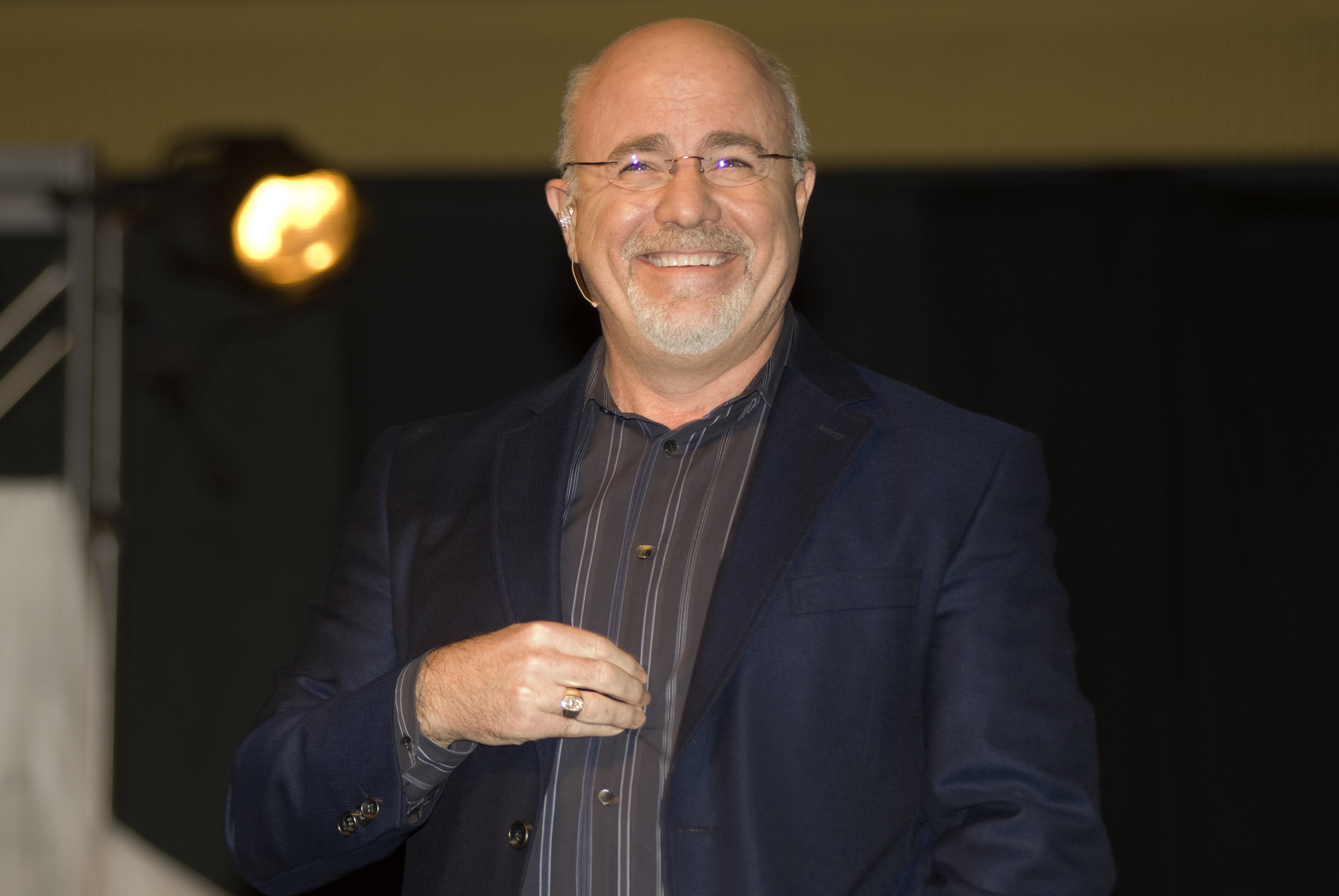
Few people expect a prominent financial commentator to push back on that conventional wisdom. Yet Dave Ramsey actively opposes the wait-until-70 strategy. His position: claim at 62, the earliest age allowed, and put those checks to work immediately. Below is the reasoning behind that view, and why it does not apply equally to everyone.
Longevity is a gamble Ramsey is unwilling to take
Ramsey’s core objection to waiting until 70 is rooted in mortality risk. As he has stated on his podcast, Social Security benefits stop the day you die. Filing at 70 only pays off if you live long enough to recoup the eight years of checks you never collected. Since no one can guarantee that outcome, Ramsey argues the prudent move is to start collecting at once.
The break-even math is real and worth understanding. A retiree who claims at 62 rather than 70 does not reach the crossover point (where cumulative lifetime benefits from the later claim exceed those from the earlier one) until roughly age 80 to 81. For someone who dies before that age, early claiming wins on a pure dollar basis. For someone who lives well into their 80s or 90s, waiting pays off substantially. SSA actuarial data from the 2026 Trustees Report puts average life expectancy for a 65-year-old at approximately 82.5 years for men and 85 years for women, meaning the statistical odds actually favor delaying for most retirees.
The opportunity cost argument, and its limits
Ramsey’s second argument centers on opportunity cost. By claiming at 62 and immediately investing every check into diversified mutual funds or index funds, he believes a retiree can build more wealth than the guaranteed benefit increase from waiting would produce. Delaying from full retirement age (currently 67 for most workers) to age 70 boosts the monthly benefit by roughly 8% for each year of delay, a guaranteed government-backed return. To put a dollar figure on that, the maximum monthly benefit at age 70 is $5,181 in 2026, compared to $2,969 at age 62 for a maximum earner. Ramsey’s theory is that a disciplined equity portfolio can outpace the guaranteed delay credits over time, though market results are never assured.
There is a practical obstacle buried in this strategy that Ramsey does not always address. The Social Security earnings test applies to anyone who claims before reaching full retirement age and continues to work. In 2026, for every $2 earned above $24,480, Social Security withholds $1 in benefits. Those withheld benefits are not lost permanently: the SSA credits them back as larger monthly checks once a retiree reaches full retirement age. Even so, the near-term cash-flow disruption can be significant. A retiree who wants to invest rather than spend an early benefit check must generally be fully out of the workforce at 62 and have enough in savings to cover living expenses without touching those Social Security payments. That is a financial position most 62-year-olds do not occupy.
What Ramsey’s advice often overlooks
For married couples, early filing by the higher-earning spouse carries an additional hidden cost. A surviving spouse is entitled to step into the larger of the two individual benefits after a partner dies. When the higher earner files at 62 and locks in a permanently reduced benefit (up to 30% below the full retirement age amount), that smaller number becomes the ceiling for the survivor’s benefit as well. Waiting longer to claim preserves a larger survivor benefit, which can matter enormously if one spouse outlives the other by a decade or more.
There is also the broader question of Social Security’s fiscal future. The 2026 Social Security Trustees Report, released in June 2026, projects that the OASI trust fund will be depleted in the fourth quarter of 2032, one quarter earlier than the prior year’s estimate. The trustees attributed the accelerated timeline to three converging forces: lower projected fertility rates, reduced immigration assumptions, and provisions in the One Big Beautiful Bill Act signed on July 4, 2025, which reduced income tax revenue flowing into the program. That law cut tax liability for Social Security beneficiaries through a new senior deduction of up to $6,000 per person (or $12,000 for married couples filing jointly), and the deduction is set to expire after 2028. According to the Bipartisan Policy Center, those provisions effectively strip roughly $169 billion in trust fund revenue from Social Security’s balance sheet over the coming decade. If Congress does not act by 2032, ongoing payroll tax revenue would cover only 78% of scheduled retirement benefits, translating to an average benefit cut of over $450 per month for the typical retiree. For those who delay to 70 to build the largest possible base benefit, even a 22% reduction would leave them collecting more in absolute dollars than an early claimer receiving the same percentage cut on a smaller base amount.
Looking ahead, the 2027 cost-of-living adjustment for Social Security is shaping up to be the largest in three years. AARP projects a 3.6% COLA for 2027, while the Senior Citizens League forecasts 3.5%. The SSA is scheduled to announce the official figure on October 14, 2026. A higher COLA delivers guaranteed, inflation-adjusted growth on a larger baseline check for those who delay. For a retiree who claimed at 62 and locked in a permanently reduced benefit, that same percentage increase applies to a smaller starting amount, widening the gap over time.
When Ramsey’s advice fits, and when it does not
Ramsey’s case for claiming at 62 works best for a specific type of retiree: someone in poor health or with a family history of shorter lifespans, someone who has enough savings and discipline to invest every check, and someone who is fully retired with no earned income that would trigger the earnings test. For that person, early claiming combined with disciplined investing can make solid financial sense.
For a retiree approaching 62 with little or no personal savings, the calculus flips entirely. Claiming at 62 under those conditions typically means spending the money out of necessity rather than investing it. Staying in the workforce until 70 and filing then, while leaving retirement accounts untouched to keep compounding, could result in meaningfully more total income over a long retirement. According to AARP, Social Security currently provides the majority of income for 43% of seniors, covering more than 25 million families. That reality makes the size of the monthly check a serious long-term variable. The average retirement benefit for a retired worker reached approximately $2,088 per month as of August 2026, a figure that underscores just how much the claiming age matters over a 20- or 30-year retirement.
The right filing age is personal. Health history, marital status, savings balances, expected longevity, and tolerance for market risk all matter. Rather than anchoring to any single expert’s rule, running the break-even numbers for your own benefit amounts and consulting a fiduciary financial advisor who can model your full retirement income picture is a worthwhile step before making a decision that cannot be undone.
Editor’s note: This article has been updated to reflect that the 2026 Social Security Trustees Report identified three drivers of the accelerated trust fund timeline (lower fertility, reduced immigration, and the One Big Beautiful Bill Act), not the legislation alone. The average retirement benefit figure has been refreshed to approximately $2,088 per month based on the SSA’s August 2026 Monthly Statistical Snapshot, and a section has been added noting that AARP and the Senior Citizens League project the 2027 COLA at 3.5% to 3.6%, with the official announcement scheduled for October 14, 2026. The average monthly benefit cut figure in the event of 2032 depletion has been revised to over $450 per month to more accurately reflect the 22% reduction applied to the average benefit.
Contact [email protected] for any questions or corrections.
Maurie Backman has more than a decade of experience writing about financial topics, including retirement, investing, Social Security, and real estate. Her work has appeared on sites that include The Motley Fool, USA Today, U.S. News & World Report, and Kiplinger.
Prior to becoming a full-time financial writer, Maurie worked in the financial industry trading distressed debt. She then changed course and spent a few years designing electronic toys. After a stint in content marketing and UX, she shifted back into writing and has since covered everything from the housing market to estate planning to Medicare.
When she's not busy writing, Maurie can be found hiking, walking her dogs, driving her kids to their various sports practices and games, and curling up with a good book. She cooks on occasion and bakes way too often.