As Trump Targets Credit Cards With 10% Black Swan Cap It’s Time To Look At Other Options
One of the most loathed antagonists among the works of William Shakespeare is his Shylock loan shark from The Merchant of Venice. While modern interpretations have focused more on his being a victim of anti-Semitism, Shylock’s loan shark activities were…


One of the most loathed antagonists among the works of William Shakespeare is his Shylock loan shark from The Merchant of Venice. While modern interpretations have focused more on his being a victim of anti-Semitism, Shylock’s loan shark activities were influenced by Shakespeare’s own father, John. John Shakespeare was a glovemaker, real estate speculator, and farmer, whose business dealings occasionally landed him in court with charges of usury. The legal limit in Stratford at the time was 10%, and John Shakespeare frequently charged 20%.
Compared to today’s Visa and MasterCard institutional bank issuers, John Shakespeare was a piker. The credit card companies routinely charge anywhere from 23% to 36%.
From 36% APR down to 10%?

During his 2024 campaign, President Trump added a proposal to cap “high interest rate rip offs” charged by credit card companies at 10%. Earlier in January 2026, he returned to this topic and has since proposed a one-year 10% cap. Despite pushback from the banking industry, a bipartisan bill in Congress called the 10 Percent Credit Card Interest Rate Cap Act was co-sponsored by Bernie Sanders (I-VT), Josh Hawley (R-MO), Kirsten Gillibrand (D-NY), and Jeff Merkley (D-OR) has been in the works since 2025, and it would last at least 5 years. Given the President’s spotlight on the issue, many expect the bill to accelerate its priority towards a vote in the House and then to the Senate, pursuant to ratification.
A Debt Reduction Opportunity
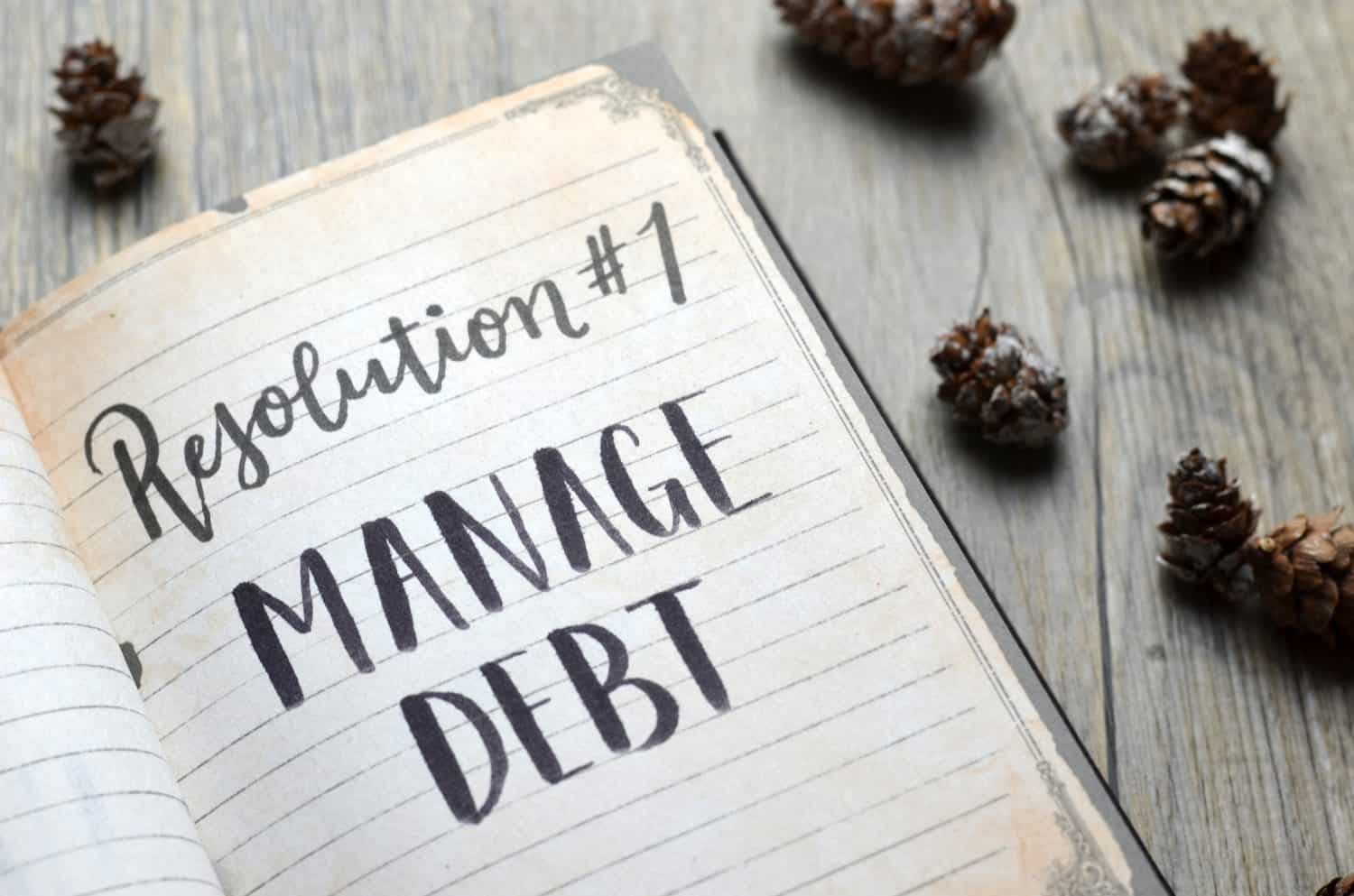
In either scenario, there is a good chance that a 10% interest rate cap on credit cards will go into effect. During this time, some may go on spending sprees, thinking that a capacity to handle the lower interest can liberate them from scrimping and saving. Wiser heads that have been caught in the debt spiral of credit card interest can take the opportunity to drastically reduce, if not eliminate their debt loads entirely.
For those earning enough to pay at least slightly more than their minimum balance per month, a 10% rate can represent a significant chance to whittle down the principal balance as well as interest. Accessing additional funds per month to augment this can serve as a force magnifier. If one has funds in savings, the following three (3) options might be worth consideration, depending on risk tolerance, available funds, and individual severity of debt overhang:
- High Yield Savings Accounts (HYSA)
- Credit Unions
- High-Yield Real Estate Investment Trusts (REITs)
High Yield Savings Accounts

A platform that combines safety, a decent APY% and instant liquidity is the High Yield Savings Account (HYSA). Available from a number of online banks as well as brick and mortar institutions, HYSAs offer yields anywhere from 3.3% to as high as 5%, rivaling those of bonds. They operate identically to regular savings accounts, and many of them include checking, alerts, and automatic features just like regular savings and checking accounts. They also boast the following attributes:
- Liquidity – While many HYSA have no minimum deposit, some HYSA may require a minimum floor deposit to earn an agreed upon highest yield. Otherwise, any amount above that level is fully liquid and can be withdrawn at the account owner’s discretion.
- Higher Yields – In general, compared to standard savings accounts, however, the HYSA yields can vary between 10X-20X higher.
- Equivalent Safety – HYSA are FDIC insured for up to $250,000. As a US government insurance company, FDIC protections are considered equivalent in safety to US Treasury bonds and notes.
- Compounding Interest – The compounding interest of a High Yield Savings Account works the same as compounding interest in a standard bank account. As a result, the principal balances of HYSAs are not affected by interest rate market conditions, apart from rate of compounding.
- Institutional Variety – High Yield Savings Accounts are available from a variety of well known institutions, such as Capital One and American Express, as well as lesser known ones that may only be available online. Nevertheless, the field is competitive, and obtaining attractive terms and higher yields can be conveniently comparison shopped online.
Credit Unions

Retirees and those who might need to access refinance and other banking services, such as car loans, insurance, and financial advisory at lower rates than most banks might want to take a look at credit unions.
Credit Unions operate similarly to traditional banks, but they have a number of foundational differences:
- Credit Unions are structured as not-for-profit co-ops owned by active members, whereas banks usually have shareholders.
- The goal of credit unions is to reinvest profits to negotiate better interest rates for its members, as opposed to banks’ objective of maximizing shareholder profits.
- Bank accounts are insured by FDIC, credit union accounts are insured by NCUA – both for $250,000.
- Credit Unions are only available to qualifying members, whereas banks are available to the general public.
- Banks generally charge higher rates and a greater variety of fees (late fees, overdraft fees, minimum balance fees, et al.) whereas credit unions generally pay higher interest rates on savings and charge lower interest rates on loans.
Annual APY of 5.0%, comparable to HYSA, can be had, and those that can satisfy membership requirements (which are unique to each credit union), may find a number of advantages over traditional banks that suit their needs.
High-Yield REITs

Real Estate Investment Trusts are traded like stocks, usually on the NYSE or NASDAQ. In order to access the capital markets, REITs that register with the SEC must pay 90% of profits to their shareholders. As many commercial and large housing complex REITs generate their income through monthly rent rolls, they more often than not pay monthly dividends. Some REITs, such as Orchid Island Capital Inc. (NYSE: ORC), invest in mortgage securities that pay these rent rolls and their profits are boosted by the lower overhead of not having to manage brick and mortar properties. In the case of ORC, for example, its yield at the time of this writing is 17.52%, sizable enough to take a big chunk of one’s credit card debt off the table under the 10% cap, depending on how much stock one can afford at $8.25 per share.
Contact [email protected] for any questions or corrections.
After 15 years on Wall Street with 7 of them as Director of Corporate and Municipal Bond Trading for a NYSE member firm, I started my own project and corporate finance consultancy. Much of the work involves writing business plans, presentations, white papers and marketing materials for companies seeking budgetary allocations for spinoffs and new initiatives or for raising capital for expansion or startup companies and entrepreneurs. On financial topics, I have been published under my own byline at The Motley Fool, 247wallst.com, DealFlow Events’ Healthcare Services Investment Newsletter and The Microcap Newsletter, among others. Additionally, I have done freelance ghostwriting writing and editing for several financial websites, such as Seeking Alpha and Shmoop Financial. I have also written and been published on a variety of other topics from music, audiophile sound and film to musical instrument history, martial arts, and current events. Publications include Copper Magazine, Fidelity (Germany), Blasting News, Inside Kung-Fu, and other periodicals.