Jim Cramer Defends Trump: “He Brings Down Prices”
For better or for worse, Mad Money’s Jim Cramer cannot be accused of being politically partisan. Since admitting that he only cares about policies that help stocks make money in 2017, he has been consistently non-partisan about politicians and only…


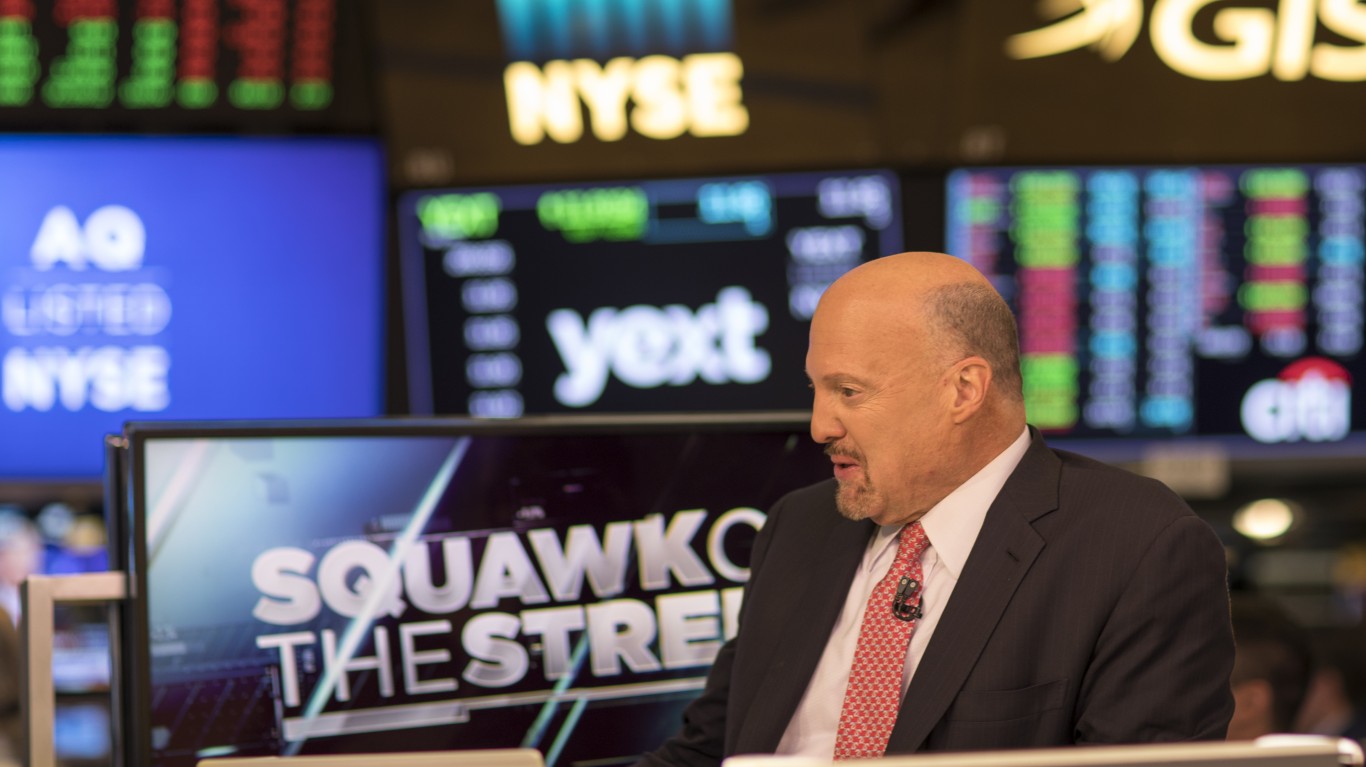
For better or for worse, Mad Money’s Jim Cramer cannot be accused of being politically partisan. Since admitting that he only cares about policies that help stocks make money in 2017, he has been consistently non-partisan about politicians and only critical about policies. In the case of President Trump, for example, Cramer has been supportive of measures like tax cuts and critical of tariffs. This is why Cramer took an unusual stance of defending President Trump on a recent Mad Money episode by exclaiming, “He brings down prices!” .
“He Brings Down Prices That Shouldn’t Come Down”
Cramer noted that after a turbulent week, the Dow soared up 589 points and the S&P 500 marked its best trading day in two months. Much of that turbulence was due to announcements of new policies, proposals, or social media posts from President Trump, and the market’s subsequent reactions.
Investor reactions have been mixed. A number of them feel that President Trump’s use of social media to address the American people directly and bypass the mainstream media news services leads to unpredictable market moves that have spooked investors away from trading. Others who follow the market and disapprove of the President’s tariff initiatives reiterate Financial Times columnist Robert Armstrong’s T.A.C.O. description, an acronym for “Trump Always Chickens Out”. Armstrong was referring to President Trump’s use of extreme leverage threats and warnings to negotiate issues with other nations, but ended up backing down at the end – to avoid rocking the market too much.
Cramer noted that although he himself criticized the tariffs early on, they have become a fact of life. The key to capitalizing on Trump policies is to watch for market overreactions, especially when fundamentals remain unchanged on companies that are facing unusual price selloffs.
Case in point: United Airlines
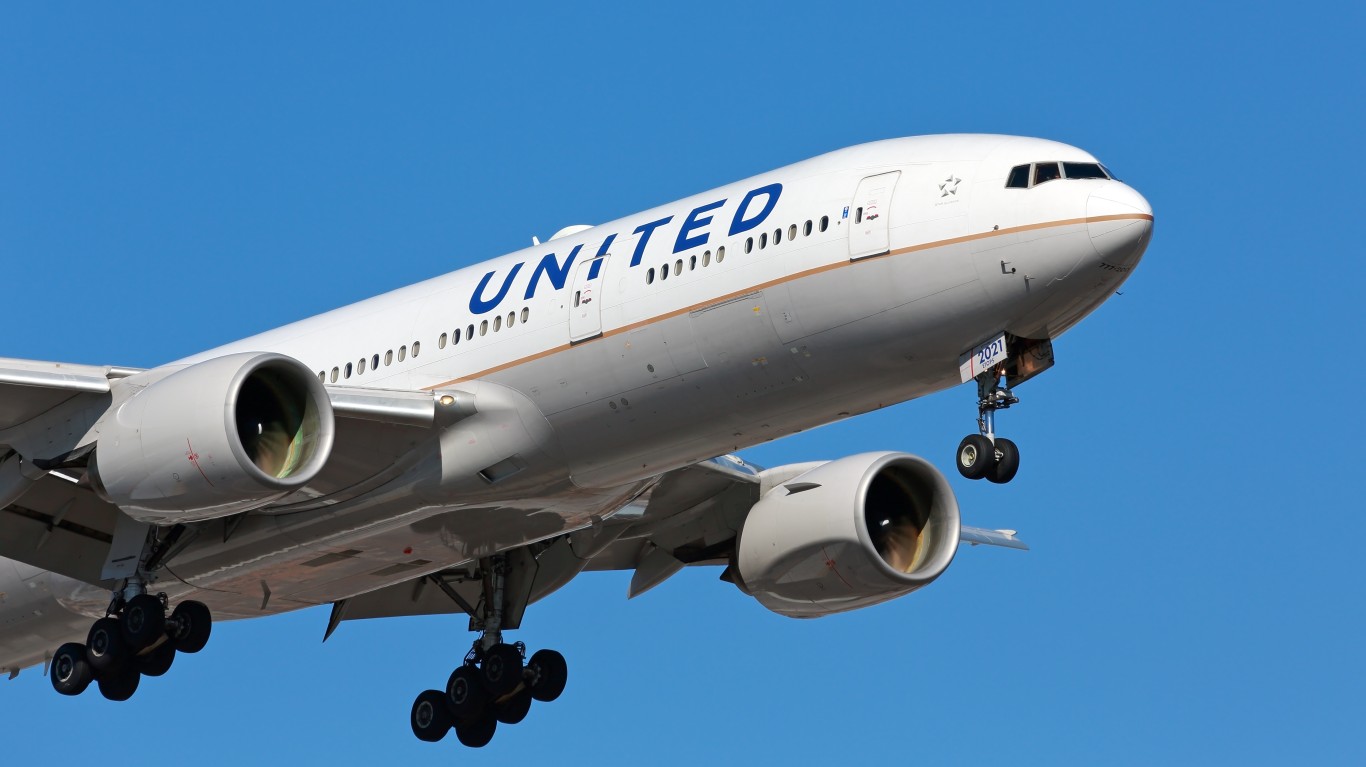
- 2025 reactions to tariffs on goods from China, Mexico, and Canada negatively impacted airline stocks over fears of reduced travel and subsequent business slowdowns.
- President Trump’s proposed 10% cap on Visa and MasterCard interest rates triggered a sell off of United stock over concerns on its impact to United Airlines’ revenues and its loyalty programs.
- Cramer thought the selloff was an overreaction, and was vindicated when its Q4 earnings were stronger than anticipated.
- “I know lots of people already feel like giving up because the President makes investing so difficult,” said Cramer. “I disagree. He makes trading hard, but he brings down prices that shouldn’t come down, as you can see from that great UAL print last night. Travel bull market is alive and well.”
As a general rule during the Trump administration’s tenure, Cramer advises investors to keep powder dry and cash on hand while keeping abreast of President Trump’s social media posts and press comments. Sudden market dips on big name stocks could present discounted buying opportunities.
Fighting WIthout Fighting

On earlier episodes concerning tariffs, Cramer noted that they do compel consumer companies to cut prices or be stuck with excess inventory. This was an early instance of his citing that tariff- created market volatility can present investment opportunities.
Unlike those who ascribe to the T.A.C.O. opinion or who think Trump has unduly spooked investors away from the market, Cramer seems to have either read the president’s Art of the Deal and Sun Tzu’s The Art of War, or has independently managed to decode the strategy behind the negotiation tactics.
Cramer has correctly surmised that in his second term, Trump is “far more comfortable taking the market down, not up,” which creates “plenty of good buying opportunities” for investors. Those who believe that Trump worries about the market dropping are not seeing the complete picture and are falling for the same ploys that Sun Tzu writes about: “The supreme Art of War is to subdue the enemy without fighting.”
The vast majority of previous US presidents were attorneys or municipal level politicians in their pre-POTUS occupations, with the exception of Donald Trump, who transformed his business career as a real estate developer and casino owner into that of a TV celebrity with his show, The Apprentice. He is a man who is transactional in almost everything he does, especially when dealing with adversaries.
In the case of Davos and his coyness about Greenland, which included the possibility of new tariffs on Denmark and the EU and even military invasion, Trump happily plays up the unpredictability of his approach by displaying unquestionable military superiority in moves like Operation Midnight Hammer in Iran or Operation Absolute Resolve in Venezuela. On the other hand, Trump has ended eight international wars and is the only US president since Carter to not start any new ones.
However, by playing up the intimidation factor while concurrently offering a very generous acquisition price for Greenland, Trump was able to accomplish his goal of getting NATO to get on board with the importance of US control of Greenland for the sake of North American and European security, and to offer Golden Dome military protection for the entire country.
So while the naysayers can call it a T.A.C.O. deal, Trump accomplishes his objective anyway, and without the need for any armed confrontation. Subduing the enemy without fighting.
Why Trump Policies Make Trading Harder But Profitable
Trump policies can frustrate traders and analysts who have grown accustomed to the predictability and news dissemination methodologies from past White House occupants. The first Trump term threw them some curveballs, but the second one is leaving them exasperated.
By refusing to go through the mainstream media channels like his predecessors, Trump prefers to address the American public directly, which irks the news agencies, who have been consistently partisan with nearly 90% negative news about him since 2015.
Additionally, the current Trump cabinet is not leaking info and cracking down harshly on anyone who does – unlike in the first term, where “anonymous sources” routinely leaked fuel for the 90% negative news to the press.
Like Cramer said, those traders and investors who have managed to tap into Trump’s tactics to interpret the broader strategy at work can make tremendous profits in the market – even when they experience some temproary volatility downturns. This is because the core reasons for their bullish runs remain intact until a new policy or strategy emerges. Some examples include:
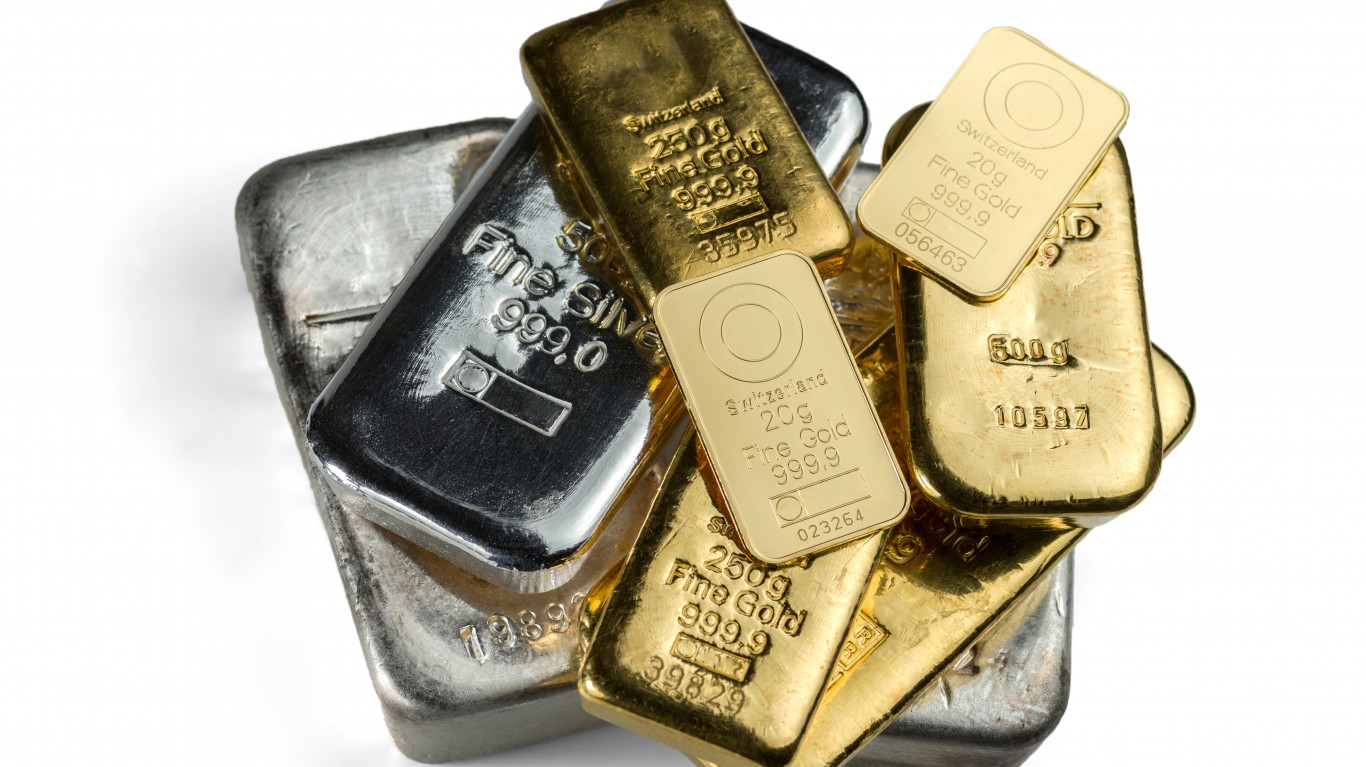
- The phenomenal bullish run on gold and silver that took off in 2025. This was easy to anticipate if one had listened to earlier campaign speeches when Trump proposed returning to the gold standard with a strategy engineered by economist Judy Shelton.
- Trump’s repeated comments on how Democrats have gutted the military and how it needs to be rebuilt as part of the “Make America Great Again” agenda gave sizable hints as to how defense and aerospace stocks would fare under his administration.
- The imposition of tariffs on nations supplying crucial and strategic technologies or products that were not currently being made in the US (China and Taiwan, for example), has led to companies like Taiwan Semiconductor to build plants in the US – not only for the benefit of US industry, but also as a way for Taiwan Semiconductor to survive as a business in the event of a Taiwan invasion by China.
Unless the fundamental reasons change – any downturns, such as with the pullback of silver and gold at the end of January – may be buying opportunities.
Contact [email protected] for any questions or corrections.
After 15 years on Wall Street with 7 of them as Director of Corporate and Municipal Bond Trading for a NYSE member firm, I started my own project and corporate finance consultancy. Much of the work involves writing business plans, presentations, white papers and marketing materials for companies seeking budgetary allocations for spinoffs and new initiatives or for raising capital for expansion or startup companies and entrepreneurs. On financial topics, I have been published under my own byline at The Motley Fool, 247wallst.com, DealFlow Events’ Healthcare Services Investment Newsletter and The Microcap Newsletter, among others. Additionally, I have done freelance ghostwriting writing and editing for several financial websites, such as Seeking Alpha and Shmoop Financial. I have also written and been published on a variety of other topics from music, audiophile sound and film to musical instrument history, martial arts, and current events. Publications include Copper Magazine, Fidelity (Germany), Blasting News, Inside Kung-Fu, and other periodicals.