Why Diversification via ETFs Is the Move for February
With investors selling stocks after perfectly “good” quarters due to high AI spending plans, it really feels like tech stocks can’t win in this climate. Perhaps that’s the danger of having hefty valuation multiples. But what’s the deal with software’s…

With investors selling stocks after perfectly “good” quarters due to high AI spending plans, it really feels like tech stocks can’t win in this climate. Perhaps that’s the danger of having hefty valuation multiples. But what’s the deal with software’s vicious implosion these past few weeks?
If AI is the cause of such software scares, shouldn’t the market be a bit more forgiving of the hefty capex of the mega-cap tech darlings within the Magnificent Seven? It just feels like that correction stocks were overdue for is finally panning out. And while things could get worse, especially for the seat-based Software as a Service (SaaS) companies, I do think that things are starting to get overblown.
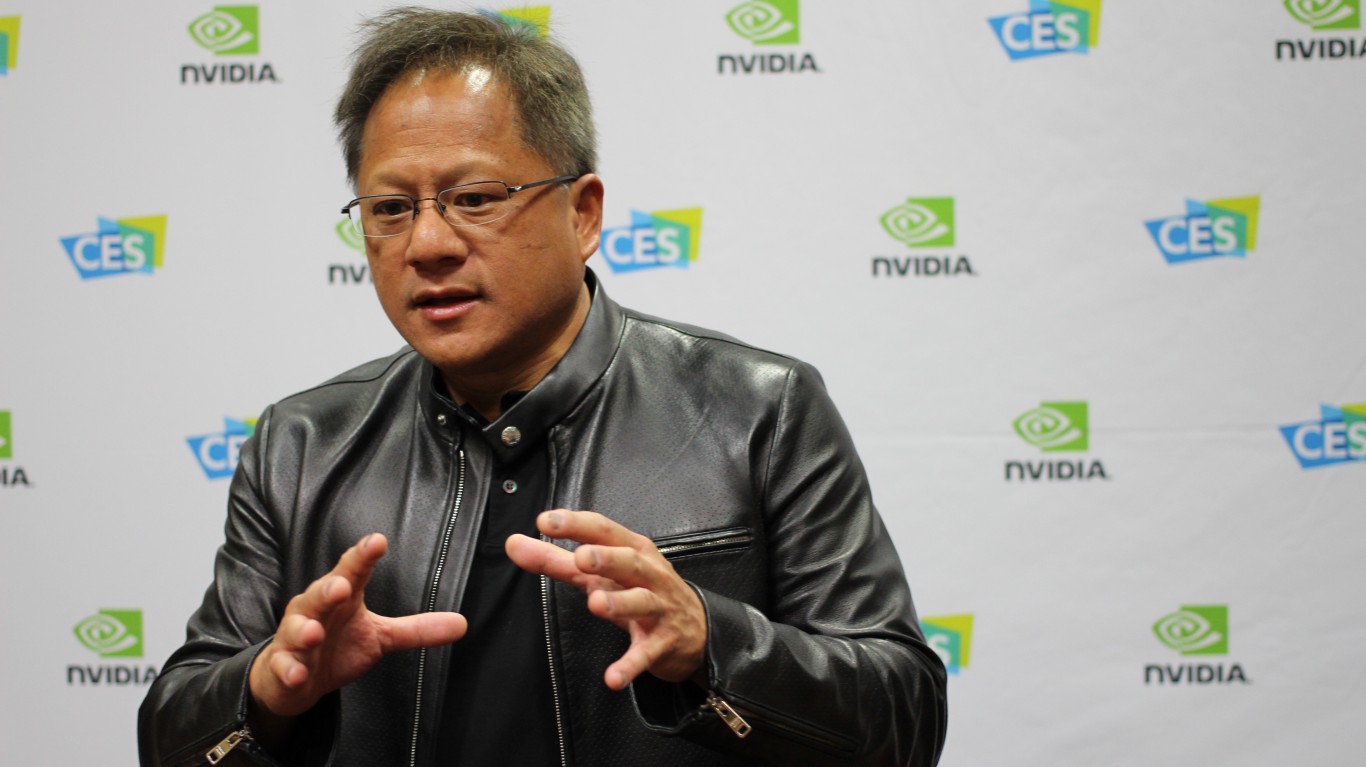
Even Jensen Huang, the top boss over at NVIDIA (NASDAQ:NVDA | NVDA Price Prediction), who couldn’t be more bullish on the AI revolution (partially because he supplies the GPUs), thinks it’s the “most illogical thing in the world” to think that AI would replace software. Undoubtedly, software may not be going the way of the Dodo bird anytime soon, as AI agents enter the mainstream, but there is lingering fear over what could happen in the future, especially given the pace of innovation we’ve witnessed in agentic AI of late.
Volatility Has Arrived — It Might Just Be an Appetizer
The agentic solutions aren’t just coming in fast; they’re shocking the world with their capabilities. And while there are certainly shortcomings in these early days, it’s quite worrisome to consider that this is the worst that such AI agents will ever be. In a way, we may have been dealt the biggest leap since the “ChatGPT moment.”
And perhaps there will be more similar moments to be had, as agents look to do more, perhaps with less. And while software will need to get up to speed with such innovations, I do think it’s quite the stretch to have a 40% to 60% implosion in share price over the disruptive potential of agents.
Of course, Jensen could be wrong, and agentic innovation may be moving faster than any of us expect. But, at the end of the day, I think investors, especially those overweighed in tech, should consider diversification as their first move. Of course, buying the dip could be met with a sharp bounce, but, at the same time, you could be dealt more of the pain. Perhaps a 30% drop in two weeks isn’t out of the cards as momentum to the downside accelerates.
Diversifying Away From Tech Might Be the Move
Indeed, diversification is the investment rule that many know, but few may actually follow, especially when tech and AI have a boom. Even for the passive indexers, one may not be well diversified across sectors, given that the weighting of tech has steadily risen over the years. One of my favorite ways to diversify across sectors is to load up on the sector ETFs. If you’re light on financials, utilities, materials, or energy, there’s an ETF for that. And it doesn’t cost much for admission.
At this juncture, I find the State Street Utilities Sector SPDR ETF (NYSEARCA: XLU) to be a quiet winner in the AI race. In essence, it’s a way to feast on the growth to be had as AI data center energy consumption strains the grid. But, at the same time, if the data centers go bust, the utilities probably won’t be all too upset about it. Since the lows of 2023, shares of the State Street Utilities Sector SPDR ETF have gained more than 50% with less volatility (0.78 beta) and more yield (2.7%) than the S&P.
While utility stocks won’t rocket once it comes time for the next leg higher in AI stocks (will investors forgive higher spend? Or will the returns justify the spend?), they seem like steady movers, whichever direction tech goes throughout the year. And for that reason, the ETF, alongside other low-beta sector ETFs, looks like a great addition to an underdiversified portfolio at this most volatile and anxious of moments for the tech sector.
Contact [email protected] for any questions or corrections.
Joey is a 24/7 Wall St. contributor and seasoned investment writer whose work can also be found in publications such as The Motley Fool and TipRanks. Holding a B.A.Sc in Computer Engineering from the University of British Columbia (UBC), Joey has leveraged his technical background to provide insightful stock analyses to readers.
Joey's investment philosophy is heavily influenced by Warren Buffett's value investing principles. As a dedicated Buffett disciple, Joey is committed to unearthing value in the tech sector and beyond.