Teradyne Stock Soars 66% in 2026 as AI Chip Testing Demand Surges
Teradyne (NASDAQ:TER | TER Price Prediction) is having a stellar start to 2026. The stock has surged 66.07% year-to-date, reaching $321.45. That’s more than four times the semiconductor sector benchmark’s 14.98% gain over the same period. Even more telling, Teradyne…

Teradyne (NASDAQ:TER | TER Price Prediction) is having a stellar start to 2026. The stock has surged 66.07% year-to-date, reaching $321.45. That’s more than four times the semiconductor sector benchmark’s 14.98% gain over the same period. Even more telling, Teradyne is now the second-best performing stock in the entire S&P 500. The only stock Teradyne’s trailing is Sandisk (Nasdaq: SNDK), which is up an astonishing 152.5%. The reason both stocks is rising is similar: booming demand for AI infrastructure.
Let’s take a deeper look at Teradyne’s incredible rally.
Earnings Ignite the Rally
The catalyst came on February 3, 2026, when Teradyne reported fourth-quarter results that blew past expectations. Revenue hit $1.08 billion, crushing the $983 million estimate and marking 44% year-over-year growth. Earnings per share of $1.80 easily topped the $1.38 consensus.
The stock jumped 18.44% in the week following earnings, reaching a 52-week high. That reaction triggered a wave of analyst upgrades, with 11 firms raising price targets. Susquehanna led the charge with a $335 target, while Stifel and UBS both went to $325.
AI Chip Testing Takes Center Stage
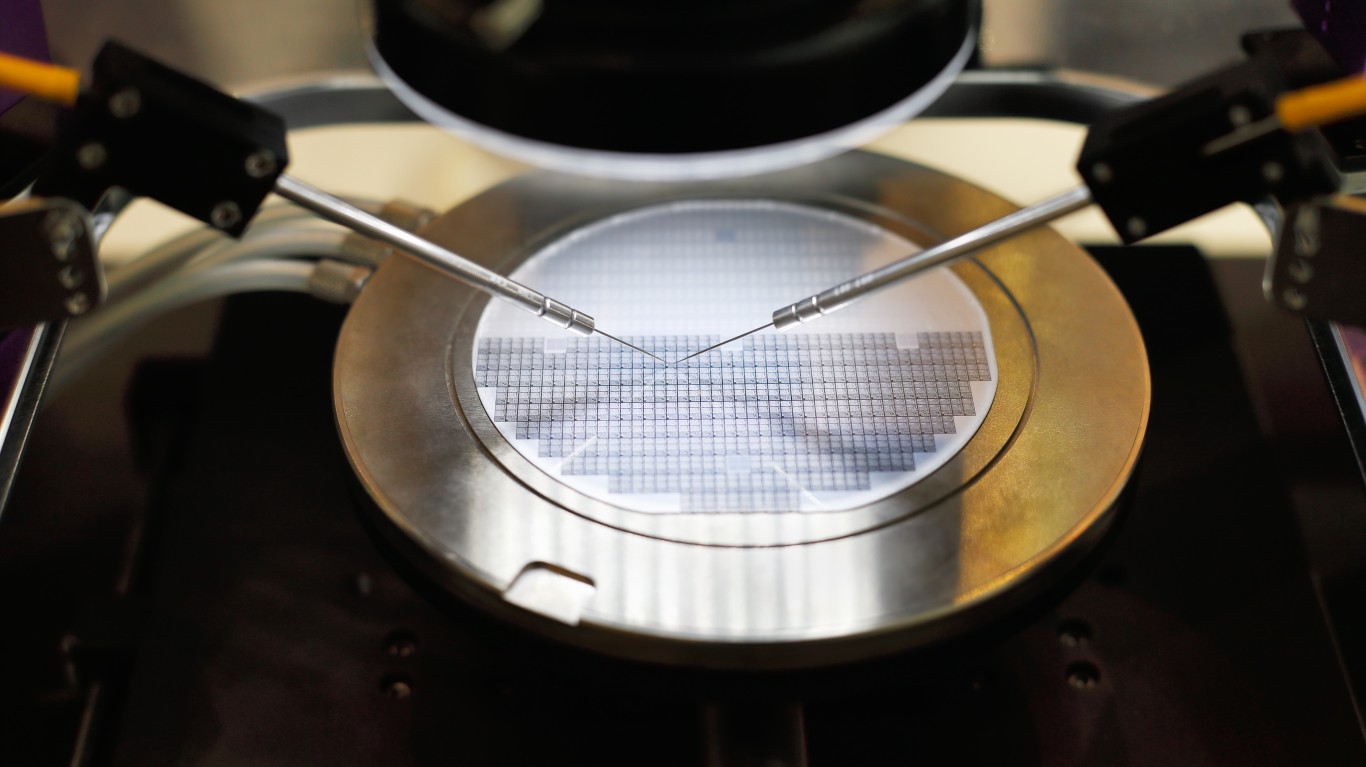
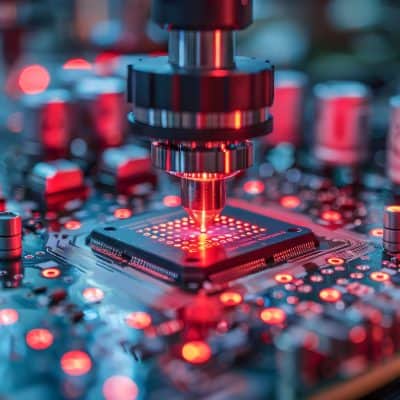
Teradyne’s business is simple: it makes automated test equipment for semiconductors. What’s changed is where the demand is coming from. CEO Greg Smith laid out the transformation on the earnings call: “In Q3, AI demand accounted for 40% to 50% of our revenue, and in Q4, it rose to over 60%. Looking ahead to Q1 of 2026, we anticipate that AI applications will drive upwards of 70% of our revenue.”
This isn’t just about testing more chips. It’s about testing the right chips. The company’s semiconductor test segment, which generated $883 million in Q4, is now heavily weighted toward compute and memory applications that power AI data centers. Smith noted that compute became the largest portion of revenue in 2025, experiencing 90% year-over-year growth.
The company is also making progress on merchant GPU testing, a market currently dominated by competitors. While Q1 guidance doesn’t include revenue from this segment, Smith expects “an impact more in the second half of 2026” as production qualifications are completed.
What’s Next for 2026
Management guided Q1 revenue to $1.15 billion to $1.25 billion, which would represent another record quarter. But there’s a catch. CFO Michelle Turner cautioned investors about “the lumpiness of this new sales pattern” tied to AI infrastructure buildouts. Smith added that the company expects “a 2 to 3 quarter surge that may lead to a shorter period of digestion afterward.”
The full-year picture is harder to pin down. Management expects 2026 sales to be front-half weighted, the inverse of 2025’s 40/60 split. The semiconductor test market could grow 20% to 40% in 2026, but visibility into the second half remains limited.
Teradyne’s rally reflects real business momentum driven by AI chip testing demand. The question is whether current levels, trading at a forward P/E of 53x, already price in that growth. If AI infrastructure spending sustains through the year, Teradyne’s positioned to capture it. If that spending moderates in the second half as management suggests, the stock’s recent gains may prove harder to justify.
Contact [email protected] for any questions or corrections.
Eric Bleeker, CFA has been investing for more than 20 years. He began his career working at Microsoft before joining Motley Fool, one of the largest publishers of financial research. In his 15 years at Motley Fool Eric served as the General Manager for Fool.com and led coverage in the Technology & Telecom sector. In addition, he was a featured columnist and has hosted dozens of investing seminars attended by more than a million total investors. Eric has more than 1,000 financial bylines to his name and has been featured in The Wall Street Journal, CNBC, Fox Business, and many other leading publications. He is currently focused on artificial intelligence investing and is a CFA Charterholoder.