




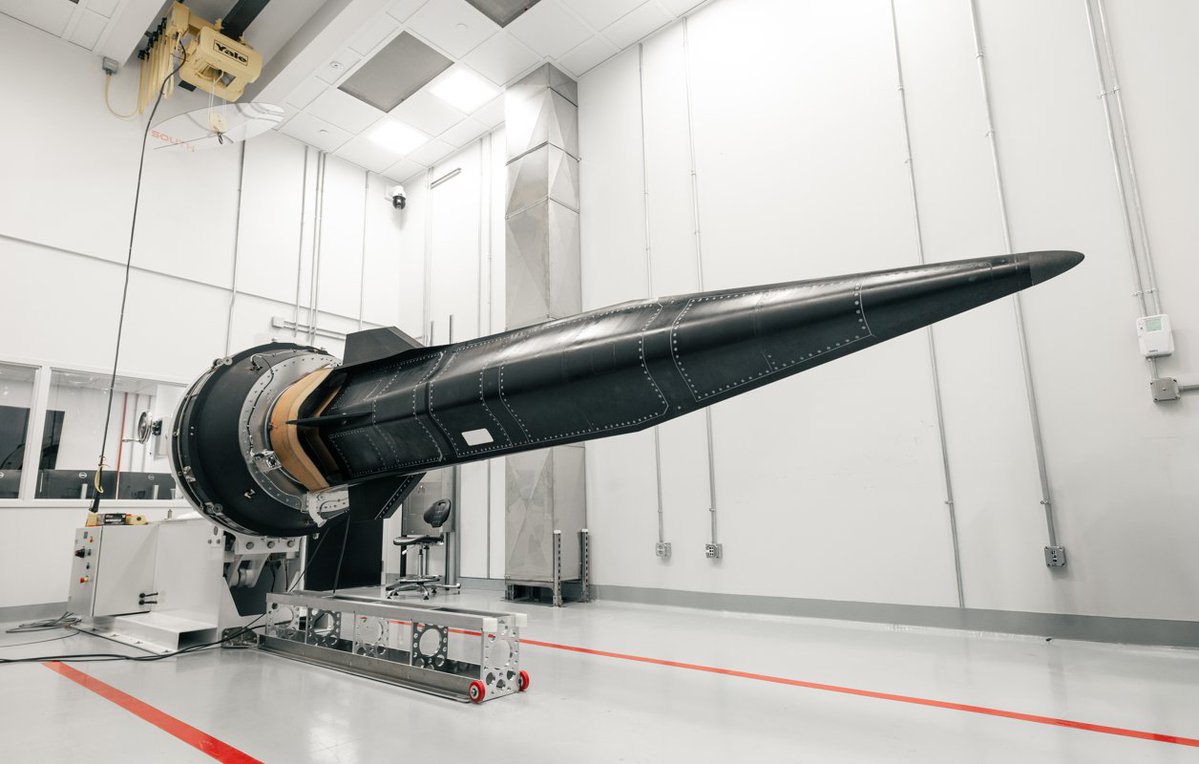
Rocket Lab (NASDAQ:RKLB | RKLB Price Prediction) is gearing up for an upcoming launch that underscores its growing role in U.S. defense and hypersonic technology testing. The space stock recently announced the Cassowary Vex mission — complete with the cheeky launch nickname “That’s Not A Knife” — is set to lift off no earlier than late February from Rocket Lab’s Wallops Island, Va., launch site.
This will be Rocket Lab’s fourth hypersonic test mission for the military in under six months, deploying the DART AE hypersonic demonstrator drone from Australia’s Hypersonix Launch Systems. The quick cadence of these flights shows how Rocket Lab is helping accelerate the U.S. military’s hypersonic capabilities, while quickly establishing its role as the defense industry’s go-to launch partner for next-generation technology.
More importantly, Rocket Lab is opening up defense work as a promising new revenue stream — potentially a profitable one — alongside its traditional satellite launches.
Inside the Hypersonic Launch
Rocket Lab is taking care of the entire launch for this test. They’re using their specialized HASTE rocket — a customized version of their workhorse Electron rocket — to boost the DART AE vehicle into a high-speed suborbital path, meaning it arcs up and comes back down without circling the Earth.
While the regular Electron rocket is built to carry smaller satellites into orbit — up to about 660 pounds to low Earth orbit — HASTE is tuned for something very different: screaming-fast speeds of up to Mach 20, or 20 times the speed of sound. It can also haul heavier payloads on these shorter suborbital hops, up to around 1,540 pounds.
The rocket has a tougher build to handle the extreme heat and forces of hypersonic speeds. This setup lets customers, such as government agencies and private companies, test their tech in real high-speed conditions repeatedly, without the huge cost of a full orbital mission. HASTE had its first flight back in June 2023, and it quickly became a favorite option for anyone needing to test hypersonic ideas in a realistic but affordable way.
rkl
What’s Different About This Drone
The star of the show is DART AE — short for Delta-Velocity Autonomous Reusable Test – Airframe Experiment — a sleek, 3D-built, self-piloting hypersonic test vehicle built by Hypersonix. It’s about 10 feet long, weighs around 660 pounds, and is designed to fly at Mach 7 — about 5,300 mph — for distances up to 620 miles.
What makes it special is its engine: the SPARTAN scramjet, which burns hydrogen fuel. Unlike traditional jet engines, a scramjet works best at very high speeds — it lights itself, can turn on and off multiple times for more flexible flight paths (not just a straight ballistic arc), and produces no carbon emissions. It starts working once the vehicle hits around Mach 5, after the rocket gives it that initial big push. It has movable control surfaces to steer at those blistering speeds, and it beams back live data throughout the flight.
Hypersonix designed it to be straightforward and reliable – with very few moving parts to reduce breakdowns — and versatile. It can hitch a ride on different kinds of boosters, too, like basic sounding rockets, guided ones, or even drops from aircraft, all to keep testing costs manageable.
Key Takeaway
For Rocket Lab, expanding into military hypersonic testing is more than a technical achievement — it’s a strategic move toward financial stability. While the company has successfully deployed hundreds of commercial payloads, profitability remains elusive amid scaling challenges and growing competition.
Defense contracts — particularly these high-value, reliable hypersonic missions — could provide steady revenue that can support ongoing innovation and growth. As hypersonic technology rises as a national security priority, Rocket Lab’s proven track record with HASTE positions it well for longer-term government partnerships.
This shift could help steady the space stock’s finances, strengthen investor confidence, and support sustained stock performance by tapping into substantial defense budgets. Rocket Lab’s stock has more than doubled in the past year, but is down 3% year-to-date. Solidifying its role as a go-to contractor for military purposes could ensure sustained profitability and allow its stock to rocket even higher.













 Top Gaining Stocks
 Top Losing Stocks