




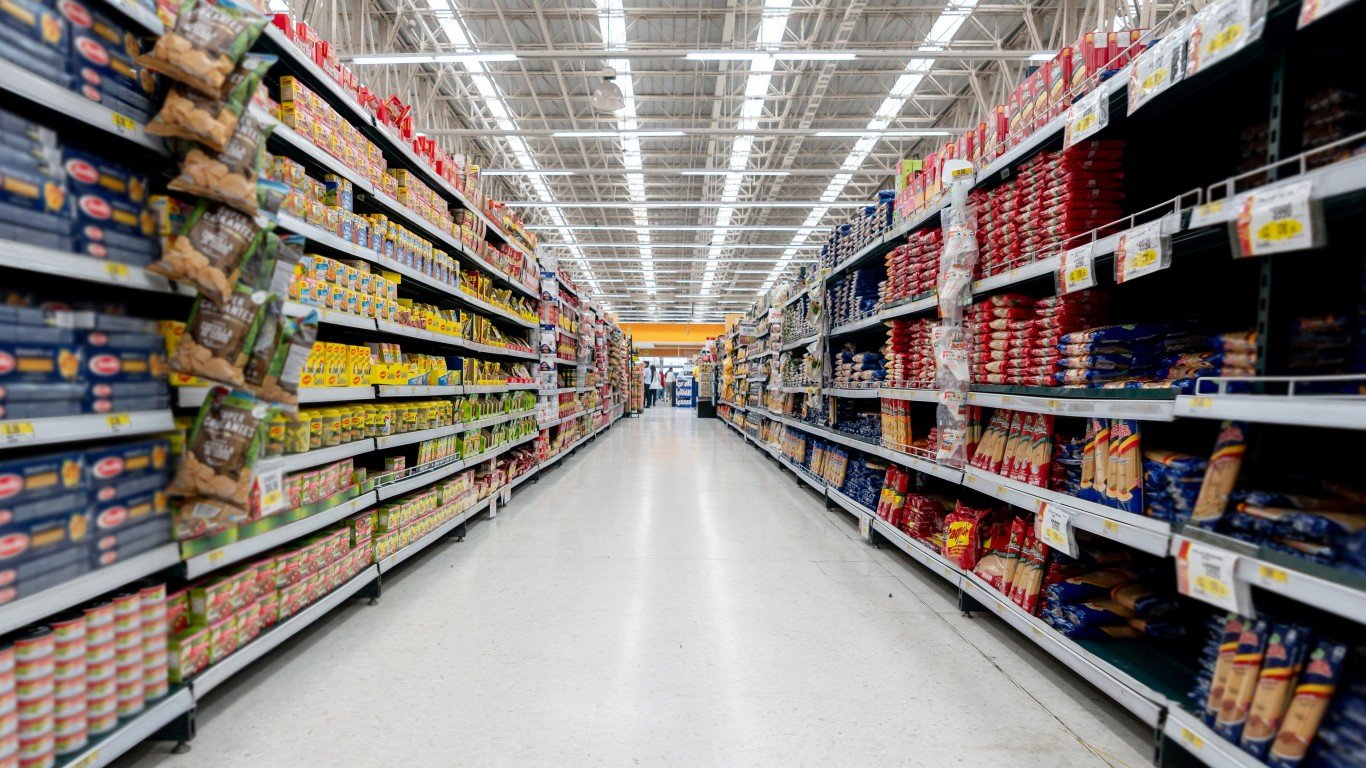
The consumer staples sector exists because people need to eat, clean, and maintain routines regardless of what the economy does. Consumer Staples Select Sector SPDR Fund (NYSEARCA:XLP) packages that defensive logic into a single ticker, concentrating 99.3% of its portfolio in companies that produce essentials like groceries, household goods, and beverages. With $16.2 billion in net assets and an 8 basis point expense ratio, it delivers broad sector exposure without meaningful cost drag. The fund’s return engine is straightforward: steady cash flows from brands consumers buy repeatedly, coupled with dividend income from mature companies that prioritize shareholder returns over aggressive reinvestment.
XLP fits portfolios seeking stability during economic uncertainty or market volatility. The fund’s 2.67% dividend yield and minimal 8% portfolio turnover reflect a buy-and-hold strategy designed for income generation rather than capital appreciation. This approach concentrates 28.73% of assets in three mega-cap names—Walmart (NYSE:WMT | WMT Price Prediction), Costco (NYSEARCA:COST), and Procter & Gamble (NYSE:PG)—that dominate their respective categories and generate predictable cash flows.
Consumer spending patterns validate this defensive positioning. Retail sales reached $735 billion in December 2025, growing 3.3% year-over-year even as consumer sentiment registered a pessimistic 52.9 reading. This disconnect shows consumers continue purchasing staples regardless of economic outlook, exactly the behavior XLP’s holdings depend on for revenue stability.
The fund has delivered on its defensive mandate through recent volatility, returning 15.2% year-to-date through February 13, 2026 and outpacing its 12.9% one-year return. This performance reflects how the fund’s largest holdings have capitalized on sector trends. Walmart drove meaningful gains with 20.2% year-to-date returns, demonstrating the strength of its omnichannel retail strategy. PepsiCo (NYSE:PEP) added 15.6% year-to-date, while Costco posted 18.3% year-to-date performance despite a 4.9% one-year decline. Procter & Gamble struggled relative to peers, reflecting operational challenges in the consumer goods segment.
The tradeoffs center on valuation and limited upside. Top holdings trade at premium multiples, with Walmart at 47x trailing earnings, Costco at 55x, and Procter & Gamble at 24x, reflecting the market’s willingness to pay for defensive characteristics. The fund’s concentrated top-10 holdings at 62.9% of assets mean performance depends heavily on a few names. Investors accept modest capital appreciation in exchange for downside protection and steady income, making XLP suitable for those prioritizing stability over growth.













 Top Gaining Stocks
 Top Losing Stocks
