





Six asset managers have rolled out U.S. spot XRP ETFs. Franklin Templeton’s XRPZ, Canary Capital’s XRPC, Bitwise’s XRP ETF, Grayscale’s GXRP, 21Shares’ TOXR, and REX-Osprey’s XRPR now hold roughly $1 billion in combined assets. These XRP (CRYPTO: XRP) funds went 35 consecutive trading days without a single outflow after launching in November 2025—a streak neither Bitcoin nor Ethereum ETFs matched in their early months.
But the ETF momentum has cooled. XRP ETFs peaked at $1.6 billion in January before roughly $500 million in outflows pulled assets back down. With the XRP price now around $1.40—down 30% in February alone—investors are looking for the next catalyst that could spark a bullish reversal, and a BlackRock’s XRP ETF could be it.
BlackRock’s Bitcoin ETF (IBIT) alone holds over $54 billion in assets, making it the dominant force in crypto ETFs. Many believe the $10 trillion asset manager entering XRP could reshape the token’s institutional profile entirely. So why hasn’t BlackRock filed yet?
Why BlackRock Hasn’t Filed an XRP ETF Yet

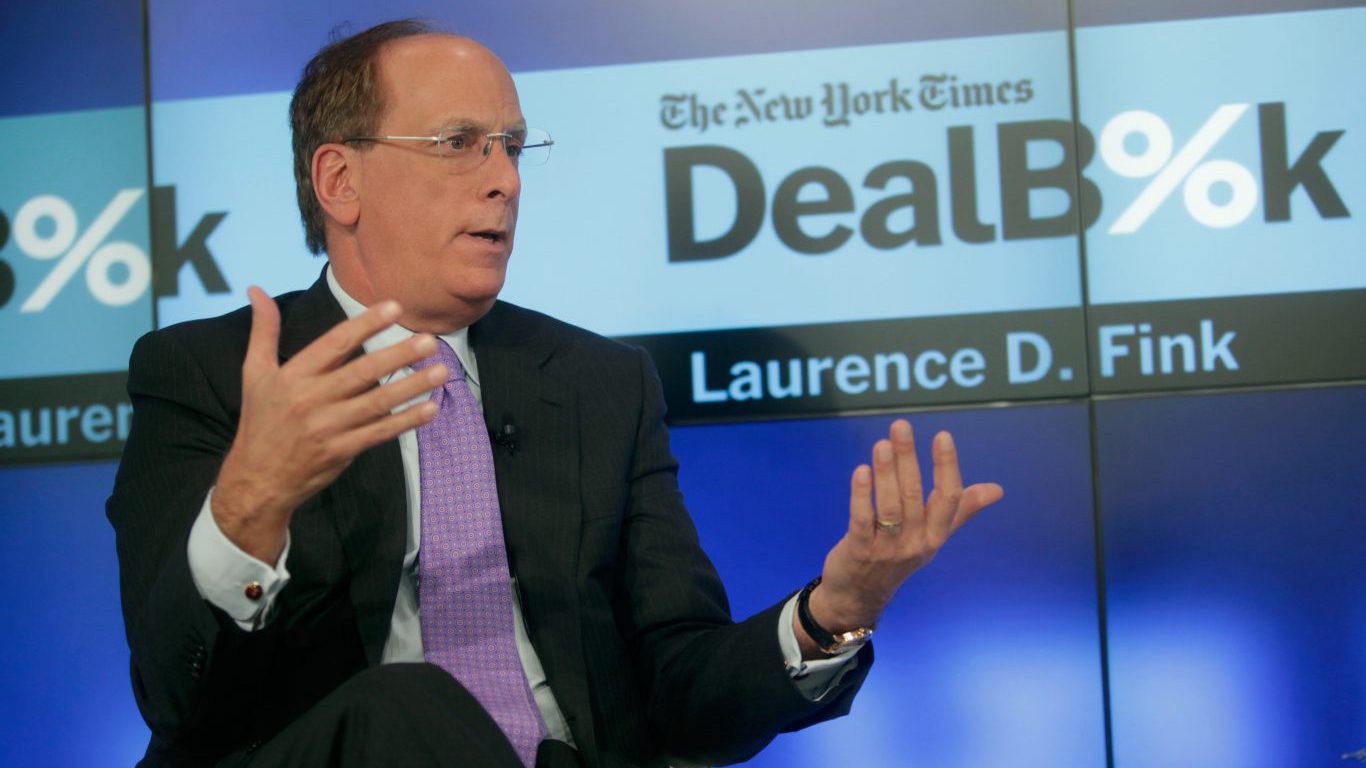
BlackRock doesn’t chase new markets, but usually waits for them to prove themselves. The firm’s Bitcoin ETF (IBIT) launched in January 2024 only after years of institutional demand had built up. IBIT crossed $1 billion in assets within its first week and hit $80 billion in just 374 days—the fastest any ETF has ever reached that level. Larry Fink, BlackRock’s CEO, called it the fastest-growing ETF in the history of ETFs.
But that success didn’t come from conviction alone—it came from real client demand. As Canary Capital CEO Steven McClurg explained in a January 2026 interview, “The reason they launched Bitcoin ETFs is simple—enough institutions were asking for them.”
BlackRock’s head of digital assets, Robbie Mitchnick, outlined the firm’s framework in September 2025. Before launching any crypto ETF, BlackRock evaluates five factors: client demand, market capitalization, liquidity, maturity, and portfolio fit—with client demand weighing heaviest.
XRP checks several of those boxes as it ranks as the fourth-largest non-stablecoin cryptocurrency with a market cap above $80 billion, with the SEC lawsuit resolved in August 2025, confirming its non-security status on secondary markets. But demand from BlackRock’s core client base—pensions, endowments, insurance companies, and sovereign wealth funds—hasn’t crossed the firm’s internal threshold.
These institutions move slowly, often waiting for early entrants to prove a market works before allocating capital. BlackRock wants to see Franklin Templeton, Grayscale, and Bitwise deliver consistent results with XRP before committing its own resources. With $11 trillion under management, a misstep on a niche product could dent the firm’s reputation far more than a missed opportunity.
What Would Trigger a BlackRock XRP ETF Filing
McClurg expects BlackRock to file for a spot XRP ETF by late 2026 or early 2027 if current trends continue—but several specific signals could accelerate that timeline.
XRP ETF Assets Need to Triple
Combined XRP ETF assets peaked at $1.6 billion in January 2026 before settling around $1 billion. If that figure climbs to $3 billion or higher, it would signal demand strong enough to justify a BlackRock entry. McClurg noted that BlackRock watches market cap and demand closely—if existing XRP ETFs triple their current size, the commercial case becomes harder to ignore.
A Rival Filing Would Force BlackRock’s Hand
BlackRock rarely moves first, but it doesn’t like moving last either. Invesco has already filed for a Solana ETF, signaling that large asset managers are expanding beyond Bitcoin and Ethereum. McClurg pointed out that Fidelity and Franklin Templeton are already in the crypto ETF race. “It’s not going to be a whole lot longer before BlackRock,” he said. If Fidelity or another major rival files for a spot XRP ETF, competitive pressure could accelerate BlackRock’s timeline.
Pension Funds and Endowments Would Be the Green Light
The clearest trigger would be explicit demand from BlackRock’s client base. If state pension systems, university endowments, or sovereign wealth funds begin adding XRP to approved asset classes, BlackRock would have all the justification it needs.
Ripple’s Stablecoin Is Already in BlackRock’s Ecosystem
Ripple’s stablecoin RLUSD has already crossed $1.5 billion in market cap, with reserves custodied by BNY Mellon and monthly attestations by Deloitte. More importantly, BlackRock’s tokenized treasury fund BUIDL now uses RLUSD as collateral, allowing investors to swap fund shares for RLUSD on-chain.
The integration signals BlackRock is already comfortable with Ripple’s infrastructure—even if it hasn’t filed for an XRP ETF yet. If RLUSD continues scaling into institutional payment rails, the distance between BlackRock and an XRP ETF filing shrinks considerably.
What a BlackRock Filing Would Mean for XRP
A BlackRock XRP ETF filing would fundamentally change how institutional capital accesses XRP regardless of where the price sits when it happens.
Aladdin Would Open the Institutional Pipeline
BlackRock’s Aladdin platform connects over $21 trillion in institutional assets, including pensions, insurers, endowments, and sovereign wealth funds. These allocators don’t buy crypto on exchanges but through systems like Aladdin. A BlackRock XRP ETF would plug XRP directly into that infrastructure, opening a channel that Franklin Templeton and Grayscale simply can’t match. The current XRP ETF complex holds roughly $1 billion, but with BlackRock’s distribution network, it could multiply that figure several times over within a year.
The IBIT Precedent
Bitcoin offers the clearest comparison to XRP. BlackRock’s IBIT gathered $54 billion in assets and helped push Bitcoin to new all-time highs in 2025. XRP’s market cap is roughly one-tenth of Bitcoin’s, so the proportional impact would be smaller—but the mechanism is the same. ETF inflows lock up supply, reduce exchange liquidity, and create structural buying pressure that spot markets alone can’t generate.
What Analysts Expect
Standard Chartered originally projected XRP could reach $8 by late 2026, assuming $4-8 billion in ETF inflows. That forecast has since been revised down to $2.80 amid ETF outflows and macro headwinds—but the bank raised its 2030 target to $28, signaling long-term conviction remains intact. The key variable is whether a heavyweight like BlackRock enters the market. If it does, the supply dynamics that drove Bitcoin’s ETF rally could repeat on a smaller scale with XRP.
Will BlackRock File for an XRP ETF?
A BlackRock spot XRP ETF would be a milestone for institutional adoption, but it’s not imminent. McClurg’s late 2026 or early 2027 forecast reflects the realistic timeline: BlackRock moves when the market proves itself.
For a BlackRock XRP ETF to become reality, XRP ETF assets need to climb toward $3 billion to demonstrate sustained demand. A competitor filing—Fidelity, Invesco, or another major rival—would create pressure BlackRock can’t ignore. And if pension funds or sovereign wealth funds start adding XRP to approved asset classes, it could be the green light.
The infrastructure is already closer than most realize. BlackRock’s tokenized treasury fund BUIDL uses Ripple’s RLUSD stablecoin as collateral, signaling the firm is comfortable with Ripple’s ecosystem even without an ETF filing. The relationship could shorten the path from “watching” to “filing” if XRP demand accelerates. Whether that happens in late 2026, 2027, or later depends entirely on whether institutional demand grows loud enough to force the move.
















 Top Gaining Stocks
 Top Losing Stocks
