Will XRP Finally Break Past $5 by 2026?
Regulatory chaos kept XRP stuck in neutral for years. Now the picture’s completely different. Ripple’s building real partnerships with massive global players, and XRP (CRYPTO: XRP) is back on traders’ radar screens. The past year brought something crypto hasn’t seen…

This post may contain links from our sponsors and affiliates, and Flywheel Publishing may receive compensation for actions taken through them.

Regulatory chaos kept XRP stuck in neutral for years. Now the picture’s completely different. Ripple’s building real partnerships with massive global players, and XRP (CRYPTO: XRP) is back on traders’ radar screens.
The past year brought something crypto hasn’t seen much of lately: actual progress. Strategic deals got signed, institutions started paying attention, and regulators backed off a bit. Now investors want to know if XRP can finally crack $5 in 2026, as the setup looks better than it has in a long time.
XRP Price Performance Over the Last Six Months
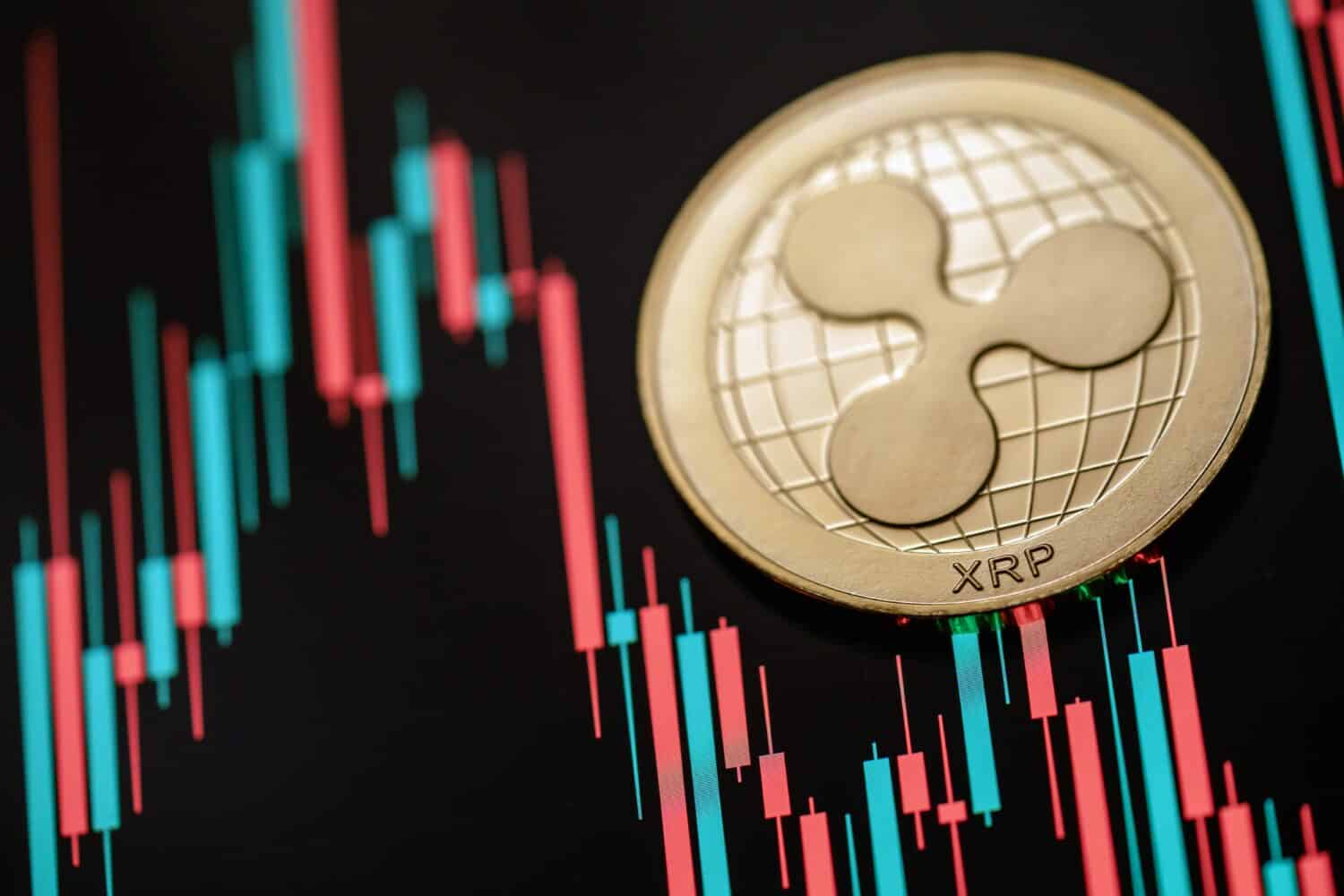
XRP was on a wild ride in August. The token hit $3.66 back then, riding a wave of optimism that had traders excited about altcoins again. Institutions were buying, retail was jumping back in, and everything looked bullish.
Then reality hit. Profit-takers showed up first, locking in gains after the August peak. Trading volume started dropping off, the broader crypto market lost steam, and XRP couldn’t hold the highs.
September brought the first real damage. XRP slipped below $3.00 and kept sliding. Then a crypto flash crash in mid-October smashed through support at $2.70, then $2.50. Every time XRP tried to bounce, sellers showed up at those same levels and pushed it back down.
But what matters is that XRP’s still up 312% over the past year. The six-month chart looks rough, but the annual return tells a different story about long-term momentum.
Drivers Pushing XRP Toward $5 in 2026
Several big developments are lining up for 2026. Each one changes the game for XRP in different ways.
Mastercard Just Partnered With Ripple for Stablecoin Settlements
Ripple announced a partnership with Mastercard, Gemini, and WebBank at the Swell 2025 conference. They’re piloting RLUSD stablecoin settlements on the XRP Ledger for real credit card transactions.
WebBank is a regulated U.S. bank, and Mastercard is one of the biggest payment networks on earth. They’re going to settle actual Mastercard transactions using a stablecoin on a public blockchain. That’s never happened before at this scale.
RLUSD launched back in December 2024 under New York’s Trust Charter rules. It’s already circulating over $1 billion. The stablecoin connects traditional banking to blockchain speed and efficiency. Mastercard’s involvement gives it legitimacy that most crypto projects can only dream about.
Think about what this changes: credit card settlements that normally take one to three days now happen almost instantly on XRPL. Banks and merchants get their money faster. Costs drop. XRP becomes the asset moving liquidity through these systems, and institutions are paying attention.
Ripple Raised $500 Million at a $40 Billion Valuation
Big money just bet big on Ripple. The company closed a $500 million funding round led by Fortress Investment Group and affiliates of Citadel Securities. Pantera Capital, Galaxy Digital, Brevan Howard, and Marshall Wace all jumped in too.
Ripple didn’t need the cash, as their balance sheet was already strong. They took the money anyway because they’re planning to scale aggressively into custody services, stablecoins, and corporate treasury management. All of it runs on XRPL.
The timing matches up with friendlier U.S. crypto regulations under the GENIUS Act. Ripple’s positioning RLUSD as a top-tier stablecoin. It’s already cracked the top 11 by market cap. More stablecoin volume on XRPL means more transactions, which means more demand for XRP as the bridge asset.
The $40 billion valuation tells you what Wall Street thinks about where this is headed.
Ripple’s Buying Up Financial Infrastructure Companies
Ripple’s not just building technology anymore. They’re buying entire businesses. The company spent $1.25 billion on Hidden Road, a non-bank prime broker. They dropped another $1 billion on GTreasury, an enterprise treasury platform. Those are the two biggest deals, but Ripple’s made six acquisitions total over the past two years. They’re assembling a complete financial technology stack: trading, settlement, custody, treasury management. The whole thing.
This matters for XRP because it expands the use cases. XRP isn’t just for cross-border payments anymore, as it’s becoming the liquidity layer for multiple financial applications across Ripple’s growing ecosystem.
CEO Brad Garlinghouse keeps pointing to Ripple’s numbers: more than $95 billion in transactions processed to date, showing that the network is expanding at a serious scale.
Franklin Templeton’s Moving Forward With an XRP ETF
Franklin Templeton just filed an amended S-1 for a spot XRP ETF. The revisions clean up technical language and get the filing ready for approval. Market watchers think it could get the green light before November ends.
An approved XRP ETF changes everything. Institutional investors get regulated, easy access to XRP through traditional brokerage accounts. No crypto wallets or exchange headaches, as investors can just buy the ETF like any other fund.
Look at what spot Bitcoin ETFs did for BTC. Billions of dollars flooded in, and the Bitcoin price hit new all-time highs. XRP could follow the same playbook if Franklin Templeton gets approval.
Can XRP Actually Hit $5 Next Year?
A lot has to go right for XRP to reach $5 in 2026, but the pieces are starting to line up.
Bullish Case
If the Mastercard partnership scales beyond the pilot phase and RLUSD settlement volumes grow substantially, XRP becomes infrastructure for real payment flows. Add in Franklin Templeton’s ETF getting approved and institutional money starts flowing in through traditional channels. Ripple keeps making strategic acquisitions that expand XRPL’s reach into custody and treasury management. Under these conditions, XRP could trade between $5.50 and $6.50 by late 2026. The key is sustained institutional adoption, not just another retail hype cycle.
Base Case
Most likely, Ripple’s progress continues but adoption curves stay gradual. Partnerships get announced but take quarters or years to scale meaningfully. RLUSD volume grows but doesn’t explode overnight. The ETF eventually gets approved but doesn’t trigger the massive inflows bulls are expecting. XRP probably trades in a range between $3.50 and $4.50 through most of 2026, with occasional volatility around news events. Not spectacular, but decent for long-term holders who bought under $2.
The $5 target is achievable if institutional demand materializes and Ripple executes on these partnerships. But crypto markets have a habit of disappointing even when fundamentals look solid.
Bearish Case
Regulatory headwinds could resurface and slow everything down. The Franklin Templeton ETF might get delayed or face rejection. RLUSD adoption could stall if banks stick with existing settlement systems. Competing blockchains like Stellar or Algorand could capture market share that Ripple expects to own. If macro conditions deteriorate and the broader crypto market enters another extended bear phase, XRP could drop to $1.80-$2.30. The 312% yearly gain would evaporate fast in that environment.
Contact [email protected] for any questions or corrections.
Sam Daodu is a crypto analyst who's spent nearly a decade making blockchain understandable—no easy task when most whitepapers read like fever dreams. He writes for 24/7 Wall St., covering Bitcoin, altcoins, and crypto market analysis for investors. Before crypto, he was a tech writer (back when explaining "the cloud" was peak innovation). Since 2018, he's written for CoinTelegraph, Yahoo Finance, The Block, Cryptonews, Zypto, Rain, and more—basically anywhere people want crypto news without the headache. Sam runs MacLabs Marketing, a content agency for crypto brands tired of sounding like AI wrote their website. He also publishes free crypto education on his site for Web3 enthusiasts who think "gas fees" is a typo. When he's not writing or staring at charts, Sam's either: - Watching anime (currently convinced One Piece has better tokenomics than most altcoins) - At the gym sculpting himself into a Greek god - Listening to the music your mum warned you only bad boys listen to Connect: LinkedIn | Email | MacLabs Marketing