The AI Conversation ETF That’s Outpacing the Nasdaq Right Now
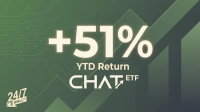
While the Nasdaq-100 has slipped 1.14% so far in 2026, the Roundhill Generative AI & Technology ETF has put up an 8.36% gain year-to-date through February 27. That gap is worth understanding, because the forces driving it are not guaranteed…

This post may contain links from our sponsors and affiliates, and Flywheel Publishing may receive compensation for actions taken through them.

While the Nasdaq-100 has slipped 1.14% so far in 2026, the Roundhill Generative AI & Technology ETF has put up an 8.36% gain year-to-date through February 27. That gap is worth understanding, because the forces driving it are not guaranteed to hold.
Roundhill Generative AI & Technology ETF (NYSEARCA:CHAT) launched in May 2023 to solve a specific problem: most broad tech ETFs give investors AI exposure as a side effect, not a purpose. CHAT targets the entire generative AI value chain directly, from chip designers like Nvidia (NASDAQ:NVDA | NVDA Price Prediction) and Advanced Micro Devices (NASDAQ:AMD) to cloud platforms like Alphabet (NASDAQ:GOOGL) and Microsoft (NASDAQ:MSFT), to memory suppliers like SK Hynix and Samsung. Nearly 50% of the portfolio sits in Information Technology, with another 13% in Communication Services. The fund manages roughly $1 billion in assets and carries a 0.75% expense ratio, reasonable for an actively managed thematic fund.
The Macro Signal That Matters Most: Hyperscaler Capex Commitments
The single biggest macro driver for CHAT is the pace of AI infrastructure spending by major cloud providers. Consensus estimates put 2026 hyperscaler capital expenditure at roughly $527 billion, a figure that flows directly into the revenue lines of CHAT’s top holdings across chips, networking, and data center hardware. When that spending accelerates, companies like Nvidia, Broadcom, and Arista Networks tend to see earnings estimates revised upward, lifting the fund.
The place to track this is quarterly earnings calls from Amazon, Microsoft, Alphabet, and Meta, where management teams update capex guidance. Any meaningful downward revision would ripple across CHAT’s holdings faster than almost any other macro event. Corporate infrastructure budgets are a more direct lever for this fund than Fed policy or jobs data.
The ETF-Specific Factor: Active Management and China Exposure
CHAT’s active management lets Roundhill shift the portfolio as the AI landscape evolves, a genuine edge over passive AI indexes. But it also means the holdings file matters more than it would for an index ETF. About 30% of the portfolio sits in international and ADR positions, with meaningful exposure to Chinese AI names including Alibaba, Tencent, Baidu, and iFlyTek. Geopolitical friction or regulatory action targeting Chinese technology companies could pressure a meaningful portion of the fund without touching the Nasdaq at all.
A post from r/investing captured a tension many CHAT holders are wrestling with: “In 2025, I tracked 2 ETFs that I have, alongside the individual top 12 holdings of each, and the difference in value is staggering.” Active management cuts both ways.
Hyperscaler capex guidance and Roundhill’s China exposure are the two variables analysts are watching most closely as key drivers of the fund’s performance relative to the Nasdaq. Either shifting materially would likely affect the gap between the two.
Contact [email protected] for any questions or corrections.
I am a long time investor and student of business, and believe finding good companies that can become great investments is the best game on earth. After 20 years of writing and researching the public markets it is clear that individuals have never had more tools and information to take control of their financial lives. From ETFs and $0 commissions to cryptos and prediction markets there has never been a greater democratization of access to investing.
I write to help people understand the investments available to them so they can make the best choice for their portfolio, whether they're starting out or looking for income in retirement.