





For decades, workers displaced by technology in traditional industries — coal miners, factory hands, truck drivers — were lectured with the same smug refrain: “Learn to code.” The promise was simple: as automation phased out old-economy jobs, higher-paying tech roles would absorb them. Retrain, relocate, repeat.
Yet reality has delivered an ironic reversal. AI shop Anthropic just released an early warning system showing computer programmers face the highest risk of displacement, with 75% of positions exposed to replacement. The very coders once touted as saviors are now the most vulnerable, manual labor one of the least.
This reversal explains the brutal “SaaS-pocalypse” hammering software stocks like ServiceNow (NYSE:NOW), Atlassian (NASDAQ:TEAM), and Salesforce (NYSE:CRM). Their seat-based models — charging per human user — lose relevance when AI agents replicate entire workflows without needing logins, dashboards, or subscriptions. Here’s why you should still avoid their stocks today.
ServiceNow (NOW)
ServiceNow built an empire on automating enterprise busywork. Its cloud platform orchestrates IT service management, HR requests, customer support tickets, and custom workflows. Companies pay by the seat: every analyst, technician, or manager accessing the system generates recurring revenue.
The model thrived because humans still handled the nuance of incidents, approvals, and escalations. AI changes that equation overnight. Generative tools already draft responses, route tickets, and resolve routine issues autonomously. Anthropic’s own Claude powers much of the coding and task automation that once required ServiceNow customizers — precisely the 75% of programmers exposed. ServiceNow is down 19% year-to-date and 41% off its highs as investors priced in AI agents competing directly in IT service management.
ServiceNow has countered with Now Assist and generative AI features, hoping to stay indispensable. Yet these additions risk accelerating the platform’s irrelevance: customers may soon run lightweight AI agents inside — or instead of — full ServiceNow instances. Shifting to consumption-based pricing could preserve some revenue, but it invites margin compression and competition from cheaper, purpose-built AI agents.
The odds of ServiceNow fending off AI encroachment seem low, though the company’s size helps. Still, seat erosion in a world of abundant AI labor looks more structural, not cyclical.
Atlassian (TEAM)
Atlassian sits even closer to the bullseye. Its Jira, Confluence, and Bitbucket form the nervous system of modern software teams — tracking tasks, documenting code, and coordinating releases. Its revenue flows from per-user licenses sold to developers, product managers, and scrum masters. When AI handles the bulk of coding, testing, and even task assignment, the need for human-heavy project tooling collapses. AI agents can auto-generate backlogs, assign stories, flag blockers, and update Confluence pages without human intervention.
The same programmers flagged at 75% exposure by Anthropic are the very users paying Atlassian’s bills. Early 2026 brought a savage 35% drop in the stock as the market connected the dots: fewer coders, fewer seats, less revenue.
Atlassian has layered on “Atlassian Intelligence” to embed AI inside Jira and Confluence. That’s helpful to augment its service, but it does not solve the fundamental problem: if AI performs the work, why license seats for oversight? Open-source alternatives and AI-native project tools already nibble at the edges. Atlassian’s dev-centric DNA, once a strength, now marks it as prime disruption fodder. Its platform’s value was coordination among humans, but AI coordination doesn’t need a handler.
Salesforce (CRM)
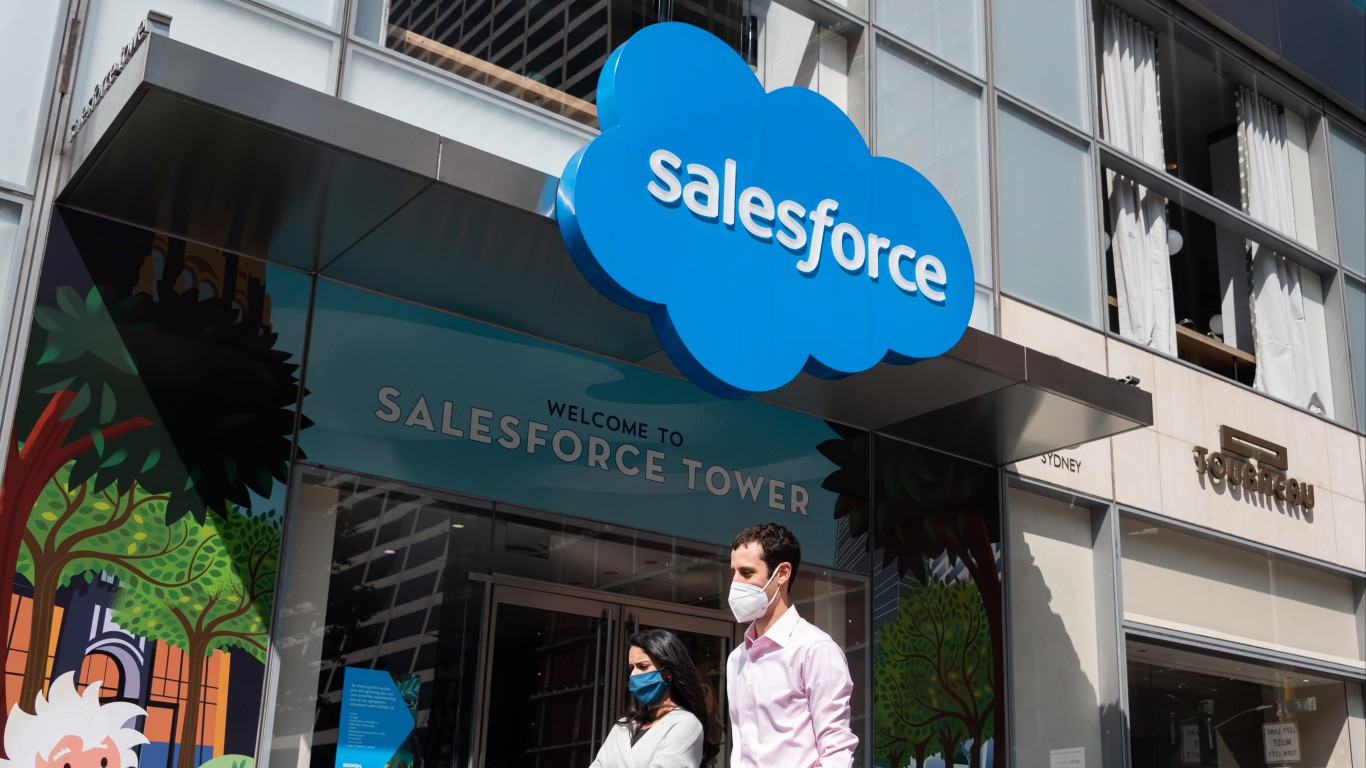
Salesforce crowns the vulnerable trio. Its CRM platform tracks leads, pipelines, customer interactions, and service cases across sales, marketing, and support teams — again, priced by seats. Every rep logging calls, every service agent updating cases, every marketer segmenting lists adds to the subscription tally. AI agents now replicate these exact motions: autonomous lead qualification, conversation logging, objection handling, and support resolution. Tools like Agentforce (Salesforce’s own AI push) illustrate the irony – customers may soon prefer pure AI agents over expensive human teams.
The 2026 rout has shaved 24% from Salesforce’s stock as Wall Street realized headcount reduction equals seat destruction.
Salesforce touts Einstein and Agentforce as the solution, positioning itself as the AI layer on top of customer data. Data moats and enterprise lock-in provide real near-term protection. Yet the seat-growth era is ending; analysts openly discuss the need for consumption or outcome-based pricing or face cannibalization.
Salesforce’s scale offers the best fighting chance among the three, yet even here the odds of fully fending off AI encroachment are dicey. The platform’s genius was organizing human customer work, but AI performs that work without needing to be organized.















 Top Gaining Stocks

 Top Losing Stocks