5 Companies Quietly Eating Tesla’s Lunch in 2026, and One Is Already Winning
For the better part of the last decade, Tesla (NASDAQ:TSLA) was the undisputed king of the EV market with the technology, brand, charging network, and effectively no competition worth naming. That era is now mostly over as the company posted…


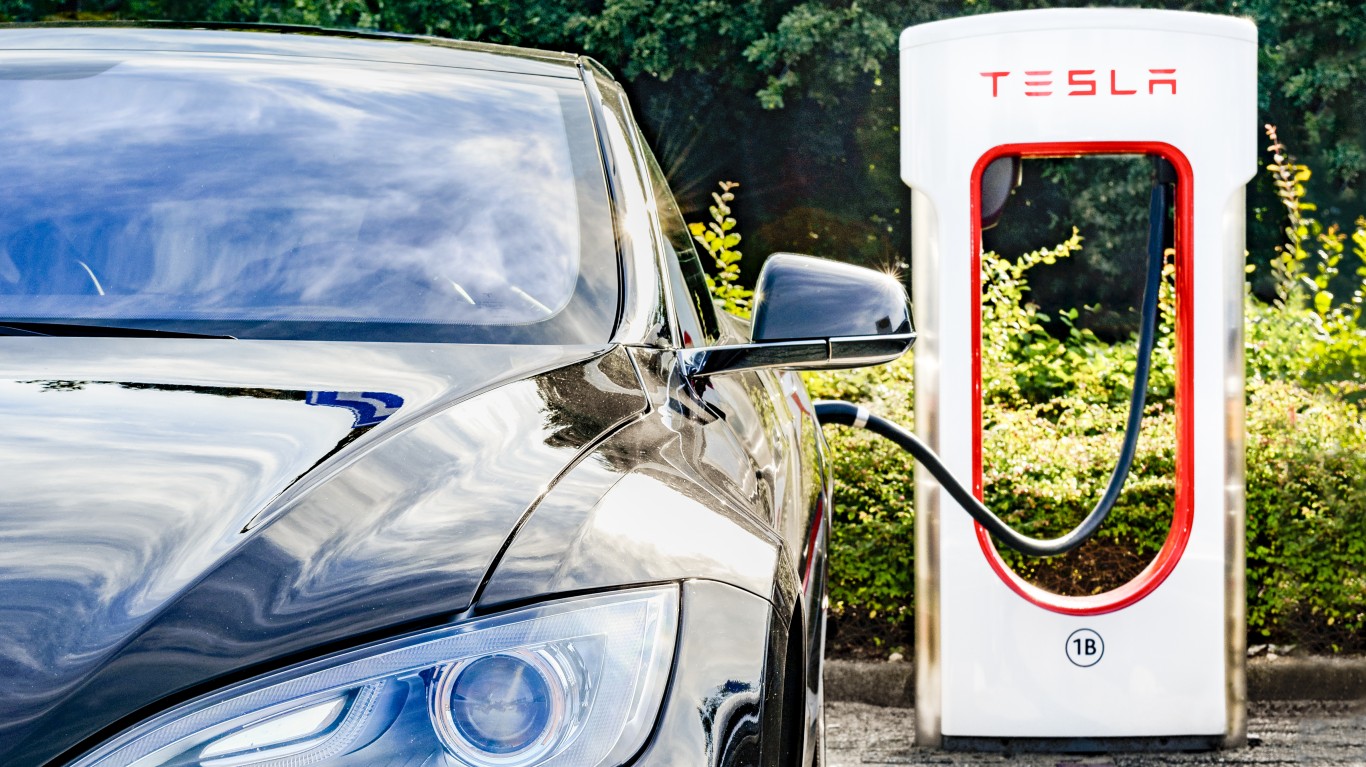
For the better part of the last decade, Tesla (NASDAQ:TSLA | TSLA Price Prediction | TSLA Price Prediction) was the undisputed king of the EV market, with the technology, the brand, the charging network, and effectively no competition worth naming. That era is now mostly over. Tesla posted its second consecutive year of declining deliveries in 2025, down roughly 9% to 1.64 million vehicles, while the broader global EV market grew 26% to 20.5 million units sold. The company that once defined electric vehicles is now losing ground to competitors shipping fresher products, at lower prices, in more segments, and in more countries.
Tesla’s problem is not just competition but also stagnation. The company still generates roughly 97% of its volume from the Model 3 and Model Y, both of which were designed years ago. Chinese automakers, meanwhile, are releasing new platforms and models at the pace of smartphone refresh cycles, and premium challengers like Lucid (NASDAQ:LCID) are bringing technology to market that matches and in some areas exceeds Tesla’s best work.
In the EV landscape, 2026 looks nothing like 2022, and the companies on this list are a big reason why. One of them is already making a compelling case for the crown.
The Moat Is Gone, and These Five EV Names Are Pouring Through
Tesla’s competitive advantage has long rested on execution speed and vertical integration. In 2026, that advantage is all but neutralized by rivals who build their own batteries, design their own chips, write their own autonomous driving software, and undercut Tesla on price while often matching it on range and performance. The companies below are not just imitating Tesla. They are writing a new playbook for the EV space.
BYD: The One Already Winning
BYD (OTC:BYDDF) did not just overtake Tesla in 2025. It buried the gap. The company sold 2.26 million pure-electric vehicles last year, a 28% increase against Tesla’s 1.64 million. Including plug-in hybrids, BYD moved 4.55 million vehicles in total, while international sales surpassed one million units for the first time, up roughly 150% year over year. BYD’s vertical integration, covering batteries, semiconductors, and most major components, gives it a cost structure that no Western automaker can match.
BYD’s dominance is accelerating into 2026, with analysts at Citigroup estimating an overseas sales target of 1.5 to 1.6 million units, supported by plants already operational in Thailand, Brazil, and Hungary and a five-minute fast-charging platform now rolling into Europe. Its lineup spans everything from the roughly $10,000 Seagull to luxury sedans, covering price points Tesla does not even attempt to compete in.
Revenue through the first nine months of 2025 hit approximately $80 billion, and the only real pressure on BYD is coming from other Chinese brands, not from Tesla. When your biggest competitive threat is domestic and not the company you just dethroned, the power shift is real.
Lucid Group
Lucid is doing exactly what Tesla did a decade ago: starting at the top and working down. The Lucid Air still holds the EPA range record among production EVs, and the Gravity SUV is ramping production with an $80,000 starting price that positions it squarely against the Model X.
Fourth-quarter 2025 revenue came in at $522.7 million, up 123% year over year, and full-year revenue reached $1.35 billion. Lucid delivered 15,841 vehicles in 2025, up 55%, and is guiding for production of 25,000 to 27,000 units in 2026. The real challenge to Tesla arrives later in 2026, when Lucid launches its midsize crossover SUV, priced around $50,000 and built on a cost-optimized platform designed to compete directly with the Model Y.
Lucid enters that fight from a position of financial stability, with $4.6 billion in total liquidity backed by Saudi Arabia’s Public Investment Fund. The company is also partnering with Uber and Nuro to deploy 20,000 autonomous Lucid vehicles as robotaxis. Cash burn remains a concern and profitability is not yet in sight, but class-leading technology and a well-funded roadmap give Lucid more runway than most EV startups have enjoyed.
Geely Automobile
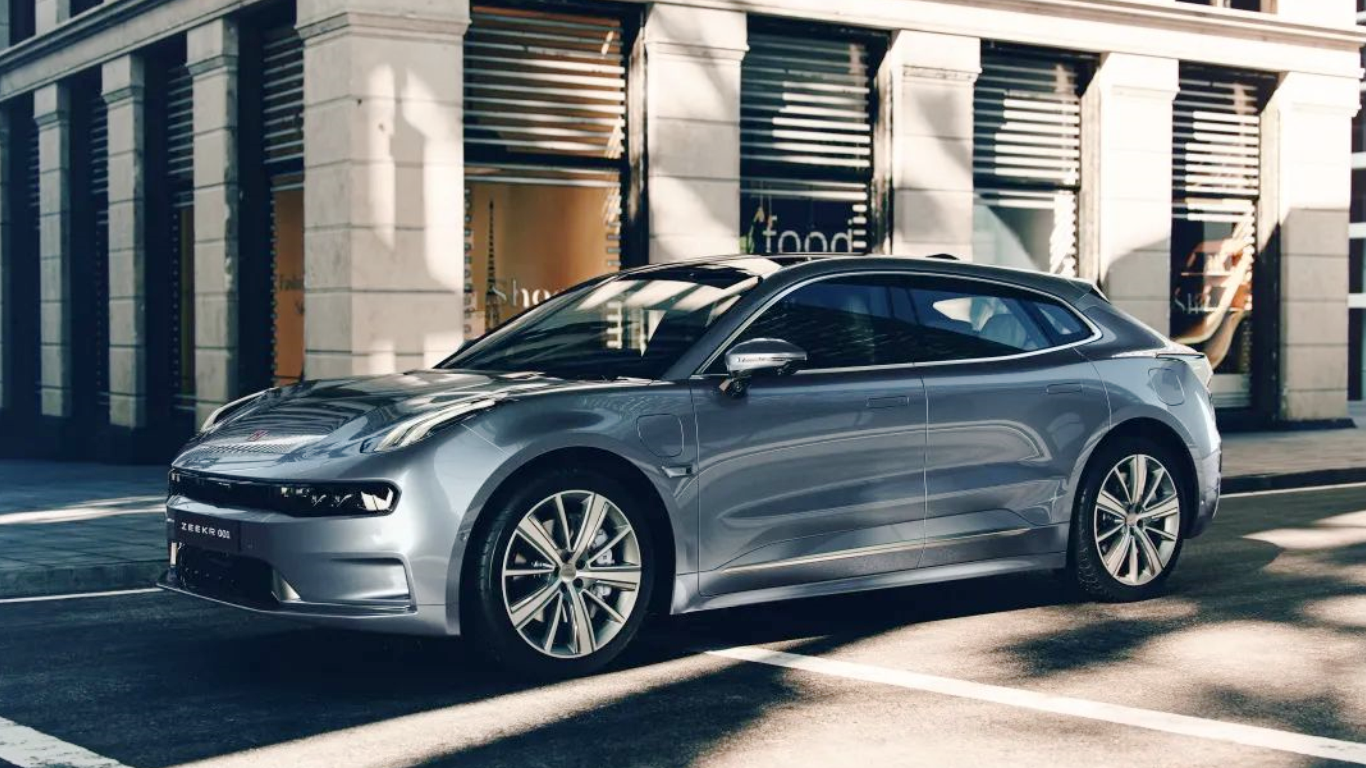
Geely (OTC:GELYF) attacks Tesla from every direction through a portfolio that includes Zeekr for premium electric, Lynk & Co for tech-forward hybrids, and the Geely Galaxy lineup for high-volume electrification. The company sold 3.02 million vehicles in 2025, up 39% year over year, while new energy vehicle sales surged 90% to 1.69 million units.
In early 2026, Geely surpassed BYD in domestic Chinese sales for two consecutive months, the first time that had happened since 2022, driven by models like the Xingyuan, which became China’s best-selling pure-electric vehicle in 2025.
Tesla’s China sales slipped to roughly 4.9% market share through 2025. Geely, by contrast, climbed to roughly 12% of the NEV market and overtook Volkswagen as the country’s second-largest automaker overall. Its Zeekr brand grew 84% through early 2026, offering premium technology, performance, and interiors that make the Model S feel dated. Geely’s 2026 target is 3.45 million total vehicles with 2.22 million NEVs, a roughly 32% increase.
Xiaomi
Xiaomi (OTC:XIACY) has done what most observers thought impossible: a smartphone company built a genuinely competitive EV from scratch and scaled it to 411,082 deliveries in its first full calendar year of operation. The SU7 sedan, priced starting at roughly $33,000, competes directly with the Tesla Model 3 and outsold it in several months in China during 2025. Notably, the EV division achieved its first quarterly profit in Q3 2025, a milestone most young EV brands take years to reach.
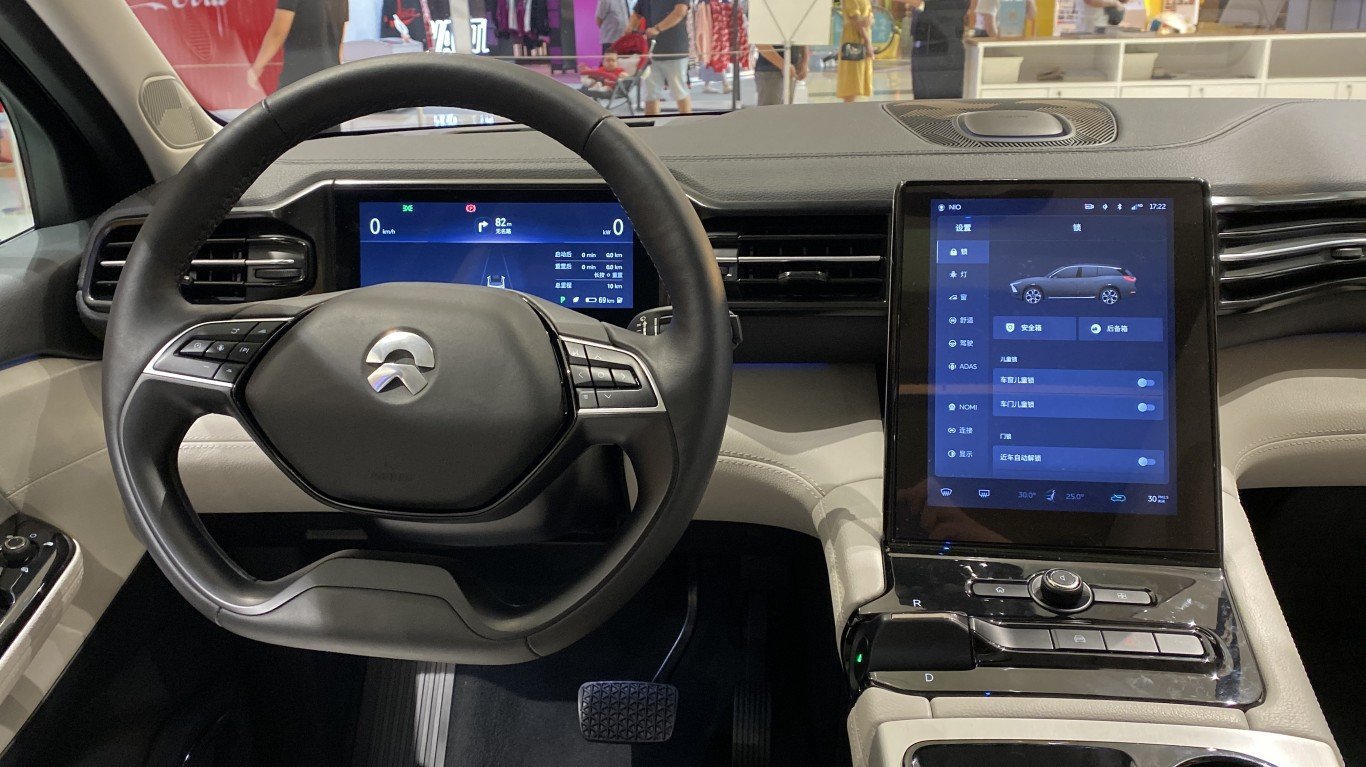
The YU7 SUV, launched mid-2025, targets the Model Y, and by December, Xiaomi’s monthly deliveries topped 50,000 units for the first time. The company is targeting 550,000 deliveries in 2026 with four new models planned, including its first extended-range vehicles. What makes Xiaomi dangerous is that it is not just a car company. It is an ecosystem company. The same platform that runs Xiaomi phones, smart home devices, and wearables now extends into its vehicles, creating a seamless user experience that Tesla’s aging infotainment system cannot easily match.
CEO Lei Jun has confirmed that Xiaomi will not sell cars outside China until 2027, but the company is already testing vehicles in Germany to meet European safety standards. When that global expansion begins, the combination of brand loyalty and aggressive pricing could reshape any market it enters.
XPeng
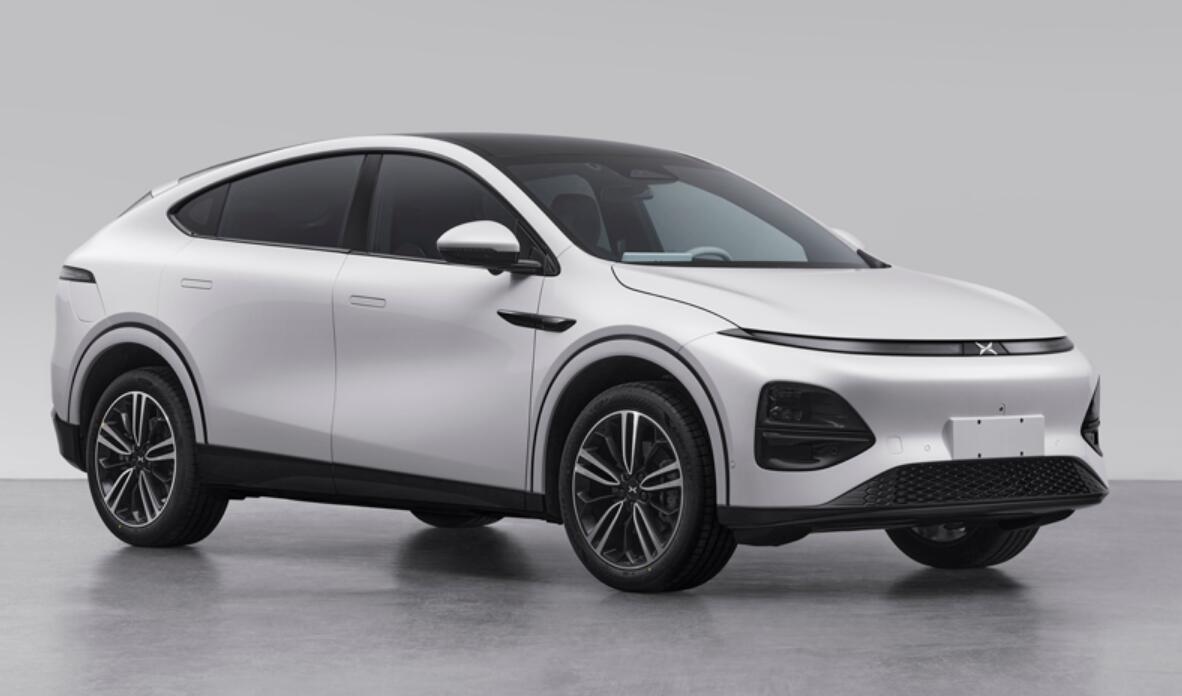
XPeng (NYSE:XPEV) is directly challenging Tesla’s core narrative of technological superiority in autonomous driving. In March 2026, XPeng began rolling out its second-generation VLA (Vision-Language-Action) smart driving system across its lineup, a system that Morgan Stanley noted puts XPeng in direct global competition with Tesla’s Full Self-Driving.
CEO He Xiaopeng has called 2026 the true beginning of full autonomous driving in both China and the United States, and the company is preparing to launch robotaxi operations with vehicles equipped for Level 4 autonomy later this year. The sales trajectory is matching that ambition. XPeng posted 126% year-over-year growth in 2025, reaching 429,445 deliveries, making it one of only a handful of Chinese EV makers to hit its annual target. For 2026, the company is targeting 550,000 to 600,000 deliveries, roughly triple its 2024 volume, supported by new extended-range models and an expanding international presence now spanning 60 countries and regions.
XPeng also recently secured Volkswagen as its first external customer for VLA 2.0, a licensing deal that validates the technology on a global stage. Tesla keeps promising full autonomy at some future date. XPeng is shipping it today, and the gap between those two narratives is narrowing faster than most observers appreciate.
Editor’s note: This article was updated to reflect XPeng’s confirmed full-year 2025 delivery total of 429,445 units (126% growth, corrected from 129%), Xiaomi’s precise 2025 delivery count of 411,082 vehicles and its first quarterly EV profit in Q3 2025, and BYD’s revised 2026 overseas sales target of 1.5 to 1.6 million units per Citigroup estimates.
Contact [email protected] for any questions or corrections.
David Beren has been a Flywheel Publishing contributor since 2022. Writing for 24/7 Wall St. since 2023, David loves to write about topics of all shapes and sizes. As a technology expert, David focuses heavily on consumer electronics brands, automobiles, and general technology. He has previously written for LifeWire, formerly About.com. As a part-time freelance writer, David’s “day job” has been working on and leading social media for multiple Fortune 100 brands. David loves the flexibility of this field and its ability to reach customers exactly where they like to spend their time. Additionally, David previously published his own blog, TmoNews.com, which reached 3 million readers in its first year. In addition to freelance and social media work, David loves to spend time with his family and children and relive the glory days of video game consoles by playing any retro game console he can get his hands on.