




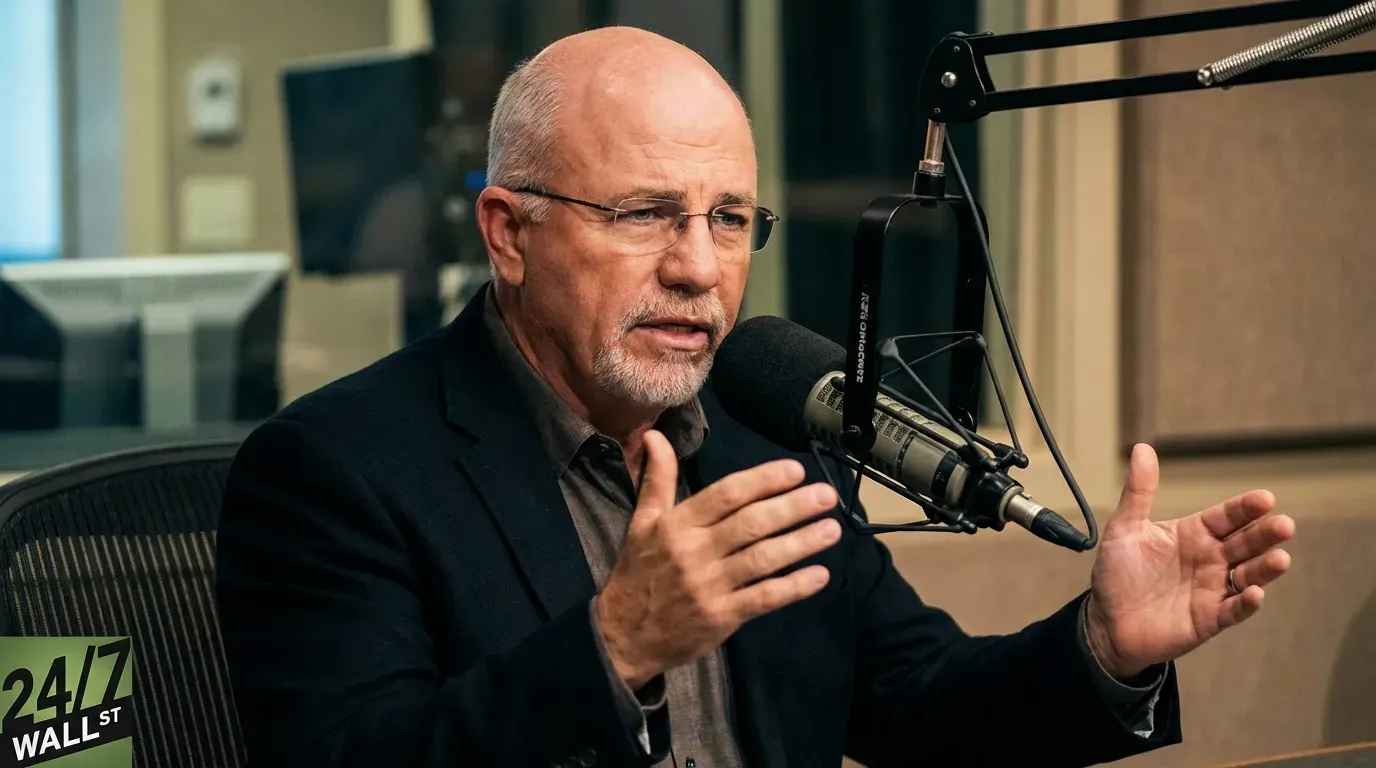
A caller making $140,000 a year reached out to The Dave Ramsey Show in March 2026 asking for “a good butt-chewing.” He got one. The original conversation centered on a luxury bike purchase, but the lesson has grown more urgent as the year progresses. With high earners watching six-figure salaries evaporate under the combined weight of “stealth inflation” and geopolitical strain, Ramsey’s blunt advice has shifted from a debt-payoff checklist to something closer to a financial survival guide.
The Anatomy of a Six-Figure Squeeze
The caller, identified as “B,” works in industrial refrigeration and earns a strong income. Despite receiving a $100,000 gift for a down payment and keeping his mortgage at a manageable $3,250 per month, B found himself drowning in outflows. The culprits were a financed $9,000 “Ferrari of the pedal bike world,” a $400 monthly payment plan for speculative mineral rights, and a $514 car payment.
With three kids and a baby on the way, his checking account was draining faster than he could refill it. Ramsey’s verdict was characteristically direct: “You just keep going about buying and buying and buying and buying.” The income looked good on paper. The cash flow told a very different story.
The “Phantom Wealth” Illusion: Net Worth vs. Cash Flow
The hidden trap for high earners at $140,000 or above is often not lifestyle creep alone. It is the misallocation of asset classes. Callers like “B” frequently mistake speculative plays (such as a $400 monthly mineral rights bet) or illiquid home equity for genuine financial stability. A more useful framework asks what ratio a given purchase represents against liquid, investable net worth, excluding primary real estate, rather than asking what the monthly payment is. Financed luxury items, a $9,000 bicycle or a $514 car payment, are depreciating liabilities dressed up as symbols of success. When a single discretionary purchase consumes more than 5% of liquid wealth, it introduces real systemic risk to a household budget, regardless of how impressive the gross salary looks on a W-2.
The 2026 Economic Reality Check
While B’s March call exposed personal lifestyle inflation, the broader economy has since tightened that squeeze considerably. The U.S. personal savings rate fell to just 2.6% in April 2026, according to the Bureau of Economic Analysis, the lowest reading since June 2022 and far below the long-term historical average of 8.4%.
Even more jarring is the trajectory of the University of Michigan Consumer Sentiment Index. The final May 2026 reading came in at 44.8, an all-time record low, with 57% of consumers explicitly blaming high prices. That is a level of pessimism deeper than anything recorded during the 2008 financial crisis, driven by a convergence of pressures:
-
Energy Costs: Gas prices peaked at roughly $4.55 per gallon in late May 2026 according to AAA data, a multi-year high tied to the ongoing Strait of Hormuz conflict, though prices have since eased to around $4.03 as of mid-June.
-
Trade Tariffs: New import tariffs were cited by roughly 30% of consumers as a direct threat to their personal finances, according to University of Michigan survey data.
There are tentative signs that the worst may be passing. The preliminary June 2026 sentiment reading recovered modestly to 48.9, up from May’s record low, as early-month gasoline price relief lifted confidence across income and age groups. Year-ahead inflation expectations also eased from 4.8% in May to 4.6% in June. The direction is better, but the overall picture remains deeply stressed by historical standards.
Ramsey’s 2026 Strategy: Digital Fasting and Hope
To combat this environment, Ramsey’s advice has evolved beyond the standard “cut the restaurants” mandate. He is now emphasizing “Digital Fasting.” With AI-driven targeted advertising more aggressive than ever, Ramsey urges high earners to delete shopping apps and clear browser cookies to shut down impulse-buy triggers before they start.
He is also doubling down on a message of hope. Even in a climate of record-low sentiment, Ramsey argues that a written plan still makes the “American Dream” achievable. For a household like B’s, eliminating the car, bike, and mineral rights payments would free up nearly $914 a month, an immediate buffer against the rising costs of gas and groceries. That is not a small number. Over a year it amounts to roughly $11,000 redirected toward actual wealth-building.
Comparison: The Financial Squeeze (2024 vs. 2026)
| Metric | Early 2024 | 2026 (Latest) |
| Personal Savings Rate | 6.2% | 2.6% (April 2026, BEA) |
| Consumer Sentiment | 79.4 | 44.8 (May 2026 Final, All-Time Low) |
| Primary Debt Driver | Student Loans / Credit Cards | Lifestyle Creep + Gas/Tariff Volatility |
| National Gas Avg (Peak) | ~$3.10 | ~$4.55 (Late May 2026 Peak, AAA) |
What to Do If You Recognize Yourself in This
If you are evaluating a purchase by asking “Can I afford the payment?” rather than “Can I afford this outright?”, you are already in the trap. In the current economic climate, the cushion that a $140K salary seems to provide is considerably thinner than it appears.
-
List every payment: If consumer debt exceeds 20% of your take-home pay, you are over-leveraged for this kind of volatility.
-
Unplug the “Impulse Engine”: Delete the apps that make spending $50 at 11:00 PM too frictionless to resist.
-
Zero-Based Budget: Use a tool like EveryDollar to assign every dollar a job before the month begins.
Structural Arbitrage: Turn Payments Into Production
For households caught in the six-figure squeeze, freedom rarely comes from cutting restaurants alone. It comes from structural recapture. If B eliminates his car, bike, and mineral rights payments, he immediately reclaims $914 a month in cash flow. In the current rate environment, deploying that recaptured cash aggressively against high-interest debt produces a guaranteed return that beats almost any passive savings vehicle. The mindset shift Ramsey prescribes is concrete: stop being a consumer of financing and start being an owner of cash-flowing assets. One decision, repeated consistently, compounds quickly.
Ramsey’s consistent message through all of it is that income alone cannot save you. The behavior around income is what determines outcomes. A $140K salary financing a depreciating bike and speculative mineral rights is financially weaker than a $70K salary with no payments and a funded emergency account. The math is uncomfortable but it does not lie.
Editor’s note: This article was updated to reflect the April 2026 Bureau of Economic Analysis personal savings rate of 2.6%, down from the previously cited March 2026 figure of 3.6%, and to note the preliminary June 2026 University of Michigan Consumer Sentiment recovery to 48.9 from May’s all-time low of 44.8. The peak national gas price figure was also updated to reflect AAA data showing prices reached approximately $4.55 in late May 2026 before easing to around $4.03 by mid-June, and the long-term savings average was corrected to 8.4%.













 Top Gaining Stocks
 Top Losing Stocks