




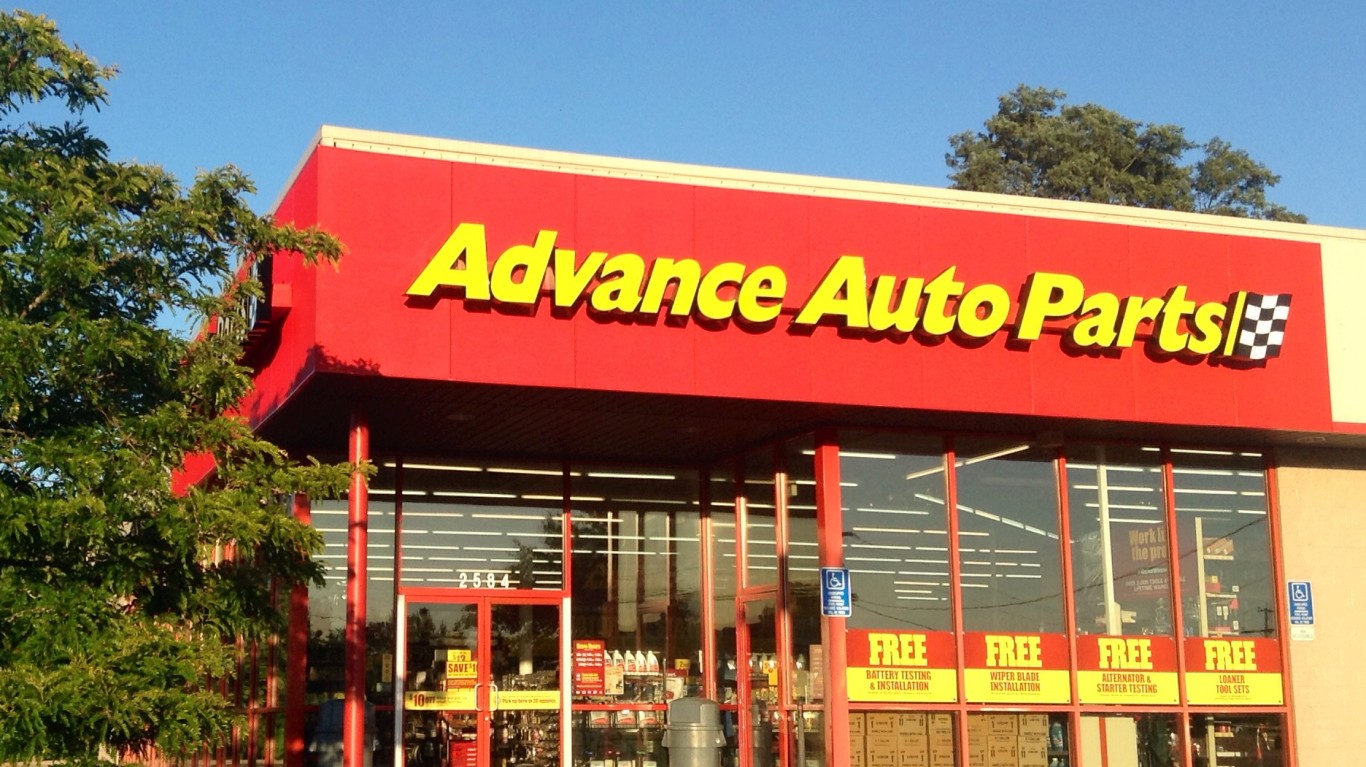
Advance Auto Parts (NYSE: AAP) and Monro (NASDAQ: MNRO) just reported earnings telling a similar story from very different positions. Both are auto aftermarket companies clawing back from years of negative comps, both closed hundreds of underperforming stores, and both are betting leaner operations will translate into real earnings power.
Parts Retail Stabilizes. Service Shops Grind Forward.
AAP sells auto parts to DIY customers and professional installers across 4,305 corporate locations plus 809 independent Carquest stores. Monro fixes cars at 1,116 locations, focusing on tires, brakes, and underbody work. Related but distinct businesses.
AAP’s Q4 FY2025 showed real progress. Comparable store sales came in at +1.1%, with positive momentum in the final eight weeks. CEO Shane O’Kelly framed it directly:
We returned to full year positive comparable sales growth following three years of negative results and expanded adjusted operating income margin by over 200-basis points.
O’Kelly, AAP Q4 FY2025 earnings
Monro’s Q3 FY2026 was messier. Revenue fell 4% year-over-year to $293.39 million, missing estimates slightly. But operating income surged 86% year-over-year to $18.57 million, and this was the fourth consecutive quarter of positive comparable store sales. Tires were the standout, up 5% on a comp basis, while front end and shocks jumped 7%.
| Metric | AAP (Q4 FY2025) | MNRO (Q3 FY2026) |
|---|---|---|
| Revenue | $1.97B | $293M |
| Comp Sales | +1.1% | +1.2% |
| Gross Margin | 44.0% | 34.9% |
| Adj. Operating Margin | 3.7% | ~6.3% |
| Cash on Hand | ~$3.1B | $4.9M |
Scale and Balance Sheet Tell Very Different Stories
AAP’s restructuring is deeper and better funded. The company closed 522 stores in FY2025 and still carries roughly $3.1 billion in cash, giving management room to execute a multiyear fix. FY2026 guidance calls for adjusted operating margin of 3.8% to 4.5% and adjusted EPS of $2.40 to $3.10. That’s a credible roadmap.
Monro’s balance sheet is far tighter. With only $4.9 million in cash, there is almost no margin for error. The company leaned on $13.53 million in real estate gains from closed stores to boost Q3 results — a one-time lever that won’t repeat. CEO Peter Fitzsimmons is banking on tax refund season and incremental marketing to keep comps positive, but issued no formal FY2026 guidance.
Which Turnaround Has More Runway?
AAP’s free cash flow is worth watching closely. Full-year FCF was negative $298 million in FY2025, and management is guiding for roughly $100 million positive in FY2026. That flip matters enormously for whether this is a real recovery or restructuring noise.
For Monro, the question is whether tire and front-end momentum can offset persistent weakness in alignments and batteries. Alignments were down 13% and batteries fell 16% on a comp basis last quarter. Consumer sentiment at 56.4 is deep in pessimistic territory and a real headwind for discretionary auto spending.
AAP vs. MNRO: The Case for Each
AAP’s 34.76% gain year-to-date already prices in some optimism, and the analyst consensus target of $57.45 sits below recent trading levels. Formal guidance, a strong cash cushion, and a clearer margin path distinguish AAP’s restructuring story. Monro’s 21.89% decline year-to-date reflects ongoing concerns about top-line momentum and balance sheet fragility. The lack of formal guidance from Monro makes it harder to assess the recovery timeline, while the tire and front-end category momentum remains a factor analysts are watching.












 Top Gaining Stocks
 Top Losing Stocks