Clark Howard Is Right About Percentage Tipping, Even If the Math Feels Unfair to Diners
A caller named Bill from Pennsylvania put a question to consumer advocate Clark Howard on his podcast this week that cuts to the heart of how Americans think about restaurant tipping. “I’ve always tipped 20% for food service,” Bill said.…

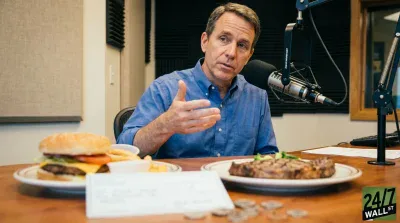
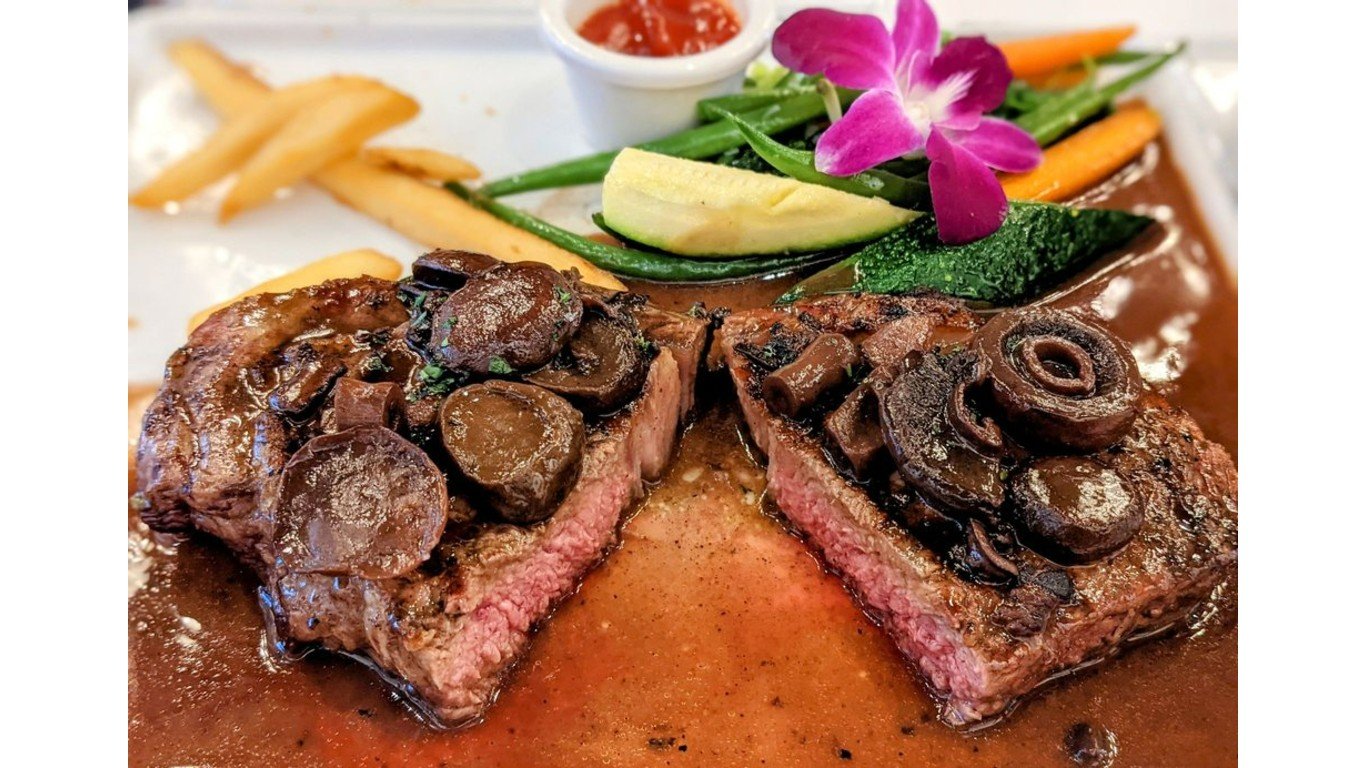
A caller named Bill from Pennsylvania put a question to consumer advocate Clark Howard on his podcast this week that cuts to the heart of how Americans think about restaurant tipping. “I’ve always tipped 20% for food service,” Bill said. “Recently it hit me that I get the same level of service whether I order a $30 steak or a $10 burger, same number of plates, same number of trips to the table by the server, etc.” His conclusion: why not tip a flat dollar amount when the effort is identical?
Clark’s answer defended the percentage system, but the real answer is more nuanced than either position. Bill’s logic is correct as a matter of pure labor economics. Clark is correct about why the system still functions. Understanding both sides tells you something useful about how to tip fairly without overthinking it.
Consider This: Dave Ramsey: “You Make $140K. Stay Out of Restaurants, Don’t Go on Vacation, And Get Rid of the Ferrari Bike”
The Math Behind the Frustration
Bill’s instinct comes from a real place. A server who brings a $30 steak and a $10 burger to the same table in the same number of trips earns $6 in tips under a 20% model versus $2. The labor input is nearly identical, yet the pay is three times higher for the steak table. That gap is hard to argue away on purely physical grounds.
But Clark’s response points to something important: “At a restaurant, normally there’s a pretty narrow band on what the entrees cost. There will be some outliers at both ends. So for the servers, it pretty much evens out.” He is describing a portfolio effect. Across dozens of tables per shift, a server’s income averages out to something proportional to the restaurant’s overall price tier. A server at a $15-average-entree diner earns less per shift than one at a $45-average-entree steakhouse, and the percentage system ties server compensation directly to the economic level of the establishment they work in.
Heads Up: Suze Orman Warns: Married Couples Who Do This Are Putting Their Finances at Risk
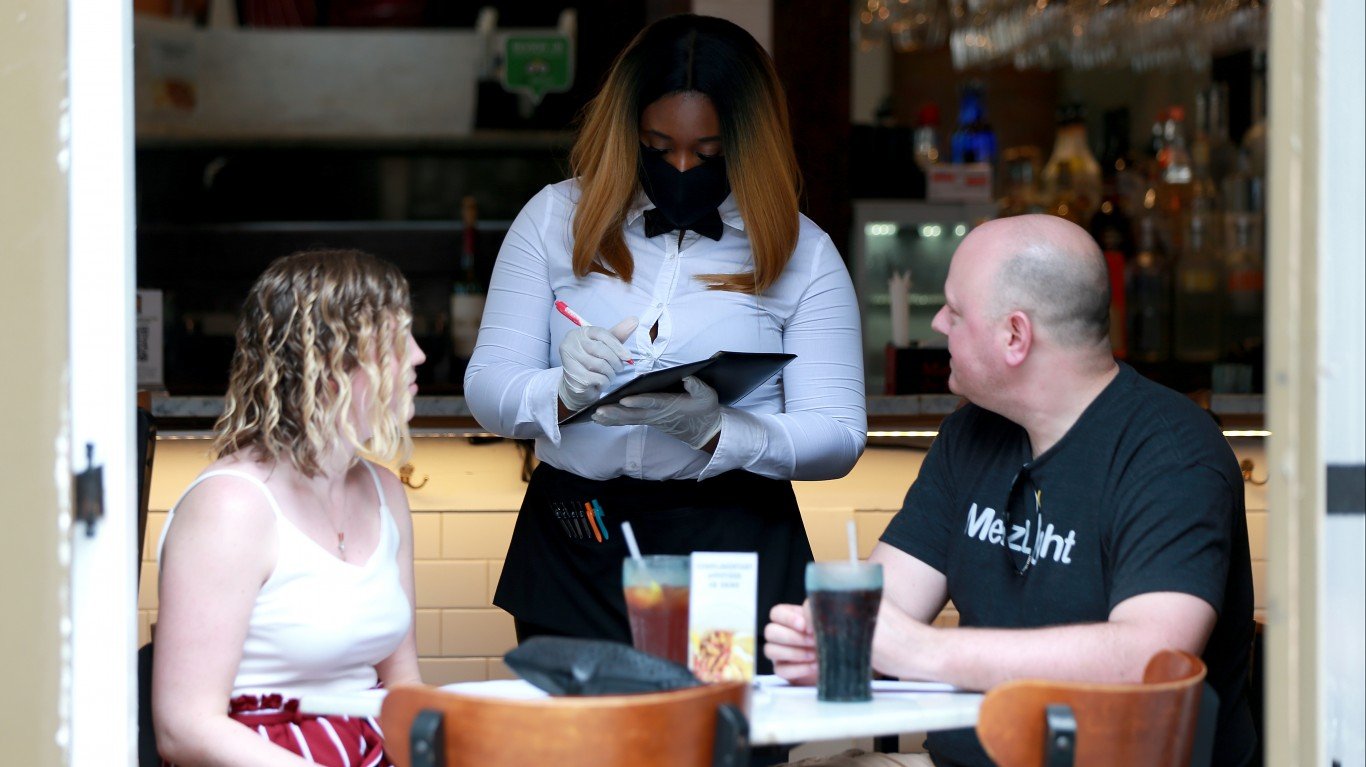
That matters because the federal tipped minimum wage is $2.13 per hour, meaning servers in most states depend almost entirely on tips for their income. The percentage model makes the customer base collectively responsible for setting the server’s effective wage. A flat $3 tip regardless of check size would devastate servers at upscale restaurants while being perfectly generous at a neighborhood diner.
Why Flat Tipping Breaks Down at Scale
Consider two scenarios. A server at a casual lunch spot averages 10 tables per shift, each with a $12 check. At 20%, that generates $24 in tips for the shift. A flat $2 tip per table produces the same outcome, so flat tipping looks reasonable here.
Now move to a dinner service at a mid-range restaurant where the average check runs $60 for two people. At 20%, a server working 8 tables earns $96 in tips. If every diner switched to a flat $4 tip instead, that same server takes home $32. The flat-tip model simply transfers income away from servers at higher-end establishments, with no additional value delivered to the diner in return.
Clark flagged this dynamic when discussing service fees: “If your $10 burger ended up being the same as what the service fee you were charged, then in your mind, I’m now eating a $20 burger.” Flat charges feel like price increases rather than compensation, which changes how diners perceive value. The percentage model keeps the tip psychologically tied to the meal rather than landing as a separate tax on the bill.
The Inflation Factor
There is a third dimension Bill’s question does not address: inflation has already done much of what he is worried about. The Consumer Price Index rose from 319.8 in March 2025 to 326.8 by February 2026, a sustained upward trend. Restaurant menu prices have climbed alongside that index, meaning the dollar value of a 20% tip has grown automatically without any change in tipping behavior. A server who earned $6 on a $30 steak two years ago may earn $7 on that same steak today simply because the menu price climbed.
For diners, that pressure compounds quickly. According to the Bureau of Economic Analysis, the U.S. personal savings rate stood at roughly 3.5% to 4.0% across the fourth quarter of 2025, well below where it was in early 2024. Americans are absorbing higher prices by saving less rather than spending less. The frustration Bill feels about tipping is real, but it is a symptom of broader price pressure rather than a structural flaw in how tips are calculated.
Who Bill’s Logic Actually Helps
Bill’s flat-tip instinct makes the most sense in one specific situation: ordering a single very expensive item at a restaurant where everything else on the menu is much cheaper. If you order a $90 wagyu entrée at a place where most dishes cost $25, the percentage model does overpay relative to the actual service effort. Tipping 20% on $25 (the effective market rate for that service level) and adding a modest premium on top is a reasonable adjustment.
Trending Now: How Many Americans Have Managed to Save $5 Million for Retirement?
Clark acknowledged this indirectly: “There will be some outliers at both ends.” A $90 item at a $25-average restaurant is exactly that kind of outlier. Shading slightly below a strict percentage in that case is not stiffing the server. It recognizes that the percentage model was designed for typical menu ranges, not for extreme price outliers within an otherwise modest menu.
Clark also made a broader point about why the system persists: “The better the server works, the everything about that server leads to higher income for that server or lower income for that server. It seems to be a system that is imperfect, but generally has worked overall.” The percentage model preserves the incentive structure. A flat tip eliminates the financial upside of exceptional service, which is part of what drives the attentiveness Clark noticed is absent in countries that have moved away from tipping.
What to Actually Do
For most restaurant visits, 18% to 20% on the pre-tax total remains the clearest way to tip fairly. It aligns your payment with the restaurant’s price tier, preserves service incentives, and sidesteps the mental gymnastics of calculating whether a flat amount is appropriate for a given check.
That said, tipping norms are visibly shifting. Toast’s payment data from Q1 2026 shows the average full-service restaurant tip running at 19.3%, recovering from a seven-year low of 19.1% in mid-2025. Separately, only 35% of Americans now say they typically leave a 20% or higher tip at sit-down restaurants, down from 37% the prior year according to Bankrate’s 2025 survey. A Popmenu survey found that 35% of U.S. consumers have actively scaled back on tipping in 2026, citing inflation and rising costs. That pullback is real and widespread, but it does not make the percentage model wrong. It reflects the same budget pressure Bill’s question is really about.
If your order is genuinely an outlier (a single expensive bottle of wine, a premium cut that costs three times anything else on the menu), tipping on the typical menu price rather than the full check is a reasonable application of the percentage model. It reflects the actual service level the restaurant operates at rather than the price of a single unusual item.
Bill’s question captures a frustration millions of diners share. Food services and drinking places in the United States recorded roughly $99.7 billion in monthly sales as of January 2026, according to the U.S. Census Bureau, putting the annual run rate at approximately $1.2 trillion. With prices still rising, every percentage point at the bottom of the receipt matters more than it once did. But the answer is not to scrap the percentage model. It is to apply it thoughtfully, using the restaurant’s overall price range as your reference point rather than the single most expensive item on the table.
Editor’s note: This article updates the Consumer Price Index figure for February 2026 to 326.8, revises the personal savings rate description to reflect BEA monthly data for Q4 2025 (3.5% to 4.0%), corrects the food services spending figure to $99.7 billion monthly ($1.2 trillion annual run rate) per U.S. Census Bureau data, and adds current tipping-rate context from Toast Q1 2026 payment data and Bankrate’s 2025 tipping survey.
Contact [email protected] for any questions or corrections.
I am a long time investor and student of business, and believe finding good companies that can become great investments is the best game on earth. After 20 years of writing and researching the public markets it is clear that individuals have never had more tools and information to take control of their financial lives. From ETFs and $0 commissions to cryptos and prediction markets there has never been a greater democratization of access to investing.
I write to help people understand the investments available to them so they can make the best choice for their portfolio, whether they're starting out or looking for income in retirement.