Capital One Has Investors Spooked, but Here’s What Wall Street Expects
Capital One Financial (NYSE: COF | COF Price Prediction) was last seen trading near $184, down about 24% year to date. The $275.48 average analyst price target implies almost 50% upside from current levels. That gap did not open by…

This post may contain links from our sponsors and affiliates, and Flywheel Publishing may receive compensation for actions taken through them.

Capital One Financial (NYSE: COF | COF Price Prediction) was last seen trading near $184, down about 24% year to date. The $275.48 average analyst price target implies almost 50% upside from current levels. That gap did not open by accident.
Capital One entered 2026 as the largest credit card issuer in the United States by loan volume, a position it earned by closing the $35.3 billion all-stock acquisition of Discover Financial Services in May 2025. Then on January 22, the company announced it was buying Brex for $5.15 billion in cash and stock. Two transformative deals in less than a year. The market has been asking whether management is building an empire or overextending one.
Two Deals at Once Spooked Investors
The Brex announcement was the clearest trigger. The stock dropped more than 5% on the announcement day, as investors processed the idea of a second major integration running parallel with Discover. That concern was not irrational. Truist and Barclays maintained their Buy and Overweight ratings but trimmed price targets due to higher operating expenses and integration complexity. Bank of America cut its price target from $280 to $254, citing an uncertain macro outlook, while maintaining its Buy rating.
The Q4 2025 earnings report added fuel. Capital One missed EPS estimates by 6.76%, reporting $3.86 against a $4.14 consensus. The culprit was costs. Non-interest expense surged 53% year over year to $9.34 billion, including $352 million in Discover integration charges and a 38% sequential jump in marketing spend. The provision for credit losses rose 57% year over year to $4.1 billion, with a $302 million loan reserve build in Q4 reversing the prior quarter’s $760 million reserve release. Broader macro fears, including proposed credit card interest rate caps, added to the pressure.
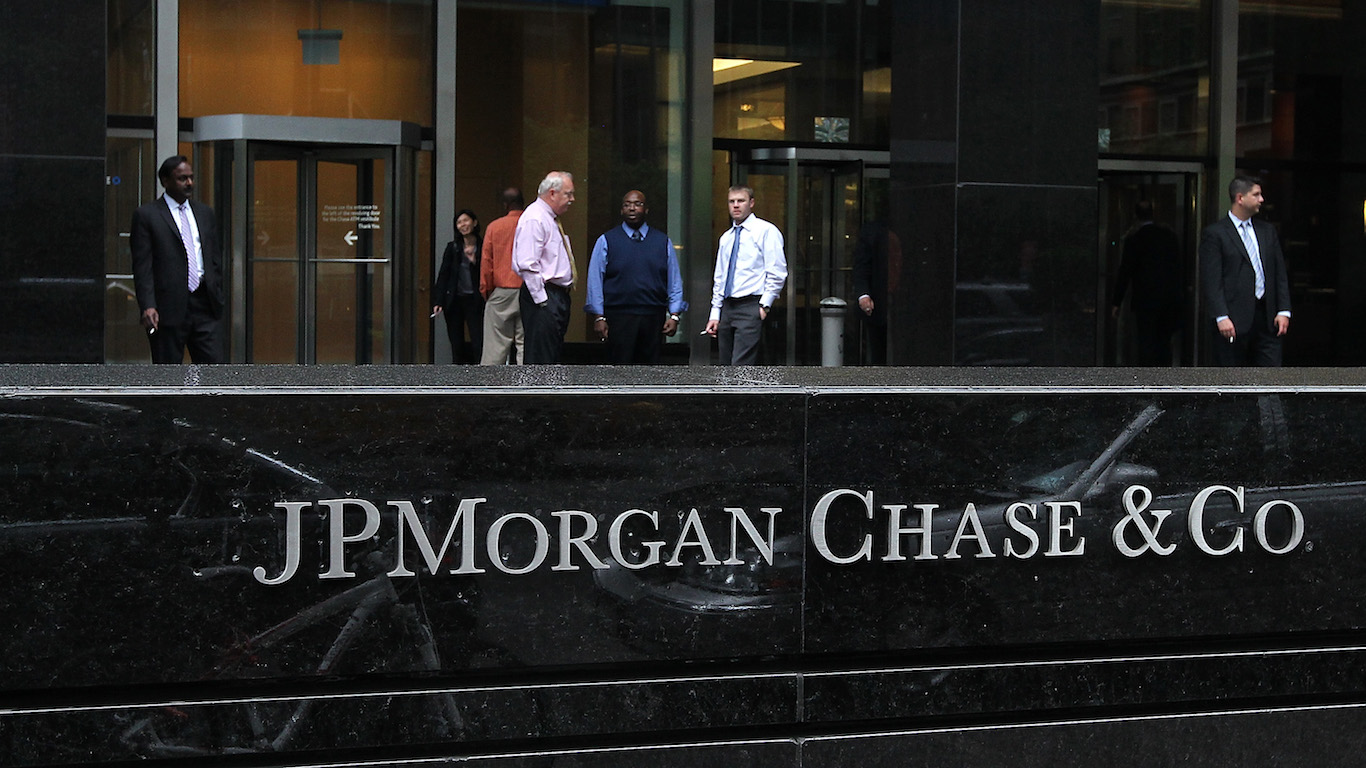
This selloff is largely company-specific. Peer JPMorgan Chase (NYSE: JPM) is down 10.5% year to date, less than half Capital One’s decline, suggesting the market is pricing in execution risk unique to COF rather than punishing the sector broadly.
Analysts See the Integration Working, Not Failing
Of the 23 analysts covering Capital One, three rate it Strong Buy, 14 rate it Buy, and six rate it Hold. Zero analysts rate it Sell or Strong Sell. Analysts are anchoring to the long-term thesis: Discover’s payment network is a strategic asset that takes time to monetize, and Brex adds an AI-native business payments layer that positions Capital One beyond consumer credit.
The underlying numbers support that view. Credit card period-end loans grew 72% year over year to $279.57 billion, and net interest margin expanded 123 basis points year over year to 8.26%. Deposits grew 31% year over year to $475.8 billion. CEO Richard Fairbank said on the earnings call, “Years of strategic preparation and our choices to consistently invest to sustain long-term growth and returns enable our results and put us in a strong position going forward.” Management also raised the quarterly dividend 33% to $0.80 per share from $0.60, signaling balance sheet confidence. The Q1 2026 earnings call is scheduled for April 21, 2026, the next major test of the integration narrative.
Where Things Stand
- Current Price: $184
- Analyst Consensus Target: $275.48
- 52-Week High / Low: $259.64 / $143.22
- YTD Performance: −24.4%
- JPMorgan YTD: −10.6%
- Analyst Ratings: 3 Strong Buy, 14 Buy, 6 Hold, 0 Sell
- Forward P/E: 9x
- Price-to-Book: 0.9
A forward P/E of 9x with a consensus target implying 50% upside and zero sell ratings signals analysts view current weakness as transitory. But those targets reflect a base case where integration proceeds as planned, credit losses stabilize, and Brex closes without complication. Each assumption carries real risk.
The Risk/Reward Is Real But Not Simple
The Discover integration’s NIM expansion, deposit growth, and card loan volume all point to a deal working structurally. The Brex acquisition adds genuine strategic logic, targeting a $2 trillion business card market growing at roughly 9% annually. If management executes on both deals, the path to the analyst consensus target is credible.
The concern is Q1 2026 earnings revealing further deterioration in credit quality or integration costs tracking above the initial $2.8 billion estimate. The University of Michigan Consumer Sentiment index sits at 55.5, still in pessimistic territory below the 80-point neutral threshold, keeping pressure on charge-off rates and origination volumes across Capital One’s card portfolio. Running two transformative integrations simultaneously is genuinely hard, and the efficiency ratio at 59.95% has room to get worse before it gets better.
The strategic logic is sound, the valuation has compressed to levels that price in meaningful execution risk, and the analyst community is not abandoning the name. But the April 21 earnings call needs to show credit stabilization and integration costs in check. Until then, the 50% gap between price and target is more a measure of uncertainty than a guaranteed return.
Contact [email protected] for any questions or corrections.
Trey has been an editor and author at 24/7 Wall St. for more than a decade, where he has published thousands of articles analyzing corporate earnings, dividend stocks, short interest, insider buying, private equity, and market trends. His comprehensive coverage spans the full spectrum of financial markets, from blue-chip stalwarts to emerging growth companies.
Beyond 24/7 Wall St., Trey has created and edited financial content for Benzinga and AOL's BloggingStocks, contributing additional hundreds of articles to the investment community.
Trey's editorial expertise extends across multiple publishing environments. He served as production editor at Dearborn Financial Publishing and development editor at Kaplan, where he helped shape financial education materials. Earlier in his career, he worked as a writer-producer at SVE. His freelance editing portfolio includes work for prestigious clients such as Sage Publications, Rand McNally, the Institute for Supply Management, the American Library Association, Eggplant Literary Productions, and Spiegel.
Outside of financial journalism, Trey writes fiction and has been an active member of the writing community for years, moderating workshop sessions at regional conventions.