VDC Is Up Nearly 6% While the S&P 500 Sinks, and That Gap Is No Accident
When the broader market has lost ground year-to-date and the VIX is hovering near 27, the question investors are quietly asking is: what in my portfolio is actually holding up? Vanguard Consumer Staples ETF (NYSEARCA:VDC) is up nearly 6% year-to-date…

This post may contain links from our sponsors and affiliates, and Flywheel Publishing may receive compensation for actions taken through them.
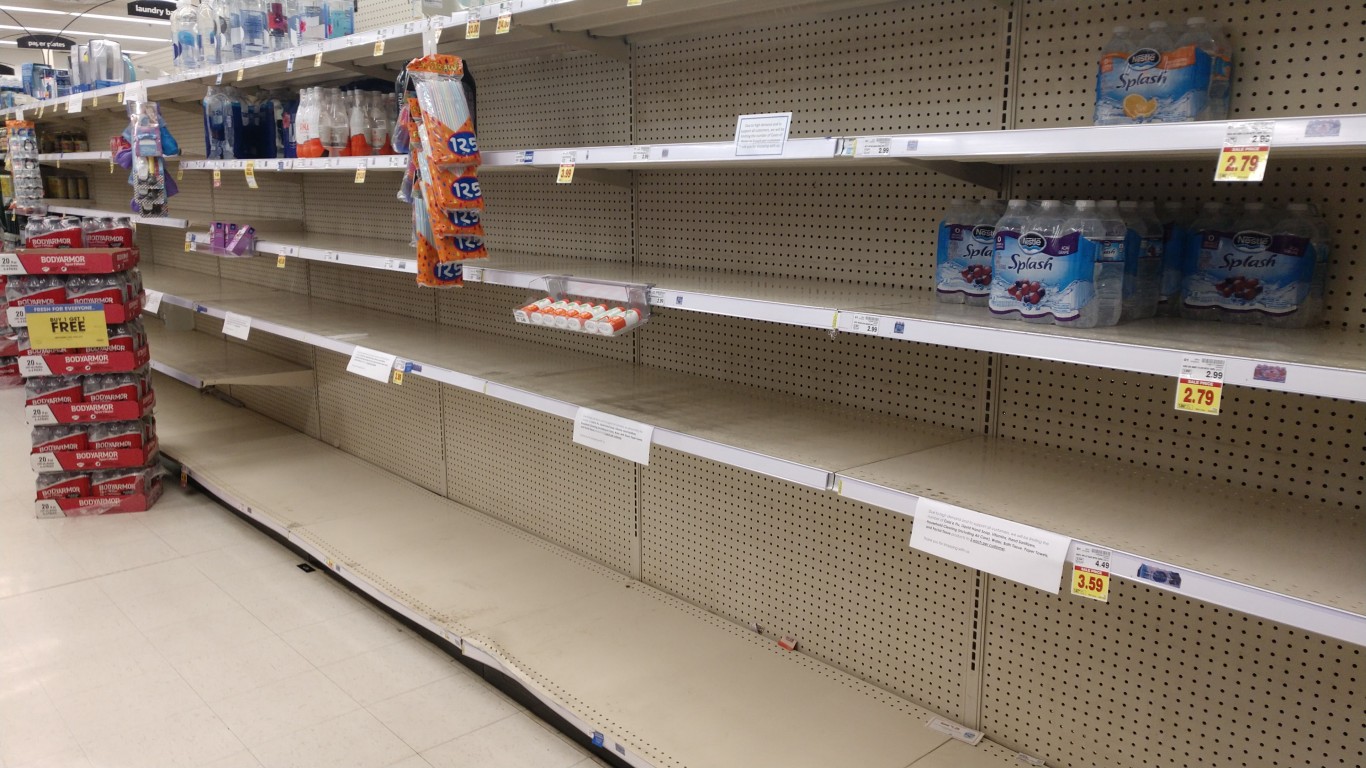
When the broader market has lost ground year-to-date and the VIX is hovering near 27, the question investors are quietly asking is: what in my portfolio is actually holding up? Vanguard Consumer Staples ETF (NYSEARCA:VDC) is up nearly 6% year-to-date while the S&P 500 is down about 4% over the same stretch. That gap is not a coincidence. It is what consumer staples are built to do.
What This Fund Is Actually Designed to Do
VDC tracks the MSCI US Investable Market Index (IMI)/Consumer Staples 25/50, giving investors exposure to the companies that sell things people buy regardless of economic conditions: groceries, toothpaste, beverages, cleaning products, cigarettes. The fund holds over 120 positions across those subsectors, with 99.4% allocated to consumer staples and essentially nothing elsewhere.
The return engine here is straightforward. These companies generate steady, recurring cash flows because demand for their products barely moves with the economic cycle. Procter & Gamble sells detergent in recessions. Walmart moves groceries no matter what the GDP print says. That earnings stability translates into dividend income and modest but durable price appreciation over time. VDC currently yields 2.13%, and the fund costs investors just 9 basis points per year to hold.
The portfolio is top-heavy by design. Walmart sits at roughly 15% of the fund, Costco at 11.8%, and Procter & Gamble at nearly 10%. Those three names alone account for more than a third of the total portfolio. Coca-Cola adds another 8.2%. Investors buying VDC are largely making a bet on the largest, most established consumer staples businesses in the U.S.
The Macro Backdrop Is Cooperating Right Now
The case for holding consumer staples gets stronger when the economic data looks shaky. University of Michigan Consumer Sentiment sits at 56.4, below the 60 threshold that historically signals recessionary consumer behavior. Real GDP growth came in at just 0.7% annualized in Q4 2025, a sharp drop from the 4.4% posted in Q3. The VIX has climbed over 41% in the past month and sits in the elevated uncertainty zone. These are exactly the conditions where investors historically rotate toward non-cyclical sectors.
VDC’s year-to-date outperformance reflects that rotation in real time. Over the past year, the fund is up nearly 8%, trailing the S&P 500’s 14% one-year gain. That spread tells the honest story of this strategy: it lags in bull markets and holds up in turbulent ones.
The Real Tradeoffs Investors Need to Understand
- Long-term growth drag is significant. Over five years, VDC has returned 40%, while the S&P 500 has returned 66% over the same period. Over ten years, the gap widens further: VDC returned 114% against the S&P 500’s 223%. Anyone using VDC as a core holding rather than a defensive sleeve is leaving meaningful long-run compounding on the table.
- The dividend yield is competitive within equities but not against bonds. VDC’s 2.13% yield looks reasonable as an equity income stream, but the 10-year Treasury is currently yielding about 4.4%. Investors seeking pure income have a lower-risk alternative in government bonds. VDC’s value proposition is total return with defensive characteristics, not income maximization.
- Concentration in a handful of mega-caps is a feature and a risk. The top-heavy structure means VDC’s performance is heavily tied to Walmart, Costco, and Procter & Gamble. If any of those names face company-specific headwinds, the diversification benefit of holding 120 stocks is partially undermined.
VDC has historically served as a 10-20% defensive sleeve for investors looking to reduce portfolio volatility during uncertain periods, but anyone treating it as a growth engine will be disappointed by a decade of data showing it trails the broad market by a wide margin.
Contact [email protected] for any questions or corrections.
I am a long time investor and student of business, and believe finding good companies that can become great investments is the best game on earth. After 20 years of writing and researching the public markets it is clear that individuals have never had more tools and information to take control of their financial lives. From ETFs and $0 commissions to cryptos and prediction markets there has never been a greater democratization of access to investing.
I write to help people understand the investments available to them so they can make the best choice for their portfolio, whether they're starting out or looking for income in retirement.