Ramsey Tells $700K Saver Marrying Pharmacist With $220K Debt: ‘You’ll Need a Stiff Bourbon After This’
A 30-year-old roofing company owner called into The Ramsey Show on March 25, 2026 with a situation that gave Dave Ramsey pause. He had accumulated approximately $700,000 in savings, earned $450,000 last year from his roofing business, and carried only…

This post may contain links from our sponsors and affiliates, and Flywheel Publishing may receive compensation for actions taken through them.

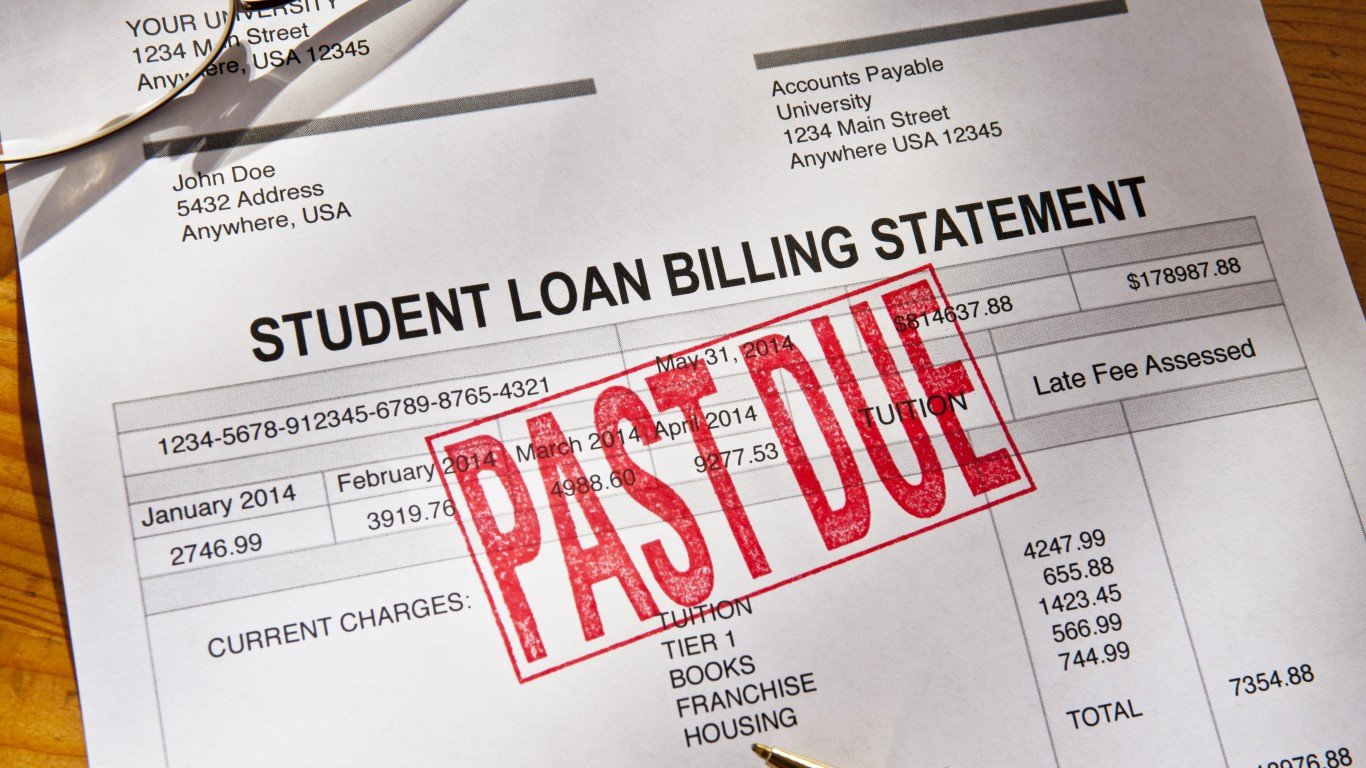
A 30-year-old roofing company owner called into The Ramsey Show on March 25, 2026 with a situation that gave Dave Ramsey pause. He had built up roughly $700,000 in savings, cleared $450,000 from his roofing business the year before, and carried only a mortgage as debt. His fiancee was days from becoming his wife, and she was about to bring $220,000 in pharmacy school student loans into the marriage.
“Every time I go to get that in order, sell stocks or things like that, it’s hard,” he told Ramsey. “It’s the buffer that you’ve built. It’s really hard.”
Ramsey’s verdict was immediate. Pay it off. And then he said something that made the advice feel human: “You’re going to need a good stiff double shot of bourbon right after you do this.”
Why Ramsey Is Right, and Why It Still Hurts
The financial case for paying off $220,000 in student loans when you have $700,000 sitting in stock accounts is straightforward. Federal graduate Direct Unsubsidized loans carry a 7.94% rate for the 2025-26 academic year, and Grad PLUS loans sit at 8.94%. Both rates are rising in 2026-27, with graduate direct loans climbing to 8.07% and PLUS loans to 9.07%, based on the May 2026 Treasury auction. Carrying $220,000 at those rates means thousands of dollars in interest compounding against the borrower every year. With the federal funds rate target holding at 3.50% to 3.75%, these loan rates look especially punishing against the broader rate environment.
But Ramsey didn’t just run the math. He acknowledged what the caller was actually feeling. “Of course it makes your stomach come up in your throat. If it didn’t, you’d be weird,” Ramsey said. “You’ve been working a long time to build this up. You got a lot of calluses, a lot of roof and shingles slung over your shoulder to get to this.”
That acknowledgment matters. Watching a balance drop by $220,000 in a single transaction is viscerally uncomfortable, even when the arithmetic is clean. Ramsey’s framing gives the caller permission to feel that discomfort without letting it stop him.
The One Condition That Changes Everything
Before endorsing the payoff, Ramsey asked a pointed question: “Are you guys aligned on we’re never doing this again for any dream or anything, or anything I want, or never again?” The caller confirmed they were “completely aligned” with “no intent to ever have debt on anything ever again.”
That answer is the entire foundation of the advice. Paying off a partner’s $220,000 debt before marriage makes sense when both people are committed to staying debt-free. It makes no sense if one partner views debt as a normal financial tool. A couple that wipes out $220,000 in loans and then finances a car, a boat, and a kitchen renovation two years later has accomplished nothing except depleting savings.
This caller passed that test. The payoff is sound. It is also worth noting that the federal student loan landscape changed significantly this year: under the One Big Beautiful Bill Act, signed into law on July 4, 2025, Grad PLUS loans were eliminated for new borrowers as of July 1, 2026. Anyone entering pharmacy school now faces tighter federal borrowing limits, which makes the $220,000 this fiancee carries all the more significant as a legacy obligation worth clearing promptly.
What the Numbers Look Like After
Consider what this couple’s financial position looks like once the debt is gone. Their combined income will be substantial: his $450,000 from the roofing business, plus her pharmacist salary. According to Bureau of Labor Statistics data, pharmacists averaged $140,920 in mean annual wages across all practice settings in 2025. With the student loans eliminated, their only remaining debt is the mortgage. Even after writing a $220,000 check, they still hold meaningful assets and earn an income that the national per capita disposable income of $66,909, the most recent annual figure from the Bureau of Economic Analysis, puts in a completely different category than typical American households.
The national personal savings rate stood at just 2.7% in June 2026, according to BEA data. Most Americans are saving almost nothing. This couple, once debt-free, has the income and the discipline to rebuild their balance sheet faster than almost anyone in the country.
Ramsey put it plainly: “She’s worth every dime of it.” At their income level, rebuilding savings after the payoff is a realistic near-term goal if they stay focused. The math fully supports it.
What to Do If You’re in a Similar Position
Before writing the check, work through four steps:
- Confirm the interest rates on every loan being paid off. Federal graduate loans, private loans, and consolidated loans carry different rates. Prioritize the highest-rate balances first if a full payoff is not immediate.
- Verify the tax implications. Liquidating stock accounts triggers capital gains taxes. Selling enough stock to cover a $220,000 payoff may require selling additional shares to account for that tax bill. Run this with a CPA before executing.
- Keep three to six months of expenses in cash before the payoff. Eliminating the debt is the goal, but wiping out the emergency fund at the same time creates a different kind of vulnerability.
- Have the debt-free commitment conversation explicitly, and ideally before marriage. Ramsey asked it on air. You should ask it at the kitchen table.
The stiff bourbon Ramsey recommended is optional. The clarity that comes from owing nothing except a mortgage, on a combined income that towers above the national average, is not.
Editor’s note: This article has been updated to reflect the June 2026 BEA personal savings rate of 2.7%, revised down from the previously cited May 2026 figure of 3.0%, and to note that the Grad PLUS loan elimination under the One Big Beautiful Bill Act took effect July 1, 2026, rather than being forthcoming.
Contact [email protected] for any questions or corrections.
Austin Smith is a financial publisher with over two decades of experience as an investor, analyst, and advisor. He covers stocks, ETFs, Artificial intelligence and personal finance for 24/7 Wall St. Previously, he spent over a decade at The Motley Fool as a senior editor for Fool.com, portfolio advisor for Millionacres, and launched The Ascent to help reader take control of their personal finances.
His work has been featured on Fool.com, NPR, CNBC, USA Today, Yahoo Finance, MSN, AOL, Marketwatch, and many other publications. He is as an advisor to private companies, and co-hosts The AI Investor Podcast with Eric Bleeker.
When not looking for investment opportunities, he can be found skiing, running, or playing soccer with his children. Learn more about Austin's investment approach here.