Dave Ramsey’s Counterintuitive Advice to Guilty Parents: Stop Saving for Your Kids Now
A 30-year-old single mother called into The Ramsey Show carrying $74,000 in debt and a question about opening a 529 for her 4-year-old son. Dave Ramsey’s answer reframed everything she thought she was doing wrong. “I’m feeling so much anxiety…

This post may contain links from our sponsors and affiliates, and Flywheel Publishing may receive compensation for actions taken through them.

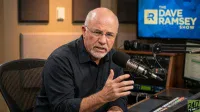
A 30-year-old single mother called into The Ramsey Show carrying $74,000 in debt and a question about opening a 529 for her 4-year-old son. Dave Ramsey’s answer reframed everything she thought she was doing wrong.
“I’m feeling so much anxiety because I feel like my student loans are so big… It makes me feel so guilty that I’m not like, you know, able to save like more for him.”
Ramsey told her to stop saving for her son entirely right now. His reasoning: getting herself out of debt is investing in her son. Then he made a projection worth examining carefully, because the math behind it is real.
“When you are at his wedding, you will be a millionaire. That’s where you’re headed. And that’s the best gift you can give him.”
The Projection Ramsey Made, and Whether It Holds Up
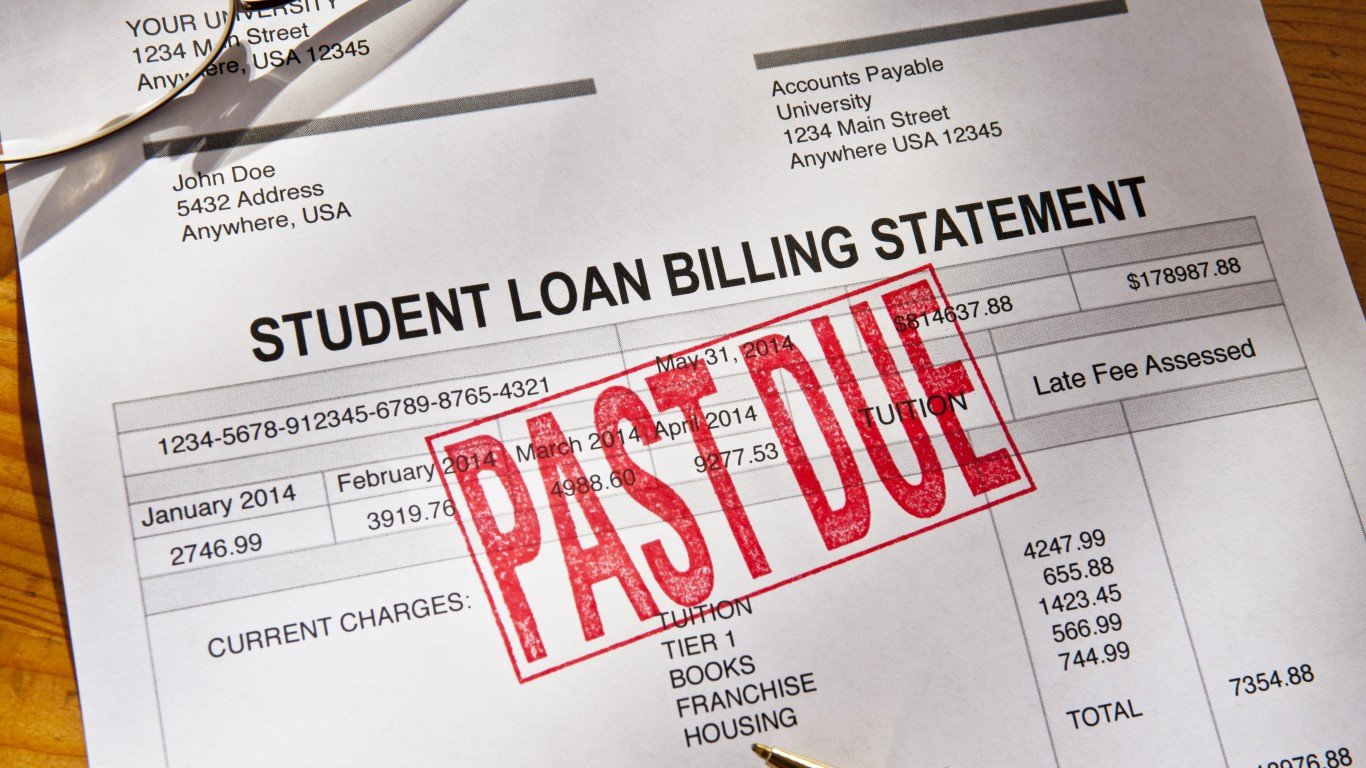
The caller earns $58,000 as a construction admin assistant and receives $400 per month in child support. She owes $54,000 in student loans, $15,000 on her car, and $5,000 on a personal loan. She also DoorDashes on weekends.
Ramsey projected that if she becomes debt-free in five years and then invests 15% of her income starting at age 35, she will have $2.3 million by age 65. That is a 30-year investing window.
Ramsey’s show uses a 10-12% average annual return assumption based on long-run S&P 500 historical performance. That figure is before inflation. The headline PCE inflation rate stands at 2.8% year-over-year as of February 2026, with services inflation running at 3.26% annually. In real purchasing power terms, $2.3 million in 30 years will not feel like $2.3 million today, but it will still represent genuine, life-changing wealth.
The $2.3 million figure is credible given the assumptions. Fifteen percent of a $58,000 salary is $8,700 annually. Invested monthly over 30 years at a 10% average return, the math produces a figure consistent with Ramsey’s $2.3 million projection. The assumption that matters most is the return rate, and the 10-year Treasury yield of 4.30% as of April 13, 2026 confirms that equity markets are still expected to meaningfully outperform risk-free rates over long horizons, making the equity return assumption reasonable if not guaranteed.
Why Stopping the 529 Is the Right Call Here
The guilt driving her question is understandable. The University of Michigan Consumer Sentiment Index sits at 56.6, well into pessimistic territory, and financial anxiety among working Americans is widespread.
But the math of debt versus savings makes Ramsey’s verdict correct for her specific situation. A personal loan likely carries an interest rate between 10% and 18%. Car loans originated in recent years have carried rates in the 6% to 9% range, according to Federal Reserve consumer credit data. Investing $50 per month into a 529 while carrying high-interest debt means earning a market return on $50 while paying a higher guaranteed rate on thousands of dollars of principal. The net effect is negative.
Eliminating $74,000 in debt in five years on a $58,000 salary requires aggressive cash management. Her child support adds $4,800 annually to her income, and her DoorDash income provides additional margin. The national unemployment rate of 4.3% reflects a stable labor market, which supports the assumption that her income remains consistent through the payoff window.
“He has a mom who is a warrior princess who knows how to fight and scrape and cause things to happen. That’s going to help more than $10 a month being stuck in a savings account.”
Ramsey’s emotional reframe is not just motivational. It is financially accurate. A debt-free mother with a growing investment account at 35 is in a structurally better position to fund college, weather emergencies, and model financial discipline than one who saved $600 per year in a 529 while paying double-digit interest on personal debt.
What She Should Do in Order
- List all three debts by interest rate and target the highest-rate balance first. Personal loans typically carry the steepest rate, often 10% to 18%, and should be eliminated before the car loan or student loans.
- Track DoorDash income separately and direct every dollar toward the debt with the highest rate. Irregular income applied consistently to principal is one of the fastest legal ways to compress a payoff timeline.
- Once debt-free, open a Roth IRA before a 529. At her income level, Roth contributions grow tax-free and the account can serve as a partial education funding tool in emergencies, since contributions (not earnings) can be withdrawn without penalty.
- After maxing retirement contributions at 15% of income, open the 529. At that point, she is building generational wealth and college funding simultaneously.
The national savings rate has declined from 5.2% in early 2025 to 4% in the most recent quarter, meaning most Americans are saving less while costs rise. She is trying to save for her child while drowning in interest charges. Ramsey’s advice to sequence correctly, debt first and then investing, is the right call. The $2.3 million projection is real if she follows through. The 529 can wait.
Contact [email protected] for any questions or corrections.
Austin Smith is a financial publisher with over two decades of experience as an investor, analyst, and advisor. He covers stocks, ETFs, Artificial intelligence and personal finance for 24/7 Wall St. Previously, he spent over a decade at The Motley Fool as a senior editor for Fool.com, portfolio advisor for Millionacres, and launched The Ascent to help reader take control of their personal finances.
His work has been featured on Fool.com, NPR, CNBC, USA Today, Yahoo Finance, MSN, AOL, Marketwatch, and many other publications. He is as an advisor to private companies, and co-hosts The AI Investor Podcast with Eric Bleeker.
When not looking for investment opportunities, he can be found skiing, running, or playing soccer with his children. Learn more about Austin's investment approach here.