




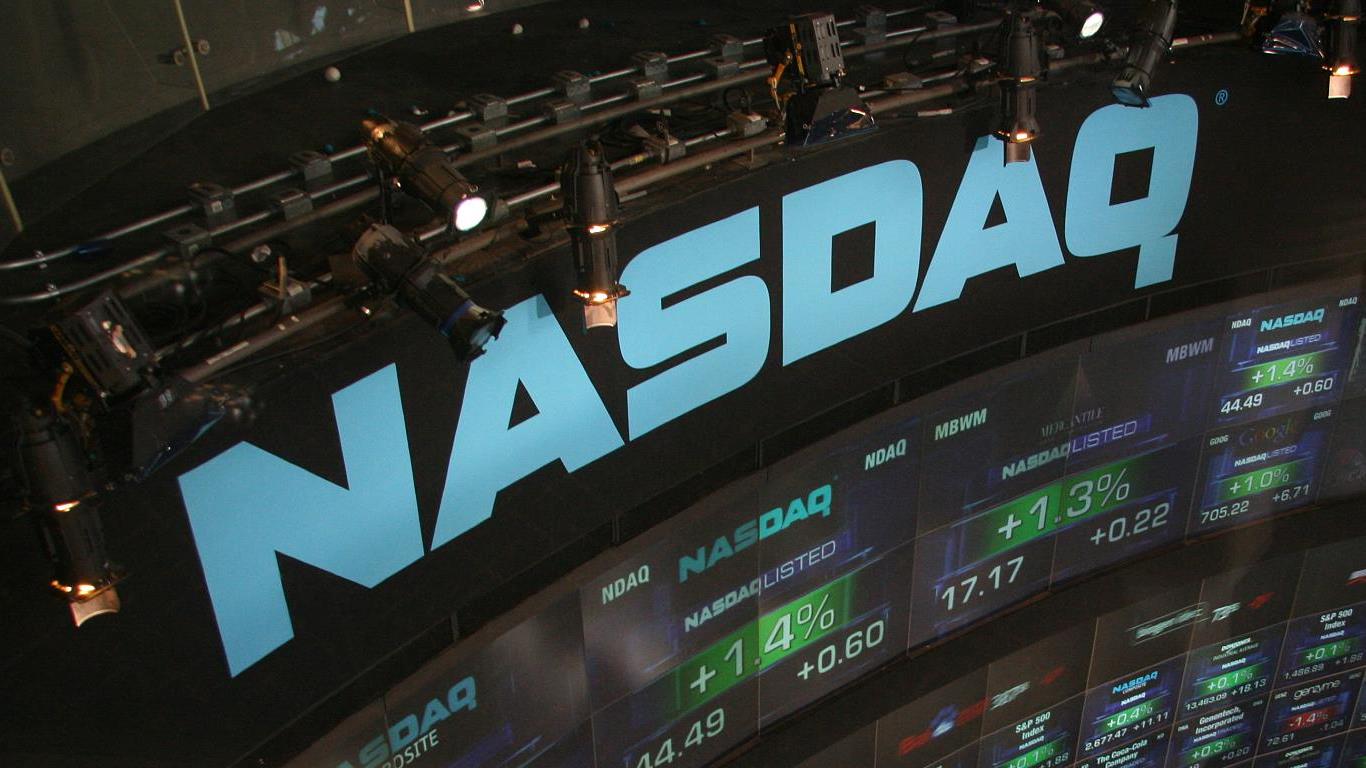
Fidelity Nasdaq Composite Index ETF (NASDAQ:ONEQ) is down 10% year-to-date through late March 2026, and the fund’s heaviest positions are pulling in the same direction. For investors holding it as a long-term growth vehicle, two specific forces will likely determine whether this pullback deepens or reverses over the next 12 months.
The fund’s core purpose is straightforward: give investors a single, low-cost way to own the entire Nasdaq Composite, which spans over 1,000 companies across technology, communications, consumer, and healthcare. Unlike its more famous cousin, the Nasdaq-100 (tracked by QQQ), ONEQ holds 1,031 securities including mid-cap and smaller names that QQQ excludes. The 0.21% expense ratio and $8.77 billion in assets make it a practical, liquid instrument. The recent pressure does not erase that long-term record, but it does raise a real question about what comes next.
The 10-Year Treasury Yield Is the Number to Watch
Growth stocks are priced on future earnings, and the rate used to discount those future earnings back to today matters enormously. When the 10-year Treasury yield rises, the present value of those distant profits shrinks, and valuations compress. ONEQ is 47% Information Technology and another 17% Communication Services, making it one of the most rate-sensitive broad index ETFs available.
The 10-year yield currently sits at 4.42%, up nearly 0.4% over the past month alone and sitting at the 87th percentile of the past year’s range. The Fed funds rate has held at 3.75% since December 2025, but the bond market is moving independently, pricing in either persistent inflation or stronger-than-expected growth. Either interpretation creates friction for ONEQ’s top holdings.
The signal to watch: if the 10-year yield approaches 4.6%, the high it reached in May 2025, expect renewed pressure on the fund’s mega-cap tech positions. Conversely, any Fed pivot toward rate cuts would likely provide meaningful relief. Track this weekly through the Federal Reserve’s FRED database, which updates daily.
Nvidia’s Weight Makes It a Fund-Level Event
ONEQ’s single biggest micro risk is concentration: nearly 11% of the entire fund sits in one stock, Nvidia. Apple is close behind at 11%. Together, those two positions represent more than a fifth of the fund. When one company controls that much weight, its earnings cycle effectively becomes the fund’s earnings cycle.
Nvidia is down 10% year-to-date and fell 14% over the past month. Apple has declined 8.4% year-to-date. These are not minor fluctuations in peripheral positions. Because index weights are tied to market capitalization, continued weakness in either stock mechanically drags the fund lower, while a recovery in Nvidia specifically would provide outsized upside given its position as the largest holding.
The VIX, Wall Street’s measure of expected near-term market volatility, is currently near 27.4 and sits at the 94th percentile of the past year’s readings. That elevated uncertainty amplifies how sharply individual large-cap moves can ripple through the fund. Watch Nvidia’s quarterly earnings reports and any guidance around AI data center demand, as that narrative has been the primary driver of its valuation. Fidelity publishes updated holdings monthly on its fund detail page, which is the cleanest way to track how weight shifts after each earnings cycle.
What This Means for the Next 12 Months
If the 10-year Treasury yield retreats from its current elevated level and the Fed signals additional cuts later in 2026, ONEQ’s growth-heavy composition should benefit from expanding valuations. But the fund’s performance will also hinge on whether Nvidia can stabilize and resume its role as the portfolio’s largest return driver, making that stock’s next earnings report one of the most consequential single events for ONEQ holders to track.
Contact [email protected] for any questions or corrections.











 Top Gaining Stocks
 Top Losing Stocks