




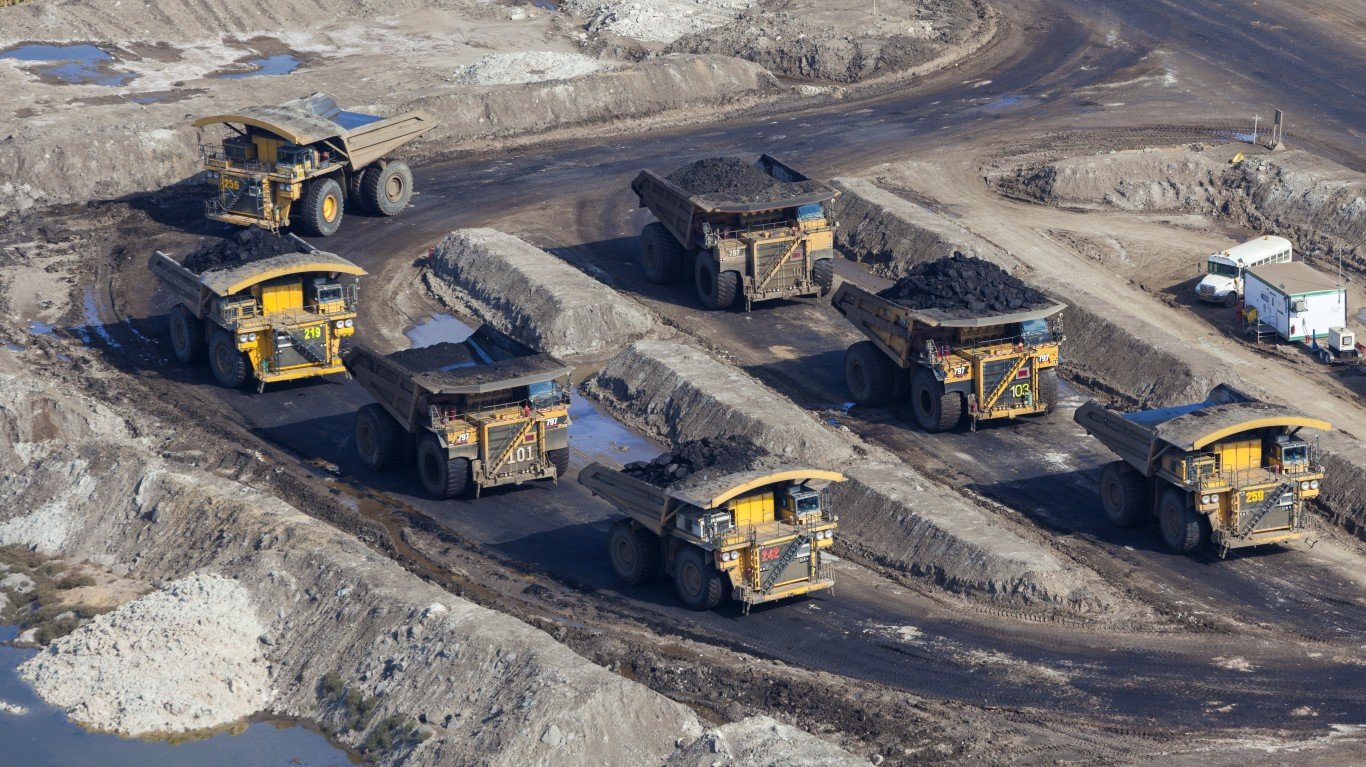
Governments around the world are treating metals and minerals as strategic assets, and that shift is creating a structural demand floor that did not exist a decade ago.
iShares MSCI Global Metals & Mining Producers ETF (NYSEARCA:PICK) offers diversified exposure to companies that extract metals from the ground, without layering in gold, silver, or uranium. The fund tracks the MSCI ACWI Select Metals & Mining Producers ex Gold and Silver Investable Market Index, with 236 total holdings spanning miners across Australia, Canada, Chile, Brazil, South Africa, Europe, Asia, and the Middle East. The sector breakdown leans heavily on Diversified Metals & Mining at 48.07%, Steel at 27.60%, and Copper at 14.00%.
Performance has been hard to ignore. The fund delivered a 50.72% NAV return in 2025, and over the past 12 months it has gained 55.82%. Year to date in 2026, the fund is up 8.34%, though it pulled back sharply in March. A mid-February report noted a 21.76% year-to-date return at that point, suggesting most of those gains gave back during the month’s volatility.
Governments Are the New Swing Buyers
The macro factor most likely to drive this ETF’s performance over the next 12 months is the acceleration of sovereign demand for critical minerals. Governments are now building strategic reserves in the same way they once stockpiled oil.
The U.S. outlined a roughly $12 billion strategic mineral reserve called Project Vault, aimed at bolstering supply-chain resilience for defense, electrification, and advanced manufacturing. Australia announced an $800 million state-backed stockpiling strategy prioritizing antimony, gallium, and rare earth elements. The European Union is advancing a joint reserve under its RESourceEU strategy. South Korea launched a minerals strategy backed by approximately $172 million in state support. India and Brazil formalized a bilateral cooperation agreement on rare earths and critical minerals in February 2026.
On Polymarket, a prediction market tracking H.R. 7126, which would establish a federal critical-minerals reserve, currently sits at 50/50 odds of becoming law by year-end. Passage would be a direct demand catalyst, but even the legislative debate signals that minerals policy has moved to the center of national security conversations in Washington.
When governments accelerate purchase commitments or announce new reserve targets, companies like BHP (NYSE:BHP | BHP Price Prediction), Rio Tinto (NYSE:RIO), and Freeport-McMoRan (NYSE:FCX), which together represent roughly 25.3% of this fund’s portfolio, stand to benefit from a more predictable demand base.
Concentration at the Top Is the Key ETF-Specific Signal
The micro factor worth watching is how concentrated the fund remains in its top holdings and whether rebalancing shifts exposure away from the names carrying the most sovereign demand tailwind.
The top holding is BHP Group, at 11.89% of the portfolio. Rio Tinto follows at 6.84%, and Freeport-McMoRan at 5.60%. Those three names account for a meaningful share of the fund’s day-to-day return behavior. Freeport is the world’s largest publicly traded copper producer and has direct exposure to the sovereign demand thesis through its copper output.
The fund’s expense ratio is 39 basis points, and its portfolio turnover is just 0.1, meaning holdings are stable and reconstitution events are rare. That low turnover benefits long-term holders, but the fund will not quickly pivot toward emerging beneficiaries of the minerals stockpiling trend, such as the rare earth names it holds in smaller positions. The fund’s P/E ratio of 19x and equity beta of 0.94 suggest the market is pricing in continued earnings growth without excessive speculation.
Monitor the iShares fact sheet, which updates monthly, for any shift in the top-ten weight distribution. If the fund’s copper-heavy names lose weight in favor of steel producers during a rebalance, the sovereign demand tailwind becomes less direct.
What to Watch Through Mid-2026
If the global wave of government mineral stockpiling continues to translate into firm commodity prices through mid-2026, this fund’s largest holdings should see earnings support. Watch the quarterly iShares holdings update for any rebalancing that reduces copper and diversified mining exposure in favor of steel, which carries a weaker sovereign demand story.
Contact [email protected] for any questions or corrections.










 Top Gaining Stocks
 Top Losing Stocks