Chevron vs ExxonMobil: Which Energy Stock Will Win In The New Oil Landscape?
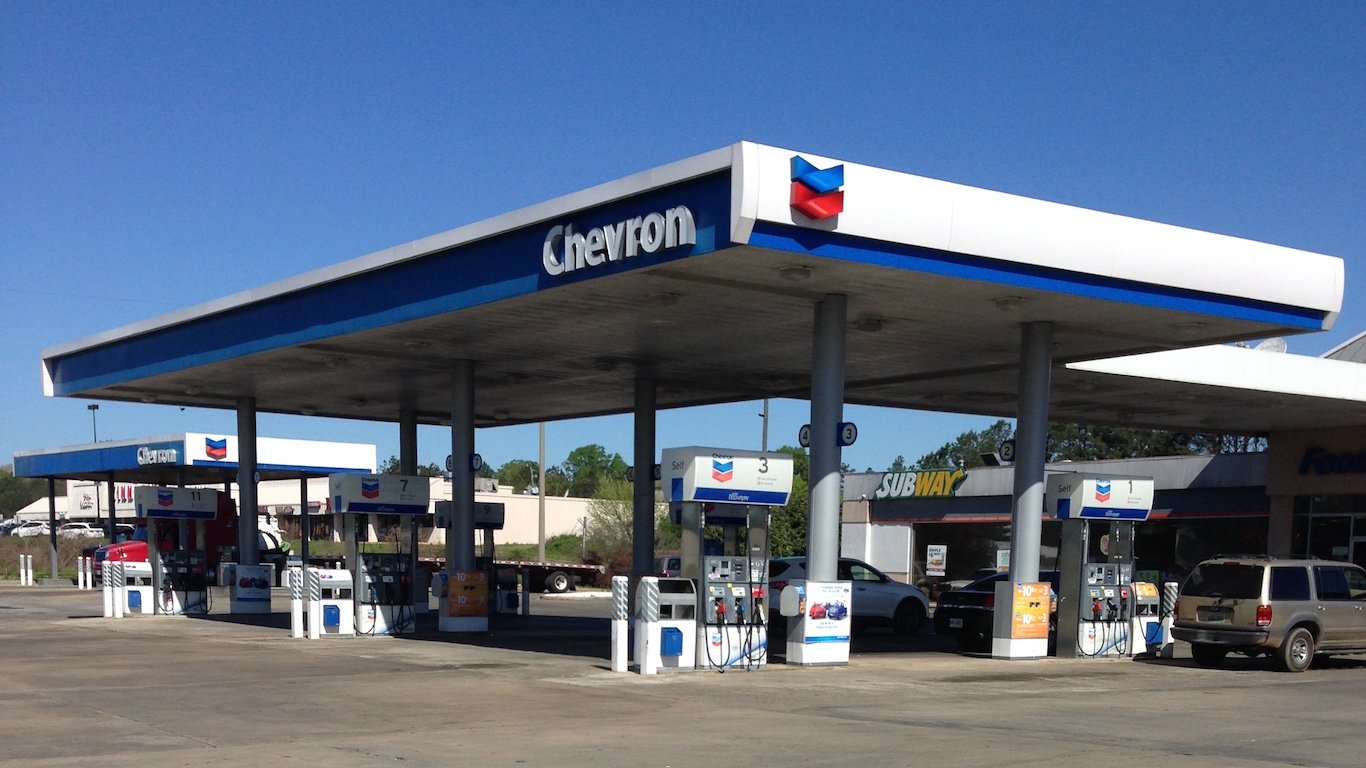
Energy company Chevron (NYSE:CVX | CVX Price Prediction) and ExxonMobil (NYSE:XOM) both closed out full-year 2025 with record production, rising shareholder returns, and dividend increases. Oil has since surged to $104.69 per barrel, making this the right moment to ask…


Energy company Chevron (NYSE:CVX | CVX Price Prediction) and ExxonMobil (NYSE:XOM) both closed out full-year 2025 with record production, rising shareholder returns, and dividend increases. Oil has since surged to $104.69 per barrel, making this the right moment to ask which integrated oil giant is the better dividend stock.
Record Output, But the Dividend Math Tells Two Different Stories
Both companies delivered record production in 2025. Chevron hit 3,723 thousand barrels of oil equivalent per day (MBOED) for the full year, including a milestone of 1 million BOE/day in the Permian Basin. ExxonMobil reached 4.7 million BOE/day, the highest output in over 40 years, with its Permian position alone hitting record 1.8 million BOE/day in Q4. Scale matters here, and Exxon’s is larger.
Dividend coverage is where the comparison sharpens. Chevron’s free cash flow came in at $16.6 billion in 2025 against a dividend payout of $12.75 billion, a coverage ratio of 1.30x. That’s tighter than it appears, because Chevron also spent $12.1 billion on buybacks, meaning total shareholder returns exceeded free cash flow.
ExxonMobil covered its $17.2 billion dividend payout with $52 billion in operating cash flow, a coverage ratio of 3.02x. That cushion is considerably more comfortable.
| Metric | CVX | XOM |
|---|---|---|
| Quarterly Dividend | $1.78 | $1.03 |
| Dividend Yield (approx.) | ~3.6% | ~2.6% |
| Annual Dividend Streak | 39 years | 43 years |
| FY2025 FCF Coverage | 1.30x | 3.02x |
| FY2025 Buybacks | $12.1B | $20.0B |
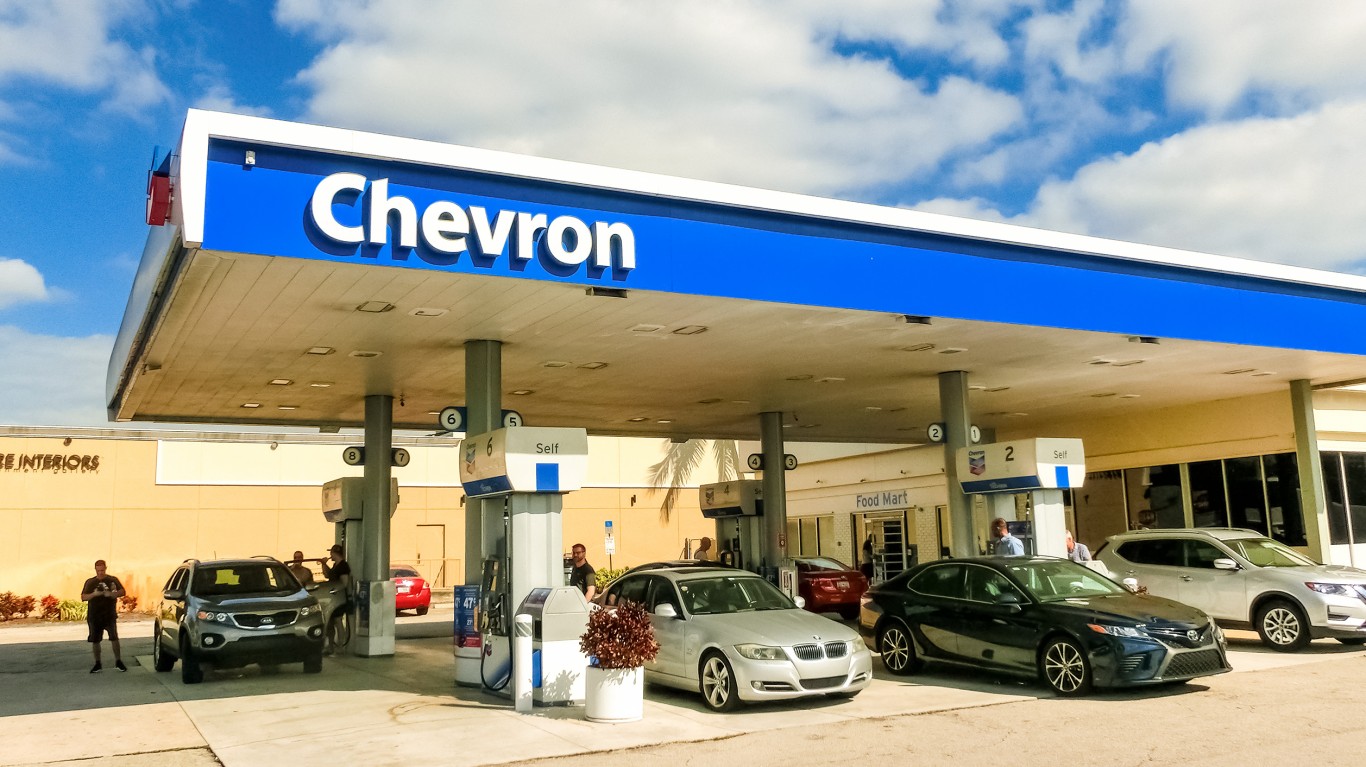
Chevron Cuts Costs. Exxon Builds Platforms.
Chevron CEO Mike Wirth framed 2025 as a year of integration and discipline: “We successfully integrated Hess, started-up major projects, delivered record production and reorganized our business. This resulted in industry-leading free cash flow growth and superior shareholder returns, despite declining oil prices.” The structural cost reduction program delivered $1.5 billion in savings in 2025 toward a target of $3 to $4 billion by end of 2026.
ExxonMobil CEO Darren Woods emphasized transformation over consolidation: “ExxonMobil is a fundamentally stronger company than it was just a few years ago, and our 2025 results demonstrate that. Our transformation is delivering a more resilient, lower-cost, technology-led business with structurally stronger earnings power.” Exxon’s cumulative structural cost savings reached $15.1 billion since 2019, targeting $20 billion by 2030.
One notable risk for Chevron: its net debt ratio rose to 15.6% following the Hess deal, up from 10.4% pre-acquisition. Exxon carries a comparatively stronger balance sheet.
The Next Test Is Whether Chevron’s Cost Cuts Arrive on Schedule
With crude oil above $100, near-term cash generation looks strong for both. The question is durability. Exxon’s 2026 planned repurchases of $20 billion and CapEx guidance of $27 to $29 billion reflect confidence in its cash generation capacity.
Chevron’s forward P/E of 16x suggests analysts expect earnings improvement tied to cost savings materializing. Watch whether Chevron delivers the full $3 to $4 billion in structural savings by year-end, as that would restore its dividend coverage to a more comfortable level.
Why ExxonMobil Has the Edge on Dividend Reliability
Chevron’s yield is higher at roughly 3.6% versus Exxon’s approximately 2.6%, and its 4% dividend increase announced with Q4 results shows real commitment to income investors. But the 1.30x Free Cash Flow coverage ratio leaves less room for error if oil pulls back.
Exxon’s 3.02x coverage, 43-year dividend growth streak, and larger absolute cash generation give it a more defensible payout. Chevron fits a value-oriented income investor who believes its cost program executes cleanly. For a dividend that holds through an oil price cycle, Exxon’s balance sheet and coverage metrics make a stronger case.
Contact [email protected] for any questions or corrections.
Vandita Jadeja is a financial copywriter who loves to read and write about stocks. She believes in buying and holding for long term gains. Her knowledge of words and numbers helps her write clear stock analysis. She has contributed to several publications, including the Joy Wallet, Benzinga, The Motley Fool and InvestorPlace.