XRP Price: XRP Just Posted Its Worst Quarter in 8 Years — Can the CLARITY Act Turn Things Around in April?
XRP (CRYPTO: XRP) reached $2.40 in early January and looked like it was building on the momentum from late 2025. But profit-taking and capital rotating toward Bitcoin pulled the XRP price down 10.6% by the end of January. February’s 16.2% drop…

This post may contain links from our sponsors and affiliates, and Flywheel Publishing may receive compensation for actions taken through them.

XRP (CRYPTO: XRP) reached $2.40 in early January and looked like it was building on the momentum from late 2025. But profit-taking and capital rotating toward Bitcoin pulled the XRP price down 10.6% by the end of January.
February’s 16.2% drop came as geopolitical tensions escalated into a full-scale conflict between the U.S. and Iran. March added another 2.79% as oil prices crossed $100 and the war widened further. XRP closed Q1 at $1.33, down by 27.1% for the quarter, making it the worst first quarter since 2018.
Despite the dismal Q1, XRP is heading into the second quarter of the year with a key catalyst that could turn things around. April brings one thing that Q1 did not have: the CLARITY Act. The Senate returns from Easter recess on April 13, and the Banking Committee markup is targeted for the second half of the month. So, could the CLARITY Act spark an XRP price recovery alongside the broader crypto market?
How Bad Was Q1 2026 for XRP?
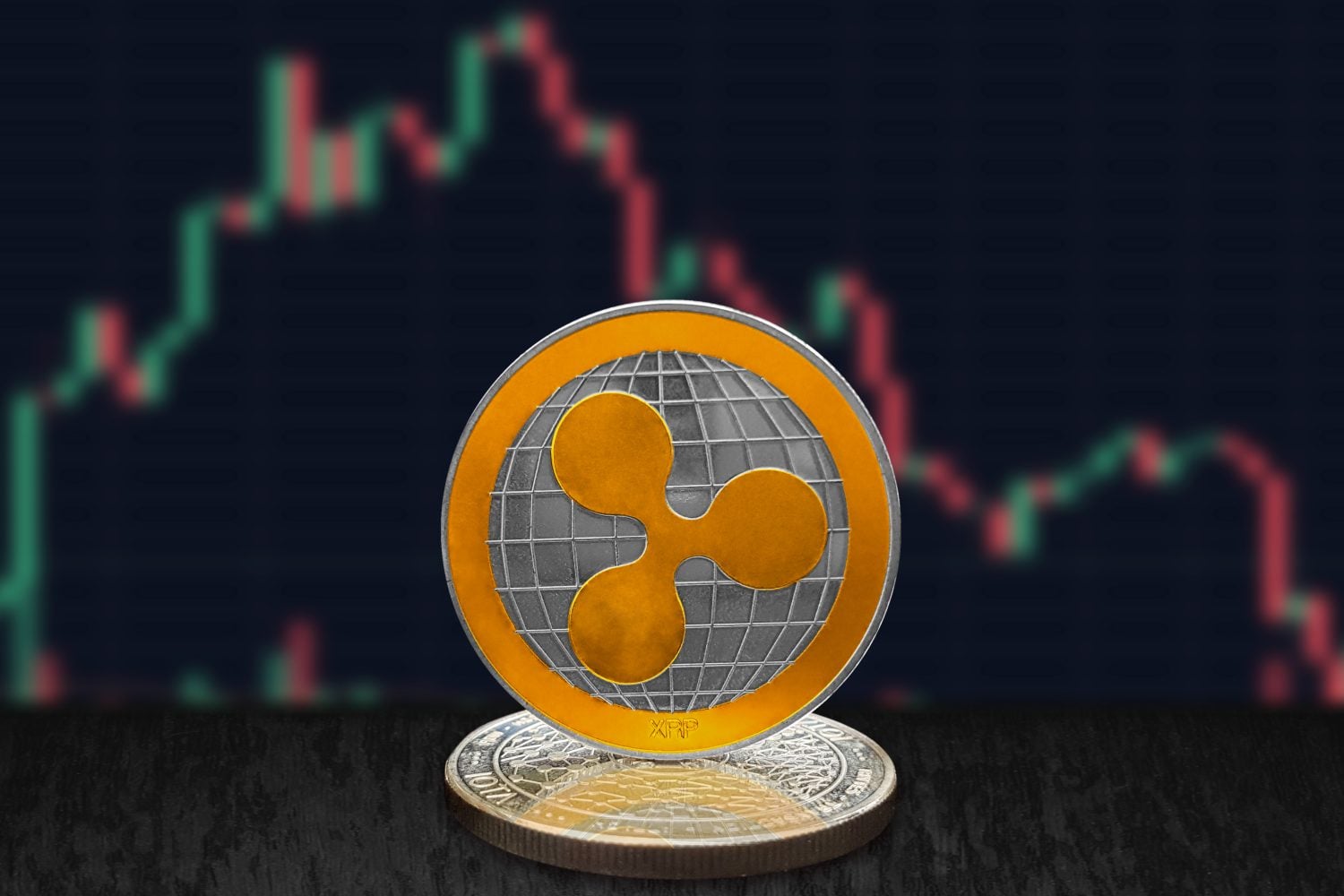
XRP’s market cap shrank from roughly $112 billion at the start of the year to $83 billion by the end of March, a drop of nearly $29 billion in three months. After the early January 25% spike to $2.40, the XRP price never came close to that level again, falling steadily through every month as the war, oil prices, and broader market sell-offs dragged it lower.
XRP ETFs, which had pulled in over $1.2 billion in cumulative inflows with no outflow days during their first four months after launching, flipped to net outflows in March. CoinShares reported that there were $130 million in net redemptions from XRP-linked funds.
What makes the Q1 decline so frustrating is that the fundamentals underneath XRP have never been stronger. The SEC and CFTC classified XRP as a digital commodity on March 17, removing the legal uncertainty that had hung over the token for years. Ripple reported a record first quarter after securing a partner program with Mastercard and hitting a $50 billion valuation. Banks including Deutsche Bank and Société Générale adopted Ripple’s payment infrastructure.
However, none of it mattered as the XRP price kept dropping on nearly every positive announcement. This was because macro conditions in Q1 were hostile to all risk assets and no amount of good news from Ripple was enough to override that.
Can the CLARITY Act Turn Things Around in April?
Every positive development in Q1 ran into the same wall because there was no federal law that turned Ripple’s partnerships into actual XRP demand. The CLARITY Act is the bill that could change that. If it passes, XRP’s commodity classification gets written into permanent federal statute, which means a future SEC chair cannot reverse it the way an executive order can be undone.
More importantly for the XRP price, the bill gives U.S. banks the legal framework they need to use XRP directly through On-Demand Liquidity for cross-border settlement. That is what connects Ripple’s infrastructure to real buying demand for the token, and it is the piece that has been missing while every partnership announcement failed to move the price.
The disputes that had been holding the bill up, primarily around stablecoin yield provisions, have been largely resolved according to lawmakers involved in the negotiations. And the Senate returns from recess on April 13 with the Banking Committee markup targeted for the second half of the month. But Senator Moreno has warned that if the bill does not pass the Senate by May, digital asset legislation may not get serious consideration again until after the 2026 midterms, which could push things into 2027.
The Banking Committee markup is only the first of five steps before the bill reaches the President’s desk, so a late April markup already leaves a narrow window. Polymarket puts the odds of the CLARITY Act being signed into law in 2026 at 63%The passage is not guaranteed, but April is the month where the path forward either opens or closes for XRP.
Will Q2 2026 Be Different for XRP?
Q1 showed that XRP’s problem is not adoption, ETFs, or regulatory wins—it had all of those and the price still dropped by 27%. The missing piece is the federal law that turns Ripple’s growing infrastructure into actual buying demand for the token. Ripple will keep sealing partnerships but none of it would impact the XRP price until the bill passes.
April is the narrowest window XRP has had for that to change. If the CLARITY Act advances through the Banking Committee before May, Q2 starts with something Q1 never had. If it stalls again, the same fundamentals that failed to move the price for three straight months will keep failing for the same reason—and the next opportunity may not come until 2027.
Contact [email protected] for any questions or corrections.
Sam Daodu is a crypto analyst who's spent nearly a decade making blockchain understandable—no easy task when most whitepapers read like fever dreams. He writes for 24/7 Wall St., covering Bitcoin, altcoins, and crypto market analysis for investors. Before crypto, he was a tech writer (back when explaining "the cloud" was peak innovation). Since 2018, he's written for CoinTelegraph, Yahoo Finance, The Block, Cryptonews, Zypto, Rain, and more—basically anywhere people want crypto news without the headache. Sam runs MacLabs Marketing, a content agency for crypto brands tired of sounding like AI wrote their website. He also publishes free crypto education on his site for Web3 enthusiasts who think "gas fees" is a typo. When he's not writing or staring at charts, Sam's either: - Watching anime (currently convinced One Piece has better tokenomics than most altcoins) - At the gym sculpting himself into a Greek god - Listening to the music your mum warned you only bad boys listen to Connect: LinkedIn | Email | MacLabs Marketing