NVIDIA CEO Jensen Huang Says AGI Is Here. If He’s Right, These Stocks Win Big
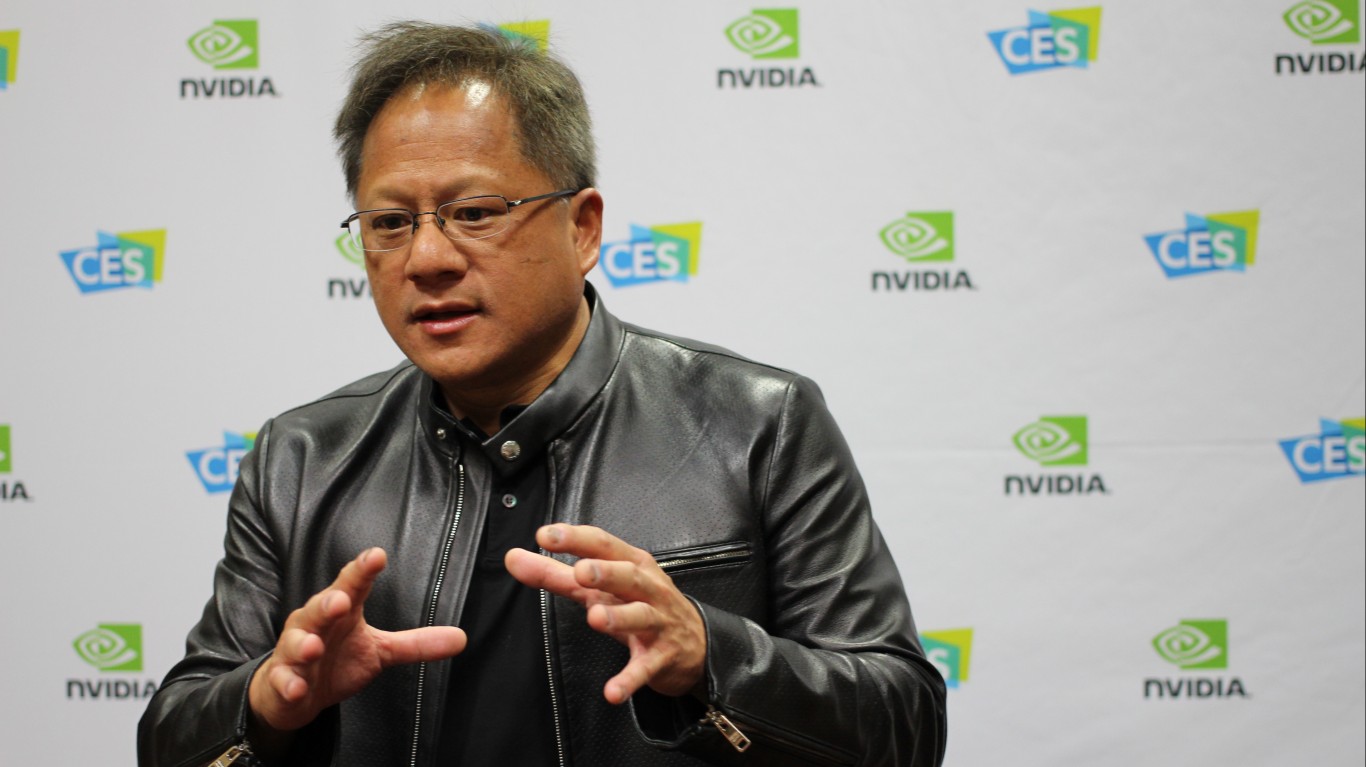
Nvidia (NASDAQ:NVDA | NVDA Price Prediction) top boss, Jensen Huang, went ahead and answered the question that many investors are asking about: When will AGI (artificial general intelligence) arrive? Well, Huang thinks, “we’ve achieved AGI.” And if that’s the case,…


Nvidia (NASDAQ:NVDA | NVDA Price Prediction) top boss, Jensen Huang, went ahead and answered the question that many investors are asking about: When will AGI (artificial general intelligence) arrive? Well, Huang thinks, “we’ve achieved AGI.” And if that’s the case, investors might have to revisit the drawing board to consider the implications and the potential winners and losers as the revolutionary technology looks to turn into some form of massive productivity growth.
Depending on how you define AGI, it’s tough to tell when the finish line has been passed. Certainly, there won’t be any sort of bell that goes off when the feat is achieved. But perhaps we’ll only really know for sure well after the fact, after the technology has had a chance to transform industries.
Is AGI already here?
While the skeptics are right to challenge Jensen’s views that AGI is already here, I do think that the Nvidia CEO’s comments are not to be taken lightly, especially as mega-cap tech looks to automate a considerable number of roles in the coming months.
While agentic AI is becoming more capable by the day, with one-person companies now becoming a thing, especially in China, the case for Nvidia’s AGI call, I think, isn’t all that far-fetched anymore. It’s quite profound that just one person can tap into digital labor to run a business that actually generates revenue.
Where this all goes, though, remains the million-dollar question. While AI probably hasn’t become conscious yet, it seems as though “functional AI,” which could lead to real-world productivity gains, may already be on the horizon if it’s not here already. Either way, I think it’ll be clearer looking back once more data has a chance to flow in. If AGI is here or is close to being, I think it’s time to set one’s sights on the companies that stand to benefit most:
Nvidia
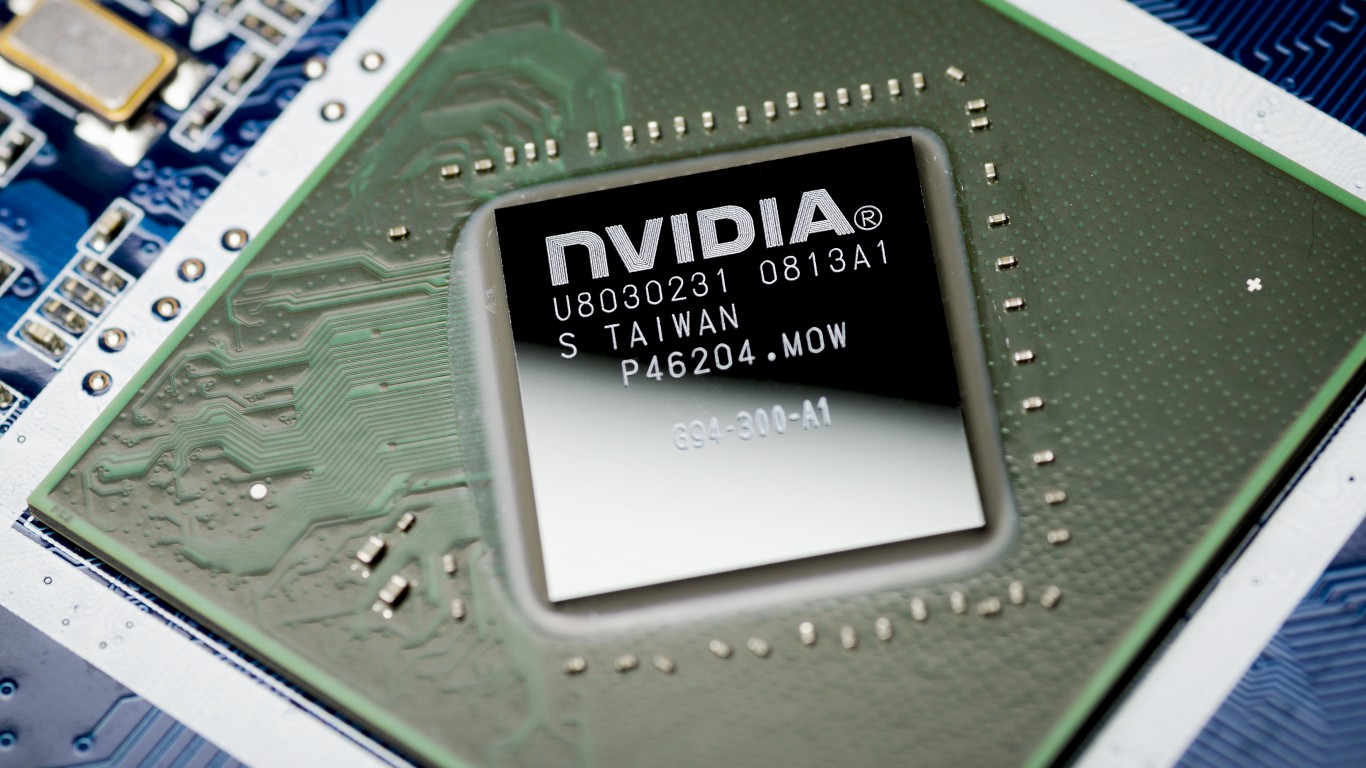
Of course, Nvidia is an obvious winner from the rise of AGI. It’ll be able to sell more AI chips while readying up for the boom that follows Vera Rubin. The company already expects to pull in $1 trillion in Blackwell and Vera Rubin sales through next year. Some would argue that the sky-high target skews conservative, especially if AGI is here, agents are ready to get to work (if they aren’t already), and there’s a big wave of white-collar displacement across corporate America.
The latest and greatest AI tools from Anthropic are quite profound. Whether it’s Claude Code, the impressive Cowork agent, industry-specific models that have contributed to the SaaS-pocalypse, or the recently leaked cybersecurity model Mythos, there’s something big happening at Dario Amodei’s efficiency-focused enterprise AI firm. The Mythos leak, in particular, is quite scary considering what could happen if the tool falls into the wrong hands.
Either way, Nvidia will remain a top “pick and shovels” play as agents unlock a new wave of inference compute demand. And if AGI is here, perhaps we’re still drastically underestimating where demand could go next.
Amazon
Amazon (NASDAQ:AMZN) stock might be in a hangover due to the CapEx drag that’s weighing down the hyperscalers. Still, Amazon stands out as a company that can unlock the monetary benefits far sooner in the game than most, as it harnesses the power of agents.
And if AGI has really been achieved, perhaps the magnitude of the gains to come might be unrecognized by investors who are more than willing to wait for further evidence of meaningful monetization before punching their ticket back into a stock that hasn’t really performed as well as it could have in the past five years.
For Amazon, AGI could mean that everyone from customer service representatives to coders becomes automatable. Beyond the white-collar displacement, many of the demanding physical jobs at the warehouse may also soon be replaced. Undoubtedly, the firm’s warehouse robots are already pulling serious weight. Add drone delivery, doorstep robots, and autonomous vehicles into the equation, and perhaps AGI is the booster that physical AI needs to enter the mainstream.
In my view, Amazon has serious margin gains to be had as functional AI takes up the seats humans once held. It’s a relatively capital-intensive business, but in an AGI era, perhaps it’ll become a smooth-running machine with margins many sell-side analysts may not have thought possible.
Contact [email protected] for any questions or corrections.
Joey is a 24/7 Wall St. contributor and seasoned investment writer whose work can also be found in publications such as The Motley Fool and TipRanks. Holding a B.A.Sc in Computer Engineering from the University of British Columbia (UBC), Joey has leveraged his technical background to provide insightful stock analyses to readers.
Joey's investment philosophy is heavily influenced by Warren Buffett's value investing principles. As a dedicated Buffett disciple, Joey is committed to unearthing value in the tech sector and beyond.