ASML Revenue Is About to Explode Higher Again
AI chip demand keeps climbing, but chipmakers hit a brick wall without the right tools to crank out the next generation of processors. Only one company’s machines can unlock it: ASML Holding‘s(NASDAQ:ASML | ASML Price Prediction) extreme ultraviolet (EUV) lithography…

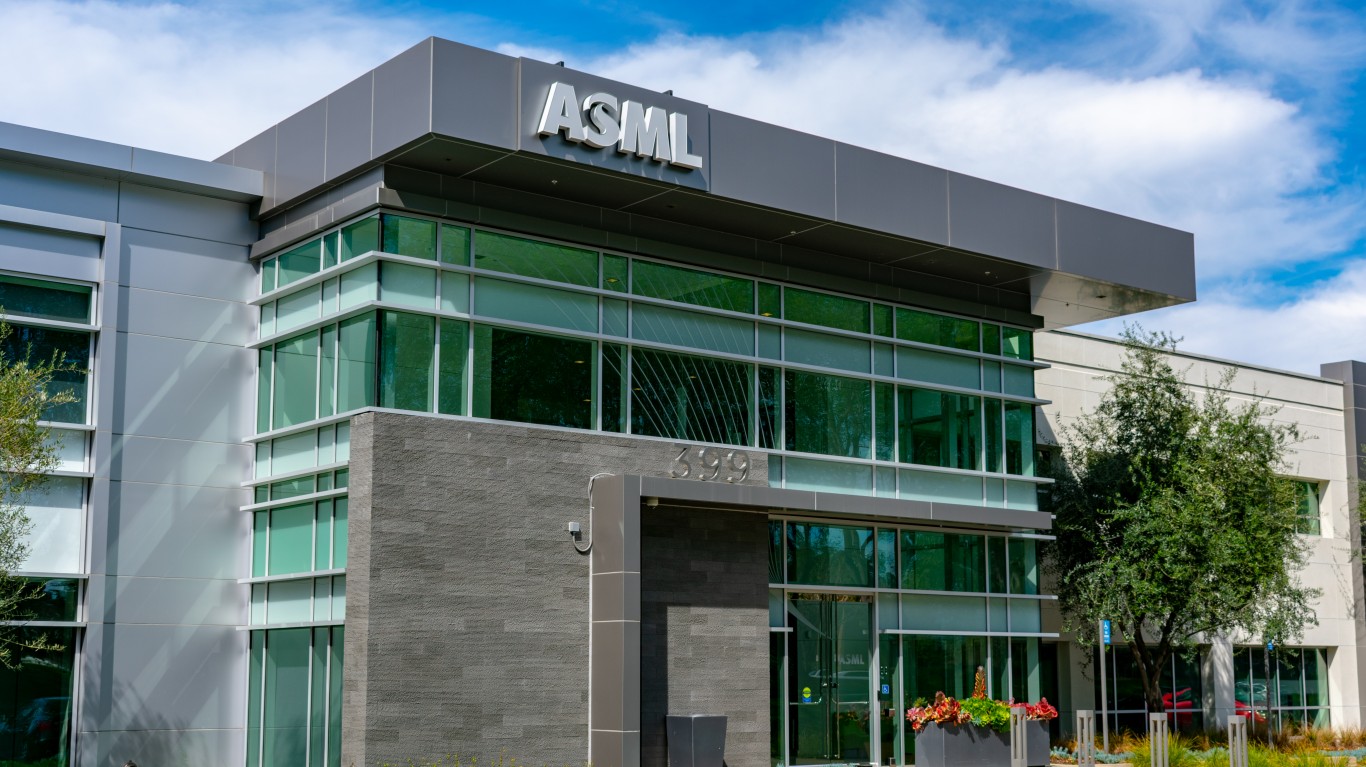
AI chip demand keeps climbing, but chipmakers hit a brick wall without the right tools to crank out the next generation of processors. Only one company’s machines can unlock it: ASML Holding‘s(NASDAQ:ASML | ASML Price Prediction) extreme ultraviolet (EUV) lithography systems sit at that exact choke point.
The Dutch equipment maker owns the only commercial equipment capable of patterning circuits at 7 nanometers (nm) or smaller — the precise scale every leading AI accelerator requires. As foundries race to meet orders from Nvidia (NASDAQ:NVDA), Advanced Micro Devices (NASDAQ:AMD), and the hyperscalers, ASML’s order book just got a massive jolt. Two fresh deals highlight why revenue could surge well beyond current forecasts.
ASML’s Monopoly Powers the AI Chip Boom
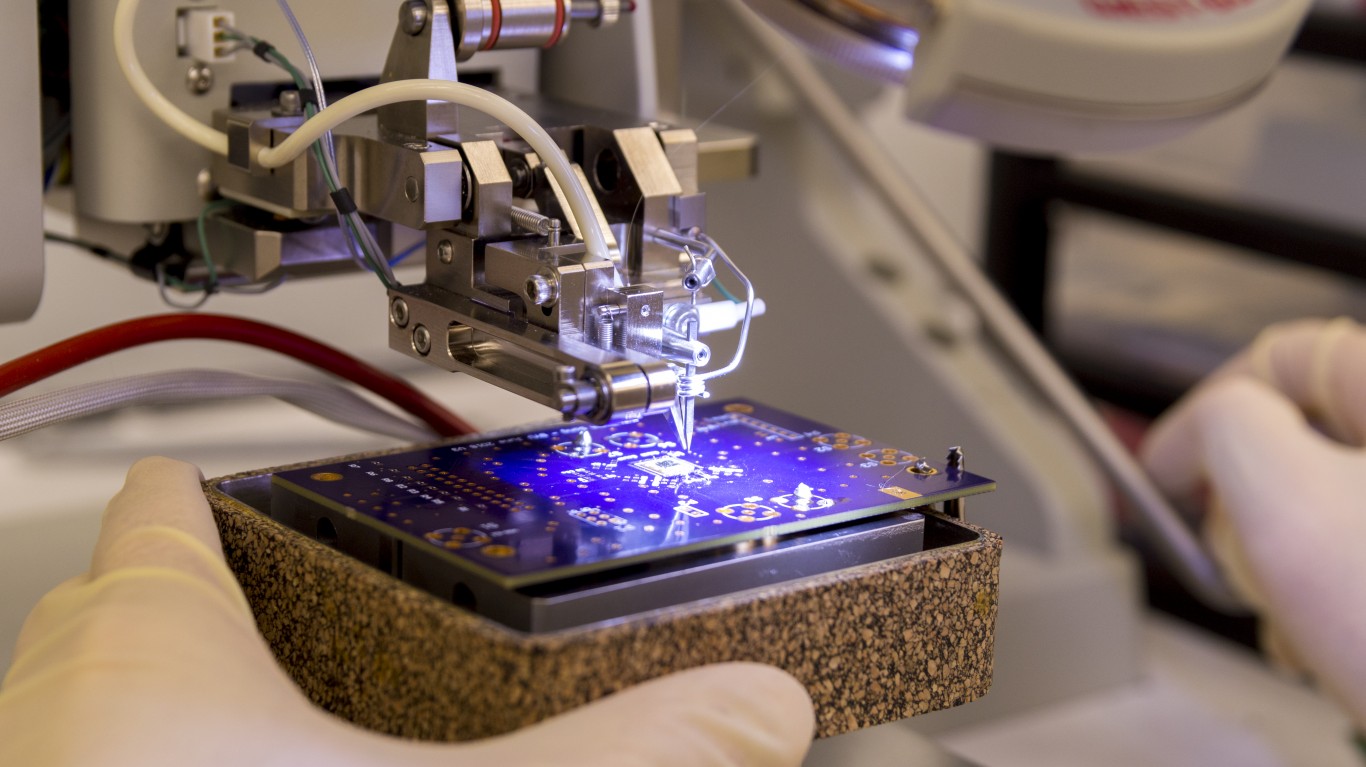
Let’s start with the basics. EUV lithography works by firing 13.5-nanometer light at silicon wafers to etch microscopic features. No other supplier — Nikon or Canon included — makes production-ready EUV tools. That gives ASML 100% market share in the technology driving sub-7nm chips. Taiwan Semiconductor Manufacturing (NYSE:TSM), Samsung, Intel (NASDAQ:INTC), and SK Hynix all rely on it for the high-bandwidth memory and logic dies that power AI training clusters.
The numbers back this up. ASML generated 32.7 billion euros in net sales for full-year 2025. That marked a 15% rise from 2024, with earnings climbing 28.5% to 24.73 euros per share. For 2026, management guided revenue between 34 billion and 39 billion euros — implying 4% to 19% growth — with gross margins holding at 51% to 53%. The installed base already exceeds 38 billion euros in backlog, and more than half of new bookings tie directly to EUV systems. In short, every expansion in AI infrastructure flows through ASML’s doors.
Landmark Orders Lock In Billions
Chipmakers aren’t waiting. On March 24, SK Hynix disclosed that it will buy 11.95 trillion won — roughly $8 billion — worth of EUV tools from ASML, with delivery by December 31, 2027, the largest single EUV commitment publicly disclosed by any ASML customer. Bernstein analyst David Dao estimates it covers about 30 machines, aimed squarely at ramping high-bandwidth memory for AI. That’s real money: at average EUV pricing of $250 million to $300 million per unit, the deal alone rivals a quarter of ASML’s 2025 revenue.
And this morning, fresh reports indicate Samsung plans to secure approximately 20 EUV systems for its Pyeongtaek P5 fab site. Construction on P5 resumed after a two-year pause, with Bernstein noting a July 2028 target completion. At current EUV pricing, those 20 machines could add $4 billion or more to ASML’s pipeline — right in line with expectations from last year’s Korea Economic Daily coverage. Samsung wants to lock in slots now, before competitors claim more capacity. Delivery timelines stretch 12 to 18 months, so revenue recognition will hit in 2026 and 2027, but the backlog boost is immediate.
These orders matter because they exceed typical quarterly bookings. ASML’s Q4 results already showed 13.2 billion euros in new orders. Add SK Hynix’s $8 billion and a potential Samsung $4 billion, and visibility into 2027 revenue improves dramatically. EUV systems carry higher margins than older deep-ultraviolet tools, so the mix shift supports management’s long-term target of 56% to 60% gross margins by 2030.
Risks and the Path Forward
Granted, headwinds exist. Export curbs limit shipments to China, which once accounted for a sizable slice of sales. Geopolitical friction could slow some orders. That said, AI demand from U.S. and allied foundries more than offsets the gap. ASML’s forward P/E stands at about 45 times trailing earnings — premium, yes, but below peaks seen during prior AI surges.
Compare that to the broader semiconductor equipment group, where no peer matches ASML’s moat or growth rate. Free cash flow generation remains robust, supporting a 12 billion euro share-buyback program through 2028.
Key Takeaway
When all is said and done, these deals signal ASML’s revenue is set to outpace its own 2026 guidance and accelerate into 2027. The AI chip race isn’t slowing — chipmakers are simply paying up to stay in it.
Savvy investors who buy ASML today gain direct exposure to the one indispensable link in the supply chain. Hold through volatility, watch the April 15 Q1 print for order updates, and let the monopoly compound. The data says the next leg higher is already booked.
Contact [email protected] for any questions or corrections.
After two decades of patrolling the dark corners of suburbia as a police officer, Rich Duprey hung up his badge and gun to begin writing full time about stocks and investing. For the past 20 years, he’s been cruising the markets looking for companies to lock up as long-term holdings in a portfolio while writing extensively on the broad sectors of consumer goods, technology, and industrials. Because his experience isn’t from the typical financial analyst track, Rich is able to break down complex topics into understandable and useful action points for the average investor. His writings have appeared on The Motley Fool, InvestorPlace, Yahoo! Finance, Money Morning, and, of course, 24/7 Wall St. He has been featured in both U.S. and international publications, including MarketWatch, Financial Times, Forbes, Fast Company, and USA Today.