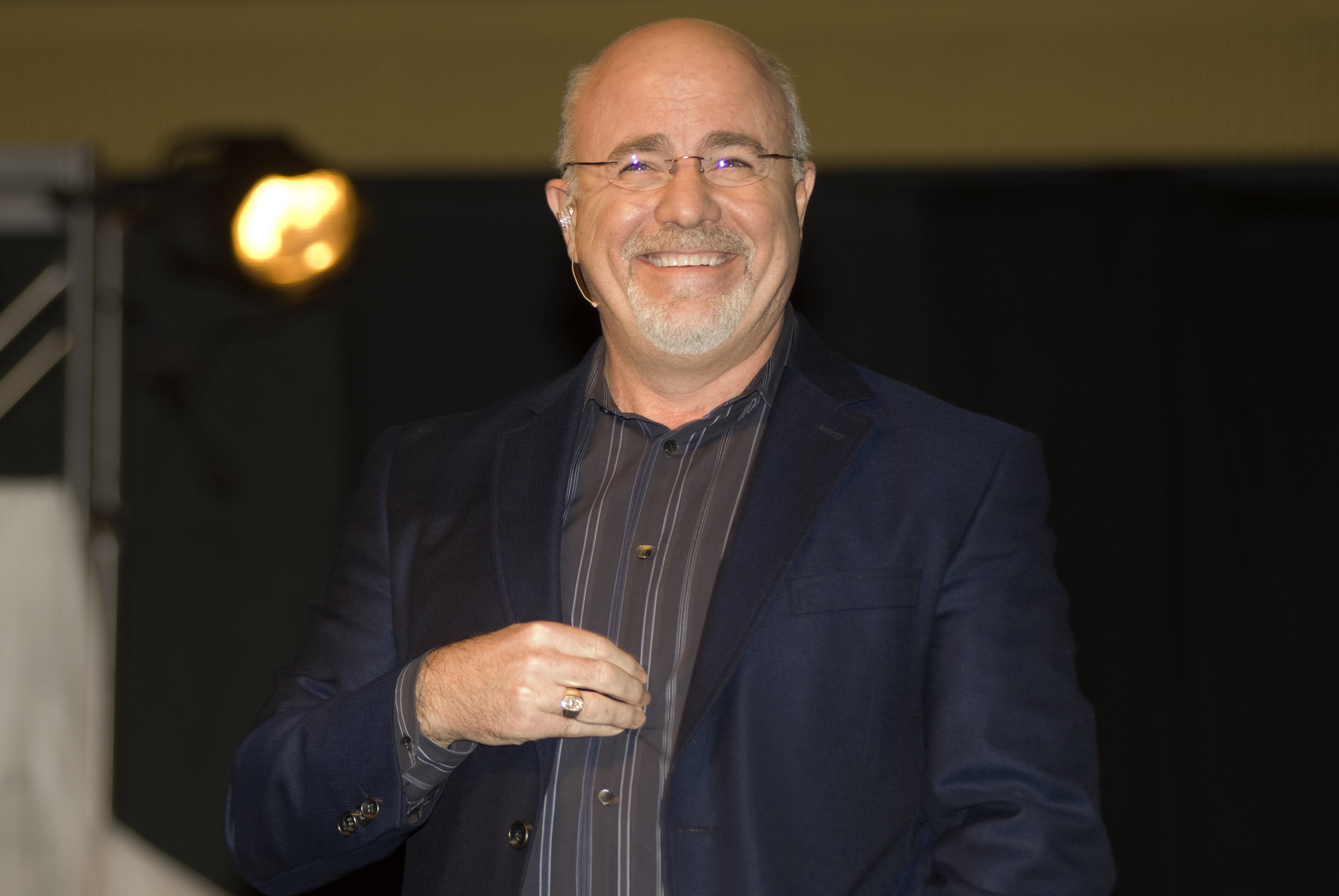
Clark Howard Says Banks Are Benign Drug Dealers, Here Is What He Really Means
Clark Howard has a gift for naming things precisely enough to make you uncomfortable. On the April 3, 2026 episode of The Clark Howard Podcast, he dropped a phrase that deserves to stick: “Think of them as benign drug dealers.…

Clark Howard has a gift for naming things precisely enough to make you uncomfortable. On the April 3, 2026 episode of The Clark Howard Podcast, he dropped a phrase that deserves to stick: “Think of them as benign drug dealers. They’re trying to get you hooked so that you have to have their product.” He was talking about Pay in 4 programs, the buy-now-pay-later products offered at checkout by Affirm, Klarna, Afterpay, and their competitors. His verdict is correct, and the behavioral finance behind it explains why.
Why Pay in 4 Hits Differently Than a Credit Card
A listener named Randy from Ohio pushed back on Howard, arguing that Pay in 4 is no different from a credit card. Randy’s framing is reasonable on the surface: both are forms of deferred payment, and Randy’s personal rule is sensible. “If you don’t need it or don’t have the money, don’t buy it.” The problem is that Pay in 4 is specifically engineered to make that rule harder to follow.
With a credit card, the full price appears on your statement. Your brain registers $400 for a new jacket. With Pay in 4, the checkout screen shows $100 today. That single reframing changes the purchase calculus entirely. Research in behavioral economics calls this “payment decoupling”: when the pain of paying is separated from the pleasure of receiving, people spend more and feel less financial friction doing it. Data backs this up. BNPL users spend approximately 6% more than non-BNPL shoppers, a gap that reflects psychology, not savings.
Howard put it plainly: “It’s like gasoline on the debt fire.” A credit card already separates purchase from payment. Pay in 4 amplifies that separation by breaking one payment into four smaller ones, each spaced two weeks apart, each small enough to feel manageable in isolation.
How Banks Designed This to Work Against You
Howard noted that banks were eager to bring Pay in 4 to the U.S. after watching it drive debt in Australia. That is not a coincidence. These products were tested in a real consumer market, observed for their effect on spending behavior and debt accumulation, and then imported here. Australia has since moved to rein them in. As of June 2025, BNPL products in Australia were reclassified as “low-cost credit contracts” under the National Consumer Credit Protection Act, requiring providers to obtain an Australian Credit License and comply with responsible-lending obligations. The U.S. has moved more slowly: in May 2025, the CFPB withdrew its 2024 interpretive rule that would have regulated BNPL purchases like credit card transactions, leaving the regulatory gap wide open at the federal level. New York has since moved to fill part of that void. In May 2025, Governor Kathy Hochul signed the state’s Buy Now, Pay Later Act, which imposes licensing requirements on BNPL lenders alongside limits on charges and data privacy protections. The United Kingdom went further: the Financial Conduct Authority’s regulation of qualifying deferred-payment credit took effect on July 15, 2026, introducing affordability checks, clearer pre-contract disclosures, and access to the Financial Ombudsman Service.
The mechanics are straightforward. A $300 purchase becomes four payments of $75, spaced every two weeks. No interest on the installments, which feels like a win. But the psychological effect is that you can now afford things you previously could not, at least in the moment. The brain’s impulse to have something now, which Howard identifies as the core vulnerability, gets fed rather than checked. That impulse is increasingly being applied to necessities: a March 2026 LendingTree survey found that 29% of BNPL users had used the service to buy groceries, nearly double the 14% who reported doing so a year earlier.
The scale of the market makes this worth taking seriously. According to the Federal Reserve Bank of Richmond, the total transaction value of BNPL loans in the U.S., measured in real terms, has grown roughly 20% per year since 2021, reaching an estimated $70 billion in 2025, or about 1.1% of total credit card spending. Most of that activity is invisible to traditional lenders: BNPL loans are generally not reported to credit rating agencies, so other lenders do not know the borrowers’ full existing liability when making credit decisions. Regulators have called this problem “phantom debt.”
Consumer sentiment data underscores the stakes. The University of Michigan Consumer Sentiment Index fell to 51.7 in August 2026, its first decline in three months, and remained roughly 11% below its year-ago level. The index had hit a record low of 44.8 in May 2026, and while it recovered through June and July, consumers continue to cite persistent inflation and a worsening business outlook as drags on their finances. The personal savings cushion has thinned sharply alongside that anxiety. According to the Bureau of Economic Analysis, the U.S. personal savings rate fell to 2.7% in June 2026, down from 4.5% at the start of the year. Financially stretched consumers with shrinking savings buffers are exactly the audience most vulnerable to products that make spending feel smaller than it is.
Who This Advice Fits and Who Needs to Be More Careful
Randy’s approach works if you have the discipline to treat each Pay in 4 installment as a full purchase commitment and track all four payments the way you would a credit card balance. If you use a budget, monitor your cash flow weekly, and never carry more than one Pay in 4 obligation at a time, the product is genuinely interest-free short-term financing.
The risk profile looks different for someone juggling multiple Pay in 4 balances across different retailers, which the apps make easy to do. Each individual payment looks small. The combined obligation can quietly reach several hundred dollars per month before the pattern becomes visible. A 2026 LendingTree survey found that 47% of BNPL users made a late payment in the previous year, up from 41% a year before that and 34% the year before that. The trend is moving in one direction. Unlike a credit card statement that consolidates your total debt in one place, Pay in 4 balances are fragmented across apps, making the total harder to see and easier to underestimate. When late payments do hit, 64% of users who paid late were charged extra fees, according to the Federal Reserve’s 2025 household survey.
What to Do Before Your Next Checkout
Before using any Pay in 4 offer, add up every installment payment you currently owe across all active plans. Write down the total. If that number would make you hesitate to put the same amount on a credit card, the Pay in 4 option is not actually making the purchase more affordable. It is making it harder to see what you owe.
Howard’s drug dealer metaphor is deliberately provocative, but the underlying point is precise: these products are designed to reduce friction at the moment of purchase, and reduced friction means more purchases. The product works as intended. The question is whether it works for you.
Editor’s note: This article has been updated to reflect the August 2026 final University of Michigan Consumer Sentiment Index reading of 51.7 (down from the June 2026 figure of 49.5 previously cited), the U.S. personal savings rate of 2.7% in June 2026 per the Bureau of Economic Analysis (updated from 3.0% in May 2026), and the latest LendingTree BNPL late-payment figure of 47% from the March 2026 survey (up from the 41% figure cited previously). The UK Financial Conduct Authority’s July 2026 BNPL regulation and New York’s Buy Now, Pay Later Act were also added, along with LendingTree data showing that 29% of BNPL users have financed grocery purchases.
Contact [email protected] for any questions or corrections.
Austin Smith is a financial publisher with over two decades of experience as an investor, analyst, and advisor. He covers stocks, ETFs, Artificial intelligence and personal finance for 24/7 Wall St. Previously, he spent over a decade at The Motley Fool as a senior editor for Fool.com, portfolio advisor for Millionacres, and launched The Ascent to help reader take control of their personal finances.
His work has been featured on Fool.com, NPR, CNBC, USA Today, Yahoo Finance, MSN, AOL, Marketwatch, and many other publications. He is as an advisor to private companies, and co-hosts The AI Investor Podcast with Eric Bleeker.
When not looking for investment opportunities, he can be found skiing, running, or playing soccer with his children. Learn more about Austin's investment approach here.