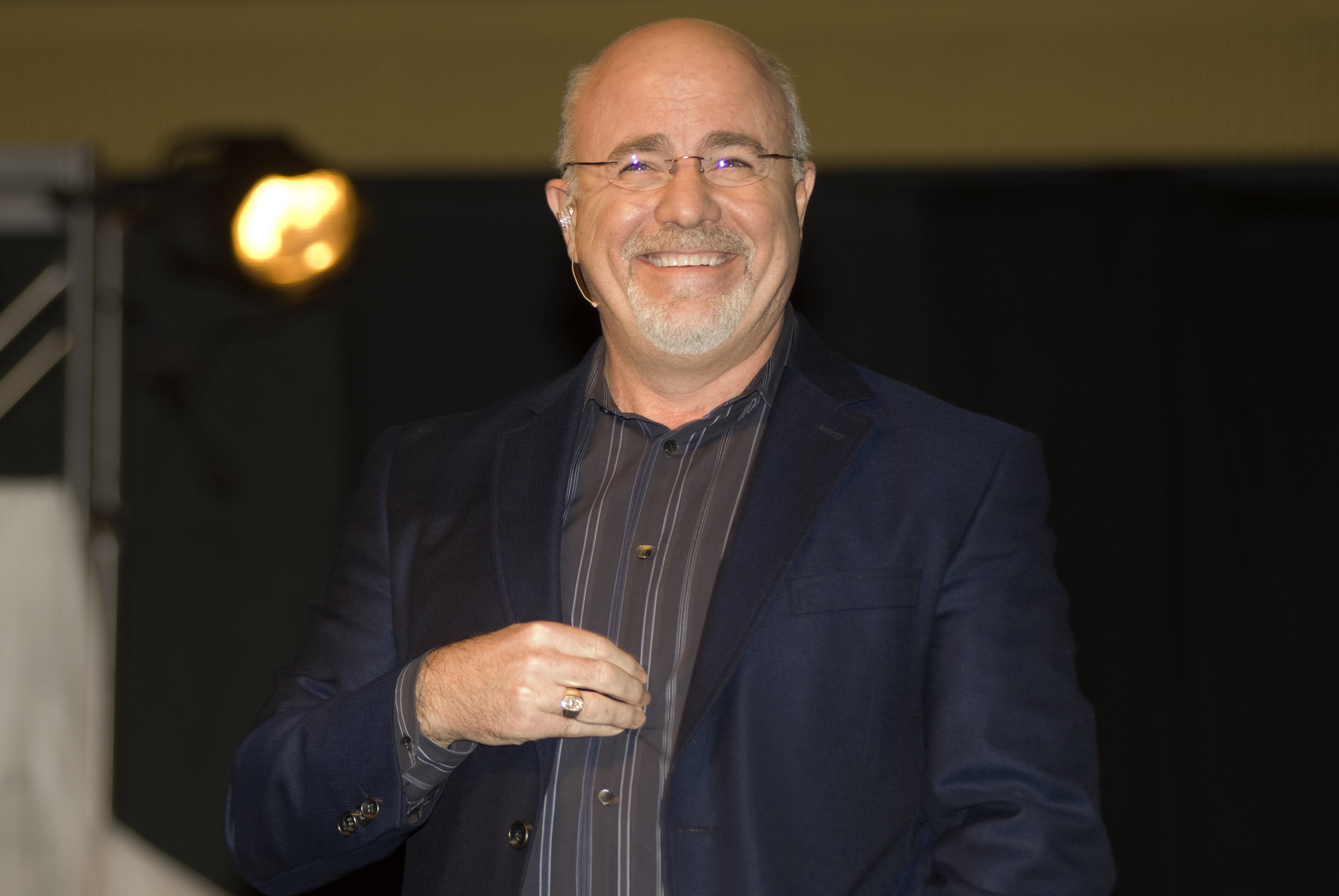
The Question Dave Ramsey Says Separates Wealth Builders from Everyone Else
Do your spending habits help build wealth or hold you back? Finance expert Dave Ramsey argues that the question you ask before making a purchase can reveal a lot about your financial mindset. Ramsey is a personal finance personality best…

This post may contain links from our sponsors and affiliates, and Flywheel Publishing may receive compensation for actions taken through them.

Do your spending habits help build wealth or hold you back? Finance expert Dave Ramsey argues that the single question you ask before making a purchase can reveal your entire financial mindset.
Ramsey is a personal finance personality best known for his debt-free philosophy and no-nonsense money advice. He built a large following through his books, radio show, and financial education programs, consistently encouraging people to stick to a strict budget, avoid debt, build emergency savings, and live below their means.
So what questions actually separate wealth builders from everyone else, according to the finance guru? Here is what you need to know.
This post was updated on April 9, 2026.
The rich look at purchases very differently, Ramsey says
Ramsey often contrasts people who focus on total affordability with those who fixate only on the upfront or monthly cost. In plain terms, when faced with a potential purchase, rich people ask “Can I afford it?” while poor people ask “Can I afford the down payment?” The gap between those two questions is the gap between building wealth and treading water.
According to Ramsey, rich people want to know how a purchase will affect their overall financial picture. They will not buy something if doing so causes them to overspend, take on debt, or otherwise damage their net worth. That discipline leads to consistently responsible spending choices over time.
His criticism targets people who make purchases based mainly on whether the monthly payment feels manageable, rather than whether the purchase truly fits their budget. He believes that mindset leads people to spend beyond their means and take on large amounts of debt purely to have items they want. They cannot truly afford those items, even if they can squeak by with the installments.
Is Ramsey right?

Ramsey is directionally right that focusing only on monthly payments can lead to costly financial decisions. Buying something because the monthly installment feels affordable, without examining total cost, total loan duration, and total interest owed, can set you up for long-term financial stress. Every dollar committed to past purchases is a dollar that cannot build future wealth.
The auto market is the clearest illustration. Dealers routinely steer buyers toward the monthly payment question rather than the full-cost question, and the numbers tell the result. Average new-car loan terms stretched to about 69 months (nearly six years) as of late 2025, according to Experian, and 84-month loans hit an all-time high share of new-car financing in the second quarter of 2025, per Edmunds data. The average monthly payment on a new vehicle reached $770 in the first quarter of 2026, and total outstanding auto debt stands at $1.685 trillion. That is a nation of people who said yes to the monthly payment without asking about the total cost.
The broader household debt picture reinforces Ramsey’s point. Total U.S. household debt hit a record $18.8 trillion in the fourth quarter of 2025, according to the Federal Reserve Bank of New York, a rise of roughly $740 billion in a single year. At the same time, the personal savings rate fell from 6.2% in early 2024 to just 4.2% by late 2025. Americans, as a whole, are spending faster than they are saving.
That said, people struggle financially for many reasons beyond spending habits. Some were born without meaningful opportunity, lacked access to quality education, or cannot find adequately paying work. Those challenges have far more to do with circumstance and systemic barriers than with consumer debt choices. Ramsey’s framework applies most cleanly to people who already have stable income but are channeling it into payments rather than savings.
A short-term, monthly-payment-focused mindset can absolutely make it harder to build financial stability, even for those who are otherwise doing everything right.
Everyone can benefit from trying to grow wealth from wherever they currently stand. A financial advisor can help think through long-term decisions around saving, investing, and borrowing, providing personalized guidance on questions like how much to set aside, where to invest it, and whether a particular loan actually makes sense over the full repayment horizon. That kind of whole-picture thinking is exactly what Ramsey is asking people to apply on their own, every time they consider a purchase.
Editor’s note: This update added current auto loan data (average new-car loan term of approximately 69 months, average monthly payment of $770, and total outstanding auto debt of $1.685 trillion as of Q1 2026), the record U.S. household debt figure of $18.8 trillion in Q4 2025, and the decline in the personal savings rate from 6.2% in early 2024 to 4.2% by late 2025.
Contact [email protected] for any questions or corrections.
Christy Bieber has been a personal finance and legal writer since 2008. She has a JD from UCLA School of Law and a BA in English, Media and Communications with a certification in business from the University of Rochester.
Christy has been published by a wide variety of sites, including WSJ Buy Side, Forbes, Kiplinger, Fox Business, Credit Karma, Insurify, and Annuity.org. In addition to writing for the web, she has also ghostwritten textbooks on business and law and served as a subject matter expert for course design.