Ripple (XRP) News: Ripple and Kyobo Life Insurance Partner to Pioneer Korea’s First Blockchain Bond Settlement
Ripple (CRYPTO: XRP) just partnered with Kyobo Life Insurance, one of South Korea’s Big 3 life insurers with over $92 billion in assets. Together, they’re piloting Korea’s first tokenized government bond settlement on blockchain using Ripple Custody, which will compress…

This post may contain links from our sponsors and affiliates, and Flywheel Publishing may receive compensation for actions taken through them.
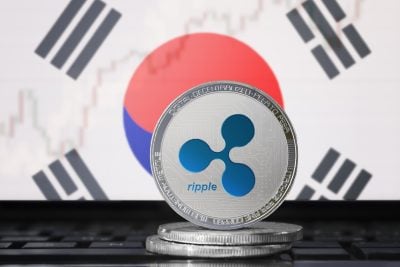
Ripple (CRYPTO: XRP) just partnered with Kyobo Life Insurance, one of South Korea’s Big 3 life insurers with over $92 billion in assets. Together, they’re piloting Korea’s first tokenized government bond settlement on blockchain using Ripple Custody, which will compress the standard two-day settlement cycle to near real-time.
This is Ripple’s first collaboration with a major Korean insurance institution, and it goes beyond just custody. The partnership also opens the door to stablecoin-based payment rails, with Ripple’s RLUSD stablecoin already live on Korean exchange Coinone. It’s another step in Ripple’s broader push into Asia’s institutional finance market, following its existing partnerships with SBI in Japan and BDACS in Korea.
How Ripple Custody Will Settle Korean Government Bonds in Near Real-Time
When a Korean institution buys or sells government bonds right now, it typically takes two business days for the trade to fully settle. The process goes through a chain of middlemen and manual paperwork, and the entire time, both sides carry the risk that the other party might not deliver.
Ripple Custody replaces that with on-chain execution, where both the bond and the payment settle at the same time on a single ledger. For an insurer like Kyobo that holds billions in government debt, that kind of speed frees up capital that would otherwise be locked for days waiting for trades to clear.
Ripple and Kyobo are also testing stablecoin-powered payments—essentially using digital dollars to move money around the clock instead of waiting for banks to open. Ripple’s RLUSD stablecoin was already listed on Korean exchange Coinone earlier this year, so that side of things is already partly set up.
The whole project has been in the works since September 2024 and is still being tested in a trial environment, so it’s not live yet. But Korea’s own financial regulators are sending delegations this month to study how the U.S. shortened its stock settlement cycle—and Ripple is already piloting something even faster for bonds.
Kyobo Life Manages Over $92 Billion: Here’s Why It Chose Ripple
Kyobo Life is one of Korea’s Big 3 life insurers alongside Samsung Life and Hanwha Life. The company has over $92 billion in total assets, an A1 credit rating from Moody’s, and roughly 5 million customers.
Insurance companies like Kyobo are also among the biggest holders of government bonds in any country. They buy and hold massive amounts of sovereign debt as part of their long-term investment portfolios. So when Kyobo picked Ripple to help modernize how those bonds settle, it put Ripple right at the centre of Korea’s government debt market.
Ripple has been building its Korean presence step by step over the past 14 months, and the Kyobo deal is the latest piece. In February 2025, it partnered with Korean custodian BDACS to provide institutional storage for XRP and RLUSD. By August 2025, BDACS had gone live on Korea’s biggest exchanges—Upbit, Coinone, and Korbit—giving institutions regulated access to XRP for the first time. Now in April 2026, Ripple has its first major insurance partner in the country.
SBI Holdings, Ripple’s long-time Japanese partner, is also an investor in Kyobo, which ties Ripple’s Japan and Korea strategies together through the same institutional network. This shows Ripple isn’t just doing one-off deals in Asia. It’s connecting the dots between custody, exchanges, insurance, and stablecoins across the region’s biggest financial names.
What Does the Kyobo Partnership Mean for XRP Holders?
The Kyobo deal uses Ripple Custody, not XRP or On-Demand Liquidity (ODL), so it doesn’t create direct XRP demand today. But Ripple has run this exact playbook before. BBVA, DBS, and Société Générale all started as Ripple Custody clients, and over time, those relationships expanded into stablecoins, payments, and more. Kyobo is already exploring stablecoin-based payment rails as part of this partnership, which is the same second step those other institutions took.
The missing piece that turns these custody relationships into actual XRP volume is the CLARITY Act, which would classify XRP as a digital commodity under federal law. If that passes, banks and insurers already using Ripple’s infrastructure get the legal cover to route payments through XRP instead of settling purely in fiat or stablecoins.
The Senate Banking Committee is targeting a markup in late April, and Ripple’s growing list of institutional partners gives the bill more weight every time a new name signs on. Kyobo won’t move the XRP price on a whim, but it adds another major institution to the pipeline that’s waiting for that regulatory green light. And when the bill eventually passes, Ripple would secure even more deals, and those will finally impact the XRP price.
Contact [email protected] for any questions or corrections.
Sam Daodu is a crypto analyst and the editor of 24/7 Wall St.'s Crypto Desk, where he covers Bitcoin, XRP, Ethereum, Solana and the altcoins investors search for most. His work focuses on price levels, spot ETF flows, on-chain data and the regulatory decisions that move crypto markets, written so a first-time buyer and a seasoned trader can both use it.
Sam has written about crypto professionally since 2019 and has published more than 2,000 articles. Before joining 24/7 Wall St., he wrote for crypto media outlets and Web3 companies and ghostwrote for crypto founders and token launches. His analysis is syndicated on Yahoo Finance, MSN and AOL and has been cited by other crypto news sites. He also founded MacLabs Marketing, a content and personal branding agency for crypto founders and executives.
When he isn't reading charts, Sam is usually at the gym or watching One Piece, a series he maintains has better tokenomics than most altcoins.