DEM’s 500 holdings mask the real problem lurking in emerging market income
The WisdomTree Emerging Markets High Dividend Fund (NYSEARCA:DEM) offers income investors about 4% dividend yield sourced entirely from companies in developing economies, packaged in a single fund with $3.5 billion in net assets. For investors tired of domestic dividend stalwarts,…

The WisdomTree Emerging Markets High Dividend Fund (NYSEARCA:DEM) offers income investors about 4% dividend yield sourced entirely from companies in developing economies, packaged in a single fund with $3.5 billion in net assets. For investors tired of domestic dividend stalwarts, the appeal is real. But the income mechanics here deserve a close look before treating this as a reliable paycheck.
How DEM Selects and Weights Its Dividend Payers
DEM tracks a fundamentally weighted index of the highest dividend-yielding stocks across emerging markets. Rather than weighting by market cap, the fund allocates based on each company’s share of total dividends paid within the index universe. This approach naturally tilts the portfolio toward mature, cash-generative businesses in financials, energy, and consumer staples, sectors that have historically paid the most cash to shareholders in developing markets.
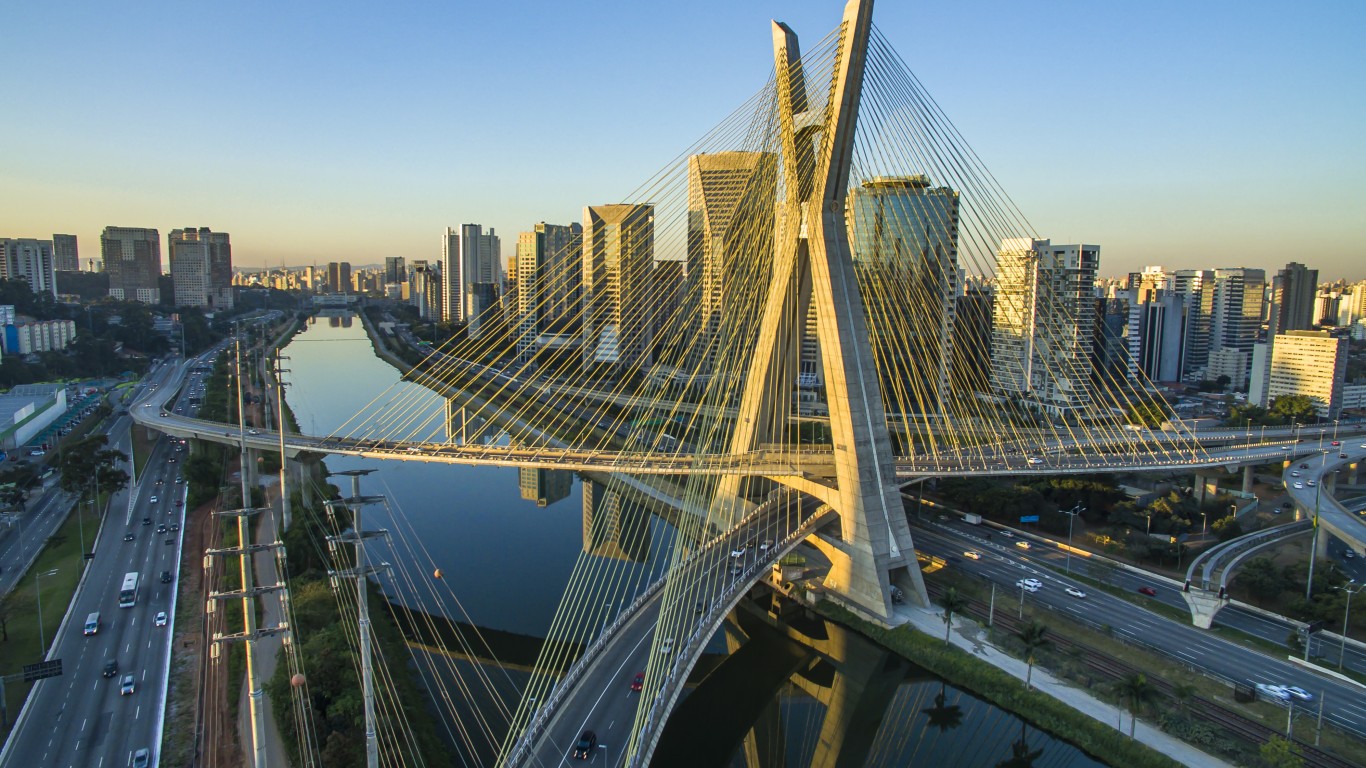
The fund holds over 500 individual securities, which sounds like broad protection. But concentration still exists at the top. China Construction Bank alone represents 4.5% of the portfolio, and the top 15 holdings account for roughly a quarter of total assets. Geographic exposure spans China, Taiwan, Brazil, Saudi Arabia, Poland, India, and a dozen other markets, each carrying its own currency, regulatory, and political risk.
The Two Highlighted Holdings: ABEV and UMC
Two of the fund’s named holdings, Ambev (NYSE:ABEV | ABEV Price Prediction) and United Microelectronics (NYSE:UMC), sit at positions 15 and 13 respectively, each carrying weights of roughly 1%. Together they illustrate the structural tensions running through the entire portfolio.
Ambev, Brazil’s dominant brewer, paid roughly $0.20 per share in total USD dividends across 2025, which matches its reported EPS of $0.20 almost exactly. A payout ratio near 100% leaves no margin for earnings softness. The company’s operating cash flow fell 6.3% year over year, and its cash balance dropped nearly 35%. Currency is the deeper issue: Ambev earns in Brazilian reals, and the BRL currently trades near 0.20 per U.S. dollar, while the company hedges at a rate of 5.50 BRL/USD. When the real weakens beyond that hedge level, USD-denominated dividends shrink. The December 2025 year-end payment of $0.13 per share was meaningfully larger than the three smaller quarterly payments, meaning income is lumpy, not steady.
United Microelectronics, a Taiwanese semiconductor foundry, has a more encouraging dividend record. Annual payments grew from $0.14 in 2020 to $0.59 in 2023, then moderated to $0.48 in 2025. With EPS of $0.52, the payout ratio runs around 92%, which is elevated for a capital-intensive chipmaker. UMC guided for $1.5 billion in 2026 capital expenditure, and utilization sits in the mid-70% range, meaning the business is not running at peak efficiency. CEO Jason Wang stated, “Going into the first quarter of 2026, we expect wafer demand to remain firm.” That confidence supports near-term dividend continuity, though the high payout leaves little room for a demand miss.
Total Return and the Currency Drag
Both holdings have delivered strong price recoveries recently. Ambev shares are up about 27% recently, and UMC has gained roughly 27% over the same period. That price appreciation is a meaningful part of the total return story for DEM holders, since the income alone carries real risks. The fund’s about 0.6% expense ratio erodes net yield meaningfully at the 4% income level.
The Verdict on DEM’s Income Stream
DEM’s roughly 4.07% yield is real, but it is not stable. The fund’s income fluctuates with foreign currencies, corporate earnings cycles across a dozen emerging economies, and the dividend policies of companies operating under political and regulatory environments outside U.S. investor control. High payout ratios, currency translation risk, and lumpy payment schedules make budgeting around this income difficult.
Investors weighing DEM should understand that the yield comes bundled with variable quarterly distributions, currency translation risk across a dozen markets, and dividend policies set by companies operating under political and regulatory environments outside U.S. investor control. The gap between the fund’s headline yield and a U.S. Treasury reflects those risks directly.
Contact [email protected] for any questions or corrections.
After 15 years on Wall Street with 7 of them as Director of Corporate and Municipal Bond Trading for a NYSE member firm, I started my own project and corporate finance consultancy. Much of the work involves writing business plans, presentations, white papers and marketing materials for companies seeking budgetary allocations for spinoffs and new initiatives or for raising capital for expansion or startup companies and entrepreneurs. On financial topics, I have been published under my own byline at The Motley Fool, 247wallst.com, DealFlow Events’ Healthcare Services Investment Newsletter and The Microcap Newsletter, among others. Additionally, I have done freelance ghostwriting writing and editing for several financial websites, such as Seeking Alpha and Shmoop Financial. I have also written and been published on a variety of other topics from music, audiophile sound and film to musical instrument history, martial arts, and current events. Publications include Copper Magazine, Fidelity (Germany), Blasting News, Inside Kung-Fu, and other periodicals.