The Amazon-SpaceX Space Race is On. Here’s What I’d Look to Buy in Response
In a rather surprising move, Amazon (NASDAQ:AMZN | AMZN Price Prediction) acquired satellite connectivity play Globalstar (NASDAQ:GSAT), which investors might know best for its dealings with Apple (NASDAQ:AAPL) and the SOS feature on the iPhone. In the coming years, satellite…


In a rather surprising move, Amazon (NASDAQ:AMZN | AMZN Price Prediction) acquired satellite connectivity play Globalstar (NASDAQ:GSAT), which investors might know best for its dealings with Apple (NASDAQ:AAPL) and the SOS feature on the iPhone. In the coming years, satellite connectivity could really explode onto the mainstream, as we move from SOS and text messaging to light browsing and maybe even a wireless service that’s good enough that we can ditch plans from the big telecoms.
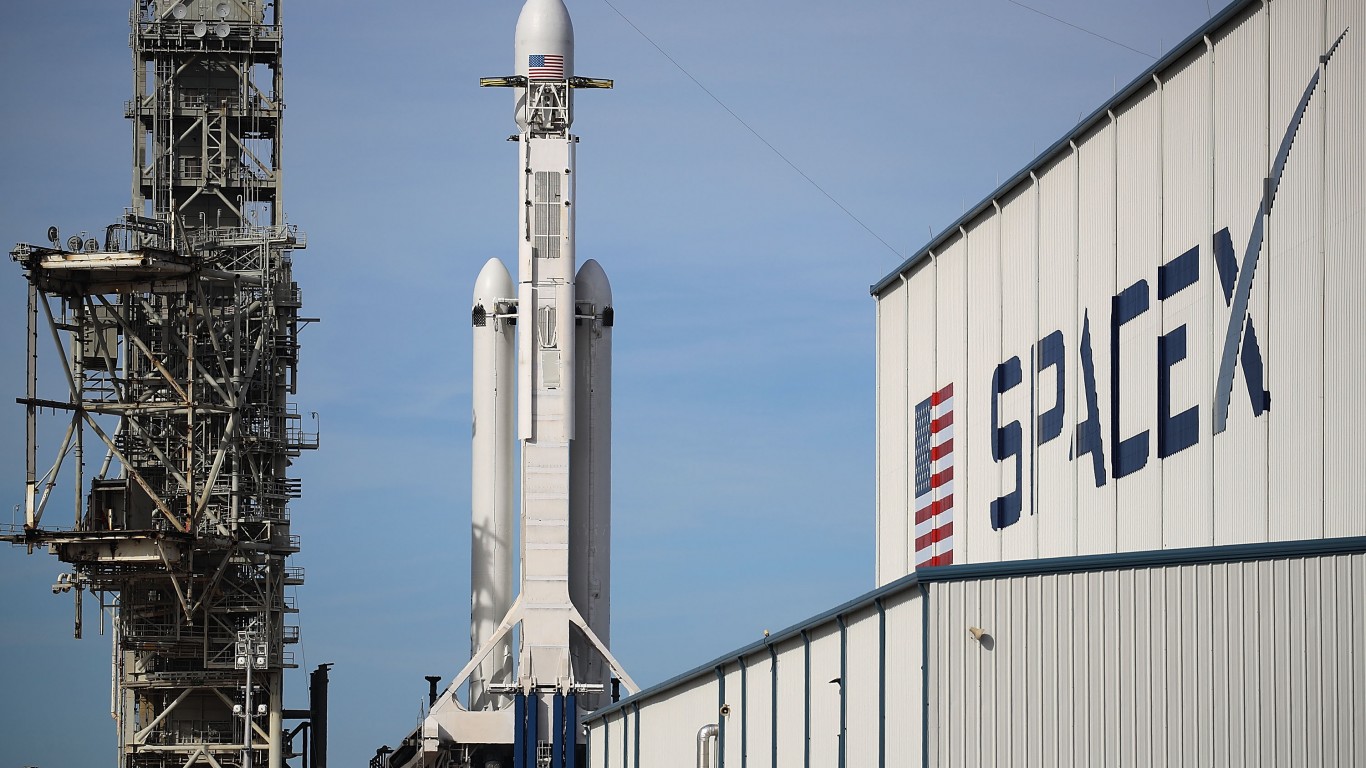
Undoubtedly, there’s a huge opportunity for Apple as the wireless innovations look towards the stars and the satellite constellations that could forever change the way we all think about mobile connectivity. It’s a bit sci-fi, to say the least, but with Elon Musk’s Starlink already showing how practical it is to beam mobile data from space, I’d argue that a new space race has kicked off as firms look to economic opportunities to be had in space.
The corporate space race is on
Of course, satellite connectivity might just be the start. With Musk talking about space-based data centers and Nvidia (NASDAQ:NVDA) debuting Vera Rubin space modules meant for data centers in orbit, it feels like we could be entering an era where rocket launches, satellites, and all the sort move from speculative moonshots to serious, profitable business models with sky-high barriers to entry. Indeed, given the costs of launching satellites into orbit, perhaps the economic moat possessed by Starlink can only be matched by few, if any, deep-pocketed tech titans.
In any case, Amazon’s latest deal to acquire Globalstar will transform Amazon Leo (formerly known as Project Kuiper) into a serious number-two rival to the likes of Starlink. Of course, there’s still a lot of catching up to do. But, for the most part, it feels like Starlink isn’t going to be the one and only king of space.
At first, I thought Apple’s stake in Globalstar would make things a bit complicated for Amazon. However, given all that Apple stands to gain from having another firm spend big money to compete against Starlink, I think it’s clear why Apple gave the green light.
Why the Amazon-Globalstar deal is a huge win for Apple
SpaceX and Starlink are a force to be reckoned with. And Globalstar is just too small to compete against a behemoth. Either Apple had to up its stake and start spending some serious money (while taking on a colossal amount of risk), or team up with the likes of a behemoth in Amazon, which, in my view, is the best-positioned firm to unlock the most value from Globalstar as satellite connectivity looks to advance well beyond just SOS messages.
And, of course, there was also the option of partnering with Starlink, but it’d be Elon Musk’s empire that would have all the right cards — all the leverage in negotiations.
In any case, the Amazon-Globalstar deal is a huge win for the e-commerce titan, but perhaps an even bigger win for Apple. In essence, Apple is getting the benefits of having Amazon tackle the hard, expensive parts of building a constellation while enjoying the benefits. Picture the feast without the indigestion and heartburn that follows.
Given this, Apple stock stands out as a great buy in response, especially in a market where investors continue to turn away from growing CapEx. Sure, it sounds better on paper if Apple were to own the entire constellation. But the reality of the situation is that there are a lot of uncertainties regarding ROI to get to the endpoint.
The case for buying Apple for the future of satellite connectivity
Sometimes, it’s just better to team up with a partner who’s just better able to achieve a feat more economically.
And while there might be some uncertainty as to what happens after the long-term agreement expires, I’d say that, in terms of risk mitigation, letting Amazon have it with a favorable deal is the absolute best move for Apple users. If it’s the best for users, it’s probably the best move for Apple as well.
As Amazon Leo continues to evolve into a serious alternative to Starlink, I do think things are about to get interesting.
Contact [email protected] for any questions or corrections.
Joey is a 24/7 Wall St. contributor and seasoned investment writer whose work can also be found in publications such as The Motley Fool and TipRanks. Holding a B.A.Sc in Computer Engineering from the University of British Columbia (UBC), Joey has leveraged his technical background to provide insightful stock analyses to readers.
Joey's investment philosophy is heavily influenced by Warren Buffett's value investing principles. As a dedicated Buffett disciple, Joey is committed to unearthing value in the tech sector and beyond.