Nuclear’s AI Moment Is Here — There Is Only 1 Play for the 4X Data Center Demand Explosion
BloombergNEF’s latest forecast paints a clear picture of AI’s inexorable force: global data center power demand will quadruple over the next decade, driven by AI data center training and inference that run nonstop. Energy needs will climb from roughly 400…

This post may contain links from our sponsors and affiliates, and Flywheel Publishing may receive compensation for actions taken through them.
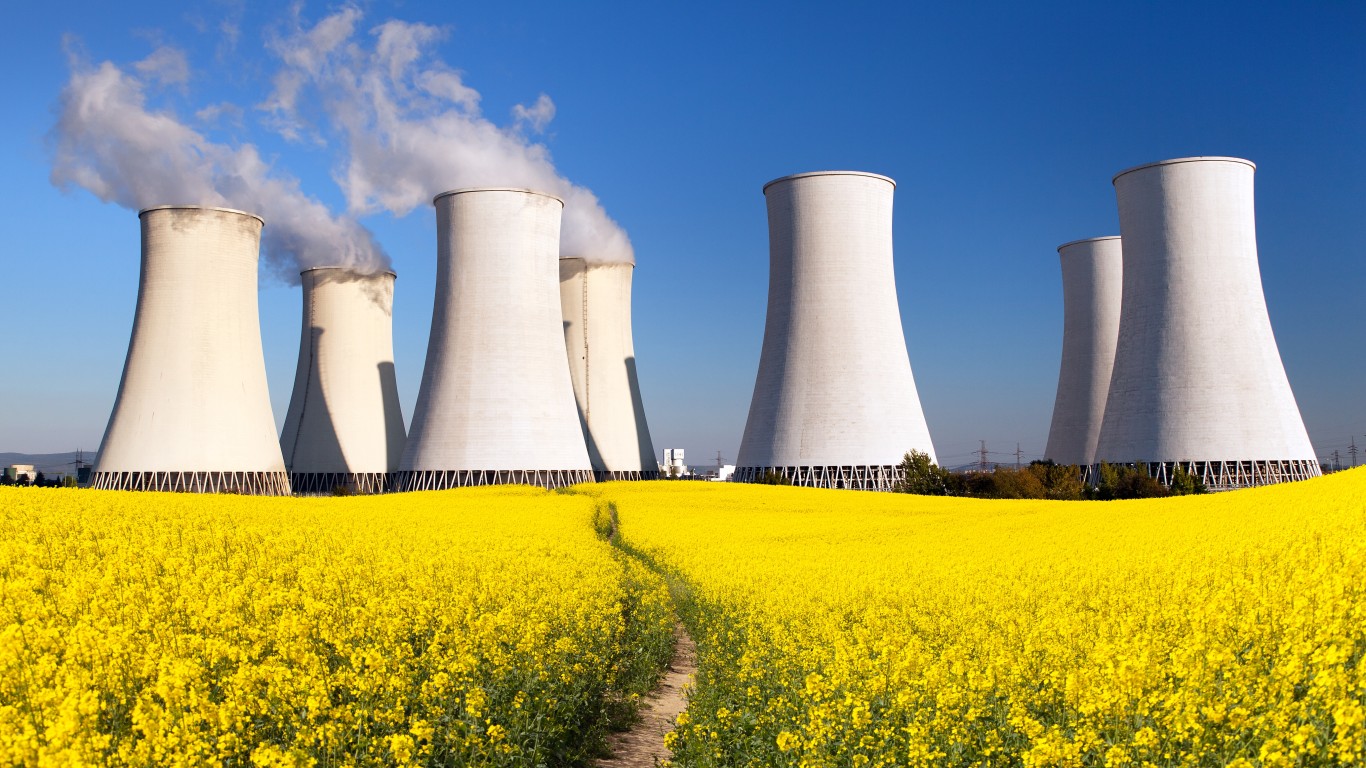
BloombergNEF’s latest forecast paints a clear picture of AI’s inexorable force: global data center power demand will quadruple over the next decade, driven by AI data center training and inference that run nonstop. Energy needs will climb from roughly 400 terawatt-hours in 2024 to more than 1,600 terawatt-hours by 2034, with the U.S. consuming the largest share.
Existing grids cannot absorb that jump alone. Nuclear power stands out as the leading source that delivers constant, carbon-free baseload exactly when AI needs it most. Investor excitement sent several pure-play nuclear names soaring last fall. Six months later, though, that ardor has cooled.
Nuclear Energy Will Be Critical — Eventually
Nuclear can supply the cheap, reliable power AI data centers require. President Trump’s executive orders directed the Nuclear Regulatory Commission to streamline approvals, and the Department of Energy has selected companies for pilot fuel projects. Demonstration reactors are in the works.
Yet building commercial-scale facilities still takes years. Regulatory reviews, supply-chain hurdles, and construction timelines mean most next-generation projects won’t deliver meaningful power before the late 2020s or early 2030s. In short, the demand surge will arrive far sooner than the new supply. That gap explains why shares of three high-profile nuclear developers have dropped sharply from their October peaks, even as the long-term case remains intact.
Three Nuclear Upstarts Losing Steam
Let’s look at the numbers for the three stocks that initially captured the spotlight.
Oklo (NYSE:OKLO | OKLO Price Prediction) reported zero revenue for full-year 2025 and posted an operating loss of $139.3 million. Net losses came to $105.7 million. The company burned $82.2 million in operating cash. As of today, Oklo shares have fallen about 65% from their October high near $194.
NuScale Power (NYSE:SMR) generated just $31.5 million in revenue last year — down from $37 million the year before — and recorded a net loss of $355.8 million. The stock now trades roughly 78% below last October’s peak of $53.43.
Similarly, Nano Nuclear Energy (NASDAQ:NNE) remains pre-revenue and reported a first-quarter 2026 net loss of $6.52 million. Shares have declined about 57% from their 52-week high near $60.87.
Granted, all three hold promising small-modular-reactor designs and have secured early partnerships. That said, none has demonstrated commercial-scale operation. Losses continue, dilution risks remain, and first revenue sits years out. Smart investors see the technology’s potential but recognize the execution timeline does not match the AI demand curve.
There Is 1 Stock Delivering Nuclear Power Today
Contrast that with Constellation Energy (NYSE:CEG), the established utility operator already generating power and profit. The company runs 21 nuclear reactors across 12 sites — the largest fleet in the U.S. — and posted $25.5 billion in 2025 revenue, up 8.3% year-over-year. It’s also profitable, with net income of $2.32 billion, or $7.40 per share, though that is down 38% from the year-ago period.
Last month, Constellation issued 2026 adjusted operating earnings guidance of $11.00 to $12.00 per share and raised its share-buyback authorization to $5 billion while earmarking $3.9 billion for growth capital expenditures.
Constellation is not waiting for future reactors. It is expanding capacity at existing plants, signing long-term contracts with data-center operators, and delivering 24/7 power today at capacity factors that routinely exceed 90%. When all is said and done, it offers the rare combination of proven operations, real earnings, and direct exposure to the nuclear renaissance without the startup risks.
Key Takeaway
AI data centers will need four times the power they use today. Nuclear is part of the answer, but only one stock gives retail investors immediate, profitable access to that solution. Constellation Energy is the clear buy.
Oklo, NuScale Power, and Nano Nuclear Energy, while exciting on paper, still face years of losses and construction delays — making them stocks to avoid until they prove they can operate at scale. Focus on the operator already delivering reliable power and steady cash flow. That is the data-rich way to play the nuclear tailwind without betting on unproven timelines.
Contact [email protected] for any questions or corrections.
After two decades of patrolling the dark corners of suburbia as a police officer, Rich Duprey hung up his badge and gun to begin writing full time about stocks and investing. For the past 20 years, he’s been cruising the markets looking for companies to lock up as long-term holdings in a portfolio while writing extensively on the broad sectors of consumer goods, technology, and industrials. Because his experience isn’t from the typical financial analyst track, Rich is able to break down complex topics into understandable and useful action points for the average investor. His writings have appeared on The Motley Fool, InvestorPlace, Yahoo! Finance, Money Morning, and, of course, 24/7 Wall St. He has been featured in both U.S. and international publications, including MarketWatch, Financial Times, Forbes, Fast Company, and USA Today.