When Hyperscalers Come Knocking: Is NuScale Next in Line to Power Up?
Meta Platforms (NASDAQ:META) announced nuclear power agreements this morning with three companies to support its artificial intelligence (AI) data centers. The deals include 20-year power purchases from Vistra (NYSE:VST | VST Price Prediction) for three existing plants in Ohio and…

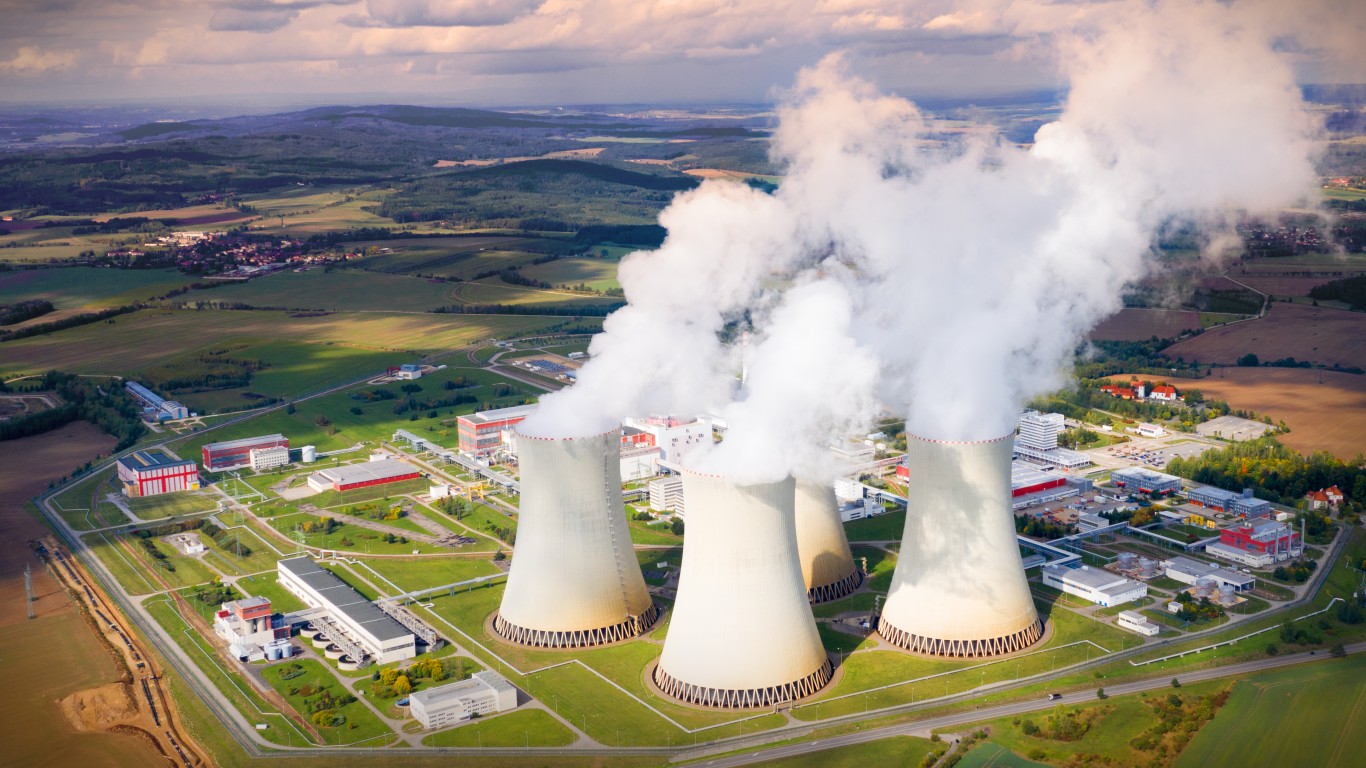
Meta Platforms (NASDAQ:META) announced nuclear power agreements this morning with three companies to support its artificial intelligence (AI) data centers. The deals include 20-year power purchases from Vistra (NYSE:VST | VST Price Prediction) for three existing plants in Ohio and Pennsylvania, financing expansions and life extensions to provide up to 6.6 gigawatts by 2035. With Oklo (NYSE:OKLO), Meta will partner on small modular reactors in Ohio for up to 1.2 gigawatts starting in 2030. TerraPower will receive funding for two reactors delivering up to 690 megawatts by 2032, with options for six more by 2035.
While NuScale Power (NYSE:SMR) wasn’t included in the new partnerships, should investors anticipate similar deals from other hyperscalers coming its way?
Hyperscaler Push for Nuclear Reliability
Hyperscalers require nuclear power due to the massive electricity demands of AI data centers, which need consistent, carbon-free energy to operate without grid disruptions. Microsoft (NASDAQ:MSFT) CEO Satya Nadella highlighted this in a November podcast, stating, “The biggest issue we’re having now isn’t chips — it’s power,” and noting that chips sit idle without sufficient electricity infrastructure. He added that the challenge is “the ability to get the builds done fast enough close to power,” emphasizing power as the new bottleneck in AI expansion. This is reflective of broader industry constraints where data center growth outpaces available grid capacity.
Meta selected Oklo as a partner for its focus on small modular reactors (SMR), which offer cost savings through factory construction, though no such reactors are yet commercially operational in the U.S. and require permits. Oklo’s approach aligns with Meta’s need for scalable, on-site power solutions to meet AI demands starting in 2030.
What NuScale Offers
NuScale shares a similar emphasis on SMRs but holds a lead in regulatory progress. NuScale received NRC standard design approval for its 50-megawatt-electric module in 2023 and its uprated 77-megawatt-electric version in May 2025, making it the only company with such certifications for multiple module designs. These approvals — completed ahead of schedule in some cases — enable faster deployment compared to traditional reactors, appealing to hyperscalers seeking quick, reliable energy builds.
The company’s VOYGR plants, which can scale up to six modules for around 462 megawatts, feature passive safety systems that rely on natural processes like convection and gravity, enhancing reliability without active intervention.
NuScale’s partnerships, including with ENTRA1 Energy for commercialization and a framework agreement with the Tennessee Valley Authority for potential multi-gigawatt deployments, position it to serve large-scale off-takers. Discussions with tier-one hyperscalers have been reported, as the sector seeks dedicated, behind-the-meter power to bypass grid limitations.
NuScale’s stock is rising over 7% today following the Meta announcements, reflecting investor optimism that its regulatory edge could lead to comparable partnerships. This movement is in line with gains by other nuclear stocks that are driven by AI’s energy needs and supportive federal policies.
Key Takeaway
Cameco (NYSE:CCJ) CEO Grant Isaac recently said the uranium miner has been securing long-term contracts with utilities at unprecedented levels, with the pricing floors in the mid-$70 per pound range and ceilings as high as $150 per pound, caused by tightening supply and increasing global nuclear demand, including from data centers. This surge reflects a renaissance in nuclear power, supported by policies in the U.S., China, and elsewhere favoring energy security and low-carbon sources.
Small modular reactors stand out for their potential in cost-effective, rapid deployment. While no hyperscaler deal for NuScale has been announced, investors should weigh the possibility of one materializing soon, given its advanced approvals, scalable designs, and alignment with AI power requirements.
For investors wanting to cash in on the long tail of AI, NuScale Power is a stock they should consider adding to their portfolios.
Contact [email protected] for any questions or corrections.
After two decades of patrolling the dark corners of suburbia as a police officer, Rich Duprey hung up his badge and gun to begin writing full time about stocks and investing. For the past 20 years, he’s been cruising the markets looking for companies to lock up as long-term holdings in a portfolio while writing extensively on the broad sectors of consumer goods, technology, and industrials. Because his experience isn’t from the typical financial analyst track, Rich is able to break down complex topics into understandable and useful action points for the average investor. His writings have appeared on The Motley Fool, InvestorPlace, Yahoo! Finance, Money Morning, and, of course, 24/7 Wall St. He has been featured in both U.S. and international publications, including MarketWatch, Financial Times, Forbes, Fast Company, and USA Today.