Why Congress Can’t Stop Loading Up on These 3 Stocks in 2026
Somehow, members of Congress have turned relatively modest salaries into impressive investment portfolios while the rest of us grind it out in the market. For years, questions have swirled around lawmakers buying and selling stocks, often right before major policy…


Somehow, members of Congress have turned relatively modest salaries into impressive investment portfolios while the rest of us grind it out in the market. For years, questions have swirled around lawmakers buying and selling stocks, often right before major policy shifts or regulatory decisions tied to their committee oversight.
Critics call it a conflict of interest fueled by non-public information gleaned from their oversight responsibilities. Yet Congress has repeatedly refused to pass a full ban or even stricter limits, sticking instead with disclosure rules under the STOCK Act. The result is a contentious debate that refuses to go away.
Former House Speaker Nancy Pelosi stands out in this conversation. Her husband Paul’s trades have delivered eye-popping results: 71% portfolio gains in 2024 versus the S&P 500’s 25%, and similar outperformance in prior years that critics say timed perfectly with big events. Whether skill, luck, or something else entirely, the pattern keeps retail investors watching. And right now, Forecaster.biz and Quiver Quantitative data show lawmakers heavily buying three names in Q1 2026 with zero reported sales: McKesson (NYSE:MCK | MCK Price Prediction), Boeing (NYSE:BA), and Alphabet‘s (NASDAQ:GOOGL) Class A shares. Here is a breakdown of each company, its business, and why it may have caught congressional eyes.
McKesson (MCK)
McKesson moves medicine. As America’s largest pharmaceutical distributor, it ships drugs, medical supplies, and specialty oncology products to pharmacies, hospitals, and clinics nationwide. In its full fiscal year 2026 results, reported May 7, the company posted consolidated revenues of $403.4 billion, up 12% year-over-year, with adjusted earnings per diluted share of $39.11, up 18% and above its own long-range growth targets. That full-year performance built on a strong fiscal Q3 (revenue $106.2 billion, adjusted EPS $9.34), where growth was driven by oncology and multispecialty platforms.
Management followed the strong annual results with fiscal 2027 guidance of $43.80 to $44.60 in adjusted EPS, implying 12% to 14% further growth. The board also approved a $5 billion increase to the share repurchase authorization in April 2026, bringing the total repurchase capacity to $7.7 billion, and entered a $2.25 billion accelerated buyback program. That kind of capital return signals confidence in the cash generation outlook.
The appeal for lawmakers overseeing healthcare policy is clear. With drug pricing debates, Medicare negotiations, and an aging population all on the table, McKesson’s role in the pharmaceutical supply chain looks both essential and recession-resistant. Forecaster.biz data flagged roughly $97,500 in congressional buys for McKesson in Q1 2026 with no reported sales, the heaviest net buying in three to four years.
Boeing (BA)
Boeing builds the planes that fly passengers and fighters. Its commercial aircraft, defense, and space businesses all feed into massive government contracts and regulatory oversight, exactly the areas Congress controls through defense budgets and FAA rules.
Its Q1 2026 results showed revenue of $22.2 billion, up 14% from a year earlier, fueled by 143 commercial deliveries (10% higher than Q1 2025) and growth across all segments. Defense revenue rose 21% to $7.6 billion. The company narrowed its core operating loss and sits on a record $695 billion backlog. CEO Kelly Ortberg said Boeing expects to ramp 737 MAX production from 42 to 47 aircraft per month by mid-2026, and management guided for positive free cash flow of $1 billion to $3 billion for the full year.
Deliveries edged ahead of Airbus for the first time since 2019, signaling that the 737 MAX ramp and 787 recovery are gaining real traction despite years of quality headaches. Airbus delivered just 114 jets in the same quarter, hampered by Pratt & Whitney engine supply shortfalls, handing Boeing a 29-aircraft edge.
Lawmakers on defense and transportation committees know Boeing’s fortunes tie directly to federal spending and safety certifications. Quiver Quantitative shows multiple purchases by Rep. Maria Elvira Salazar (R-FL) in the $1,001 to $50,000 range in March. No sales appeared in the filings.
Just this month, Boeing won a $324 million U.S. Army contract for six Chinook helicopters and a $1.1 billion contract to supply the U.K. Ministry of Defence to support Apache and Chinook helicopters. Its backlog and policy tailwinds explain the appeal for those with a long horizon.
Alphabet (GOOGL)
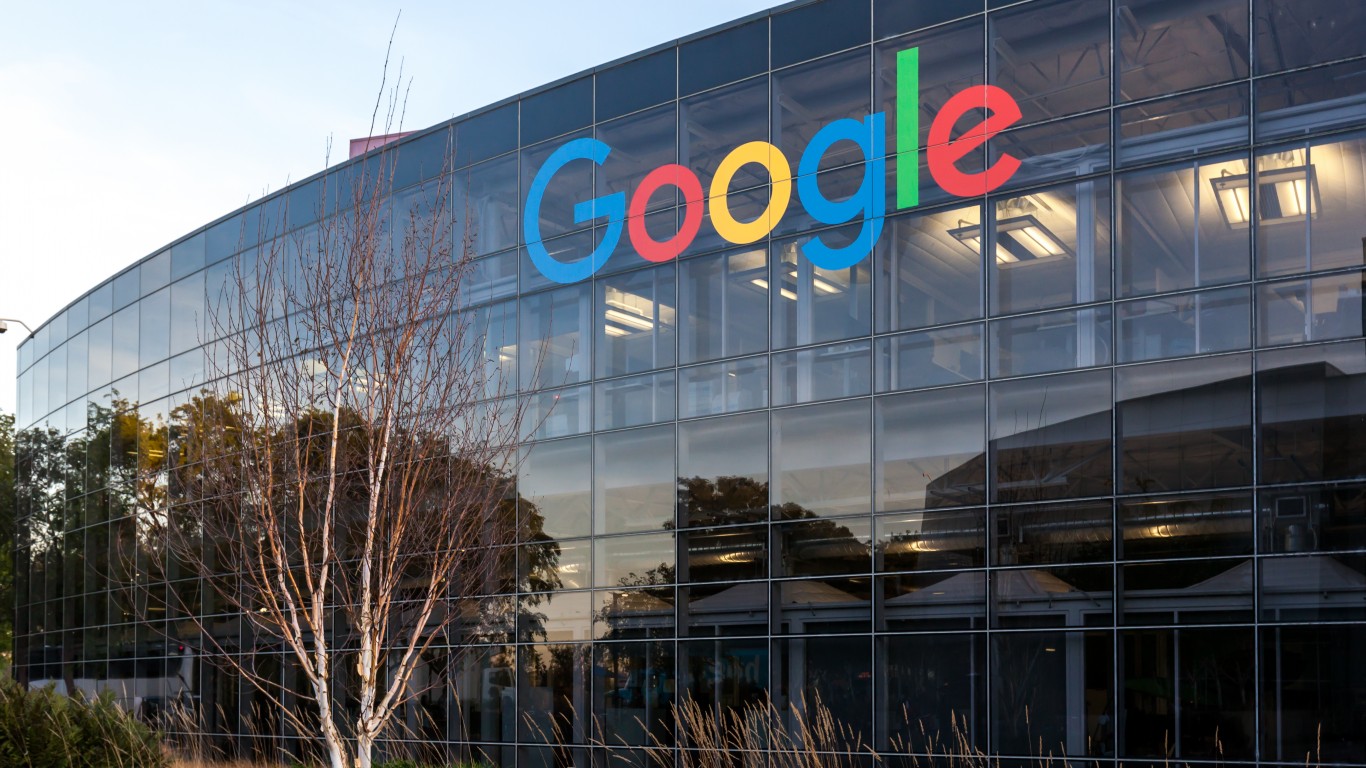
Alphabet powers search, YouTube, Android, and the fast-growing Google Cloud. Its Class A shares give voting rights and have drawn repeated congressional attention amid antitrust scrutiny, AI policy debates, and ad-regulation discussions. When the article was first written, Q1 2026 results were still pending. Those results, reported April 29, delivered a significant beat across every major metric.
Consolidated Q1 2026 revenue reached $109.9 billion, up 22% year-over-year and Alphabet’s highest growth rate for any quarter since 2022. Google Cloud surged 63% to $20 billion on AI infrastructure demand, a sharp acceleration from the 48% growth it posted in Q4 2025. The Cloud backlog nearly doubled quarter-over-quarter to over $460 billion. Net income jumped 81% and EPS climbed to $5.11. Operating margin expanded two percentage points to 36.1%.
CEO Sundar Pichai noted that enterprise AI solutions became Cloud’s primary growth driver for the first time in Q1, and that paid subscriptions across the business hit 350 million. The company raised its full-year capital expenditure guidance to $180 billion to $190 billion to capture AI demand, a figure that underscores both the scale of the opportunity and the competitive intensity around AI infrastructure.
Multiple lawmakers, including Reps. Ro Khanna, Cleo Fields, and Sen. John Fetterman, filed GOOGL buys in the $1,000 to $50,000 range during Q1 2026, according to Capitol Trades and Quiver data, with no offsetting sales. For committees handling tech oversight, the combination of search dominance, cloud acceleration, and AI policy leverage represents a clear bet on where technology is heading.
Editor’s note: This article has been updated to reflect McKesson’s full fiscal year 2026 results (revenue $403.4 billion, adjusted EPS $39.11) and new fiscal 2027 guidance ($43.80 to $44.60), Boeing’s Q1 2026 earnings details including its first delivery win over Airbus since 2019 and CEO Ortberg’s 737 MAX production ramp guidance, and Alphabet’s Q1 2026 results showing $109.9 billion in revenue (up 22%), Google Cloud growth of 63% to $20 billion, and EPS of $5.11.
Contact [email protected] for any questions or corrections.
After two decades of patrolling the dark corners of suburbia as a police officer, Rich Duprey hung up his badge and gun to begin writing full time about stocks and investing. For the past 20 years, he’s been cruising the markets looking for companies to lock up as long-term holdings in a portfolio while writing extensively on the broad sectors of consumer goods, technology, and industrials. Because his experience isn’t from the typical financial analyst track, Rich is able to break down complex topics into understandable and useful action points for the average investor. His writings have appeared on The Motley Fool, InvestorPlace, Yahoo! Finance, Money Morning, and, of course, 24/7 Wall St. He has been featured in both U.S. and international publications, including MarketWatch, Financial Times, Forbes, Fast Company, and USA Today.