New Study Finds These Sectors Produce the Most 100-Bagger Stocks
On a recent episode of The Compound and Friends, hosts Josh Brown and Michael Batnick sat down with former Janus analyst Matt Ancrum to discuss his study of 100-bagger stocks. He found that 100-bagger stocks came from all different sectors,…


On a recent episode of The Compound and Friends, hosts Josh Brown and Michael Batnick sat down with former Janus analyst Matt Ancrum to discuss his study of 100-bagger stocks. He found that 100-bagger stocks came from all different sectors, but there were some industries that accounted for a lion’s share of the world’s 100-baggers.
The Sector Breakdown
Ancrum studied companies that went public between 1980 and 2000. Technology and software stocks accounted for about a third of the 100-bagger list, leaving the majority to other sectors. The 1980 to 1984 IPO class alone produced Home Depot (NYSE:HD | HD Price Prediction), Apple (NASDAQ:AAPL), Nike (NYSE:NKE), UnitedHealth (NYSE:UNH), and Amgen (NASDAQ:AMGN). He found that 100-baggers emerged consistently across every decade studied.
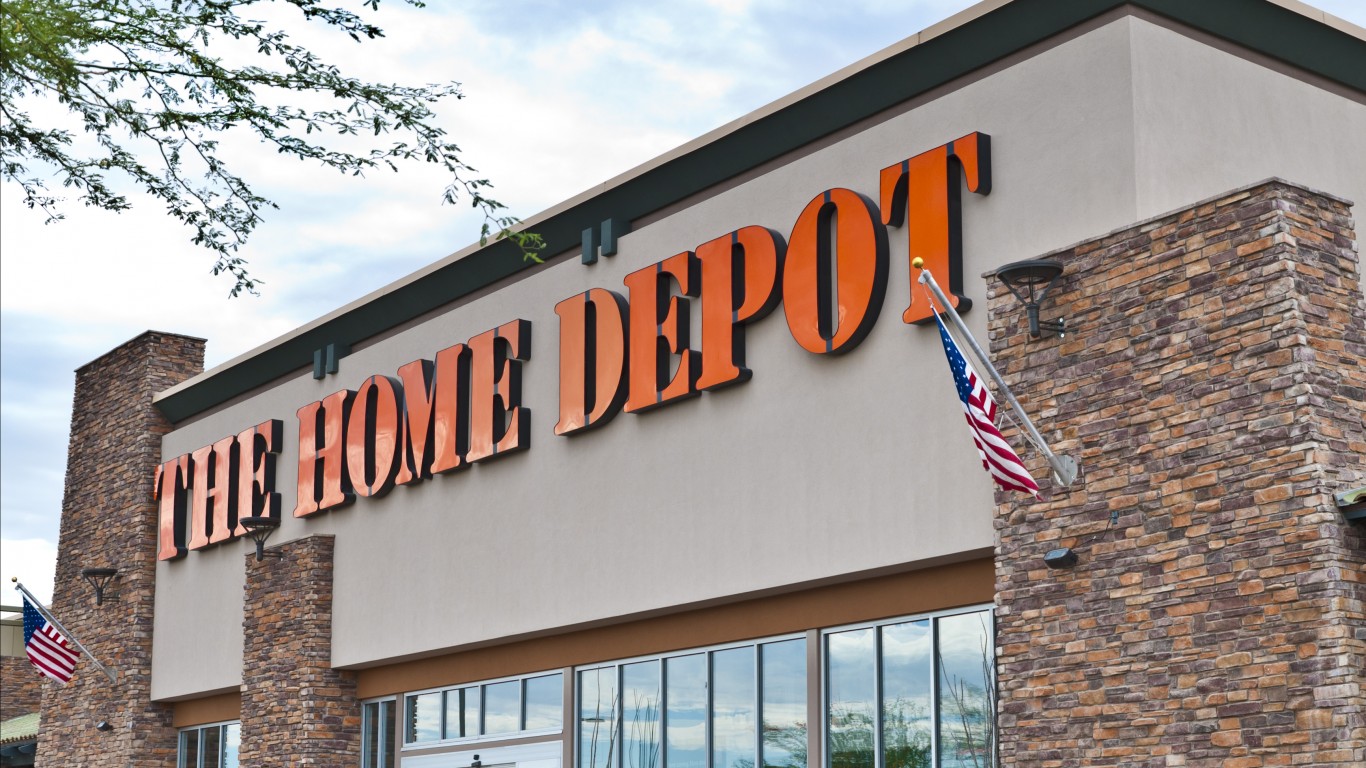
Retail produced an outsized share. Home Depot, AutoZone (NYSE:AZO), and Tractor Supply (NASDAQ:TSCO) were all cited as retail 100-baggers. Home Depot has compounded at 195.42% over the past decade, AutoZone at 356.18%, and Tractor Supply at 103.61%, with AutoZone still buying back stock aggressively ($310.8M repurchased in fiscal Q2 2026).
The manufacturing sector saw similar results. Amphenol (NYSE:APH) and HEICO (NYSE:HEI) were named as manufacturing 100-baggers. Amphenol is up 980.51% over ten years, with Q1 FY2026 revenue of $7.62 billion (58.4% YoY growth). The serial acquirer, HEICO, has compounded by 789.23% over the same span.
The takeaway is that while 100-bagger stocks come from all different industries, there was an outsized portion in the technology, retail, and manufacturing sectors.
The Modern Application: AI vs. Mission Critical Software
Host Josh Brown framed a topic on everyone’s mind today: “A lot of the stocks that you talk about are, as we speak, being thought of on Wall Street as literally marked for death by Anthropic and Gemini and ChatGPT.”
Ancrum’s filter splits software into low-consequence (marketing tools, basic site builders) and high-consequence (cybersecurity, tax, compliance). On Australian council software vendor TechnologyOne, he noted: “You as a CEO, you’re actually personally accountable. That’s high consequence.” Switching to save a few dollars per seat is typically seen as irrational because the buyer carries the risk.
Brown applied that lens to Toast (NYSE:TOST), where he is personally underwater 30%, 40%, and to ServiceTitan. His view on Toast’s stickiness: “Once you convince a guy that owns a diner to adopt this, he ain’t never taking it out.” The runway is real. Toast serves 150,000 restaurant locations in a 600,000-location addressable market, and CEO Aman Narang has stated confidence in scaling to “$5 billion and $10 billion in ARR over the next decade” from $2.05B today.

Ancrum closed with the dot-com analogy: of today’s top 20 e-commerce sites, “There’s only 5 new economy, 15 old economy” retailers like Walmart and Home Depot that ultimately dominated online. The incumbent often wins the disruption.
Contact [email protected] for any questions or corrections.
Thomas Richmond is a financial writer and content strategist with 5+ years of experience covering stocks and financial markets. He has published over 250 articles focused on individual stock analysis, helping investors better understand business fundamentals, stock valuations, and long-term opportunities.
Thomas previously served as a Content Lead at TIKR, a stock research platform, where he helped scale the company’s blog to hundreds of articles per month and contributed to a weekly newsletter reaching more than 100,000 investors.
He specializes in breaking down complex companies into clear, actionable insights for everyday investors, with a focus on fundamentals-driven research.
His work has also been featured on platforms including Seeking Alpha and Sure Dividend.
Outside of work, Thomas enjoys weight lifting and soccer.