Trump Wants Rate Cuts. The Data Just Made That Nearly Impossible.
The President wants rate cuts. His pick has taken the chair at the Federal Reserve. Futures markets spent weeks pricing in easing. Then the Bureau of Labor Statistics released the April Consumer Price Index report, and the door slammed shut.…

The President wants rate cuts. His pick has now taken the chair at the Federal Reserve. The Senate confirmed Kevin Warsh on May 13, 2026, in a 54-45 vote, and his term officially began when Jerome Powell’s expired on May 15. Futures markets had spent weeks pricing in easing. Then the Bureau of Labor Statistics released the April Consumer Price Index report, and the door slammed shut.
The consumer price index rose at a seasonally adjusted 0.6% for the month, putting the one-year pace at 3.8%, the highest since May 2023. Core CPI accelerated in April, rising 0.4% month over month and 2.8% year over year versus March’s readings of 0.2% and 2.6%. The Fed’s preferred gauge tells the same story: headline Personal Consumption Expenditures inflation hit 3.5% year-over-year in March, with core PCE at 3.2%, both well above the 2% target the Fed has now missed for five consecutive years. The report also contained bad news for workers, as real average hourly wages slipped 0.5% for the month and fell 0.3% annually.
The Energy Shock the Fed Can’t Ignore
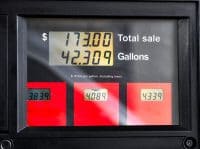
The proximate culprit is oil. West Texas Intermediate crude surged to around $101.56 per barrel in mid-May, near the top of its 12-month range and up from a December low of $55.44. That peak reflected the full weight of the Iran war premium. The conflict caused oil prices to spike, which then pushed up costs for gasoline, airfare, and groceries. Energy accounted for over 40% of April’s monthly CPI rise, with energy costs up roughly 4% in April after an 11% gain in March. Gasoline rose 21% in March alone, the largest monthly increase in BLS data going back to 1967.
The Fed could write off energy as transitory if the rest of the basket cooperated, but the rest of the basket is heating up too. Grocery prices rose 0.5% and dining out rose 0.7% in April, the biggest monthly jumps since late 2025. Airfares climbed 2.8%. Shelter inflation accelerated to 0.6% from 0.3%. Services inflation has held in the 3.3% to 3.6% range for months, the stickiest piece of the pie and the one that responds least to rate policy.
Meanwhile the employment side of the dual mandate offers no cover. Unemployment held at 4.3% through May 2026 and has remained in a narrow range of 4.3% to 4.5% since July 2025. A labor market this stable provides zero urgency for emergency easing. The bond market has noticed: the 10-year Treasury yield climbed from 3.97% in late February to 4.46% on May 12, a clear vote against near-term cuts, and the 10-year note finished June 12, 2026 at 4.48%, still well above its pre-conflict levels.
The K-Shaped Economy Under the Hood
The headline economy looks resilient. Underneath, lower-income households are absorbing the entire shock. The personal savings rate fell to 3.6% in March, the lowest since the revenge-spending period of 2022. Heather Long, chief economist at Navy Federal Credit Union, said: “Inflation is the key drag on the U.S. economy now. This is hurting Americans. There is a real financial squeeze underway. For the first time in three years, inflation is eating up all wage gains.”
Corporate America is saying it plainly. Kraft Heinz (NASDAQ:KHC | KHC Price Prediction) CEO Steve Cahillane told Bloomberg that customers are “literally running out of money at the end of the month” and that the company is “seeing negative cash flows in the lower-income brackets where they’re dipping into savings.” McDonald’s (NYSE:MCD) CEO Christopher Kempczinski flagged that rising gas prices are disproportionately hitting low-income consumers and that pressure is “going to continue.” Whirlpool (NYSE:WHR) CEO Marc Bitzer compared the appliance industry’s decline to the financial crisis. New York Fed research found households earning under $40,000 cut gasoline purchases by 7% in March yet still spent 12% more on gas. Walmart (NYSE:WMT) told investors in February that “wallets are stretched” for households under $50,000.
What to Watch
The Fed is holding because the data won’t let it move, not because of politics. The Committee maintained the target range for the federal funds rate at 3.50% to 3.75%, where it has sat since December 2025 after 75 basis points of cuts last fall. Warsh’s first meeting as Fed chair is June 16 to 17, and it arrives with the inflation picture still deteriorating on a year-over-year basis.
The annual inflation rate rose to 4.2% in May 2026, marking its highest level since April 2023, from 3.8% in April, in line with market expectations. That represents the third consecutive monthly acceleration in headline inflation, with energy costs jumping 23.5% year-over-year. The energy story, however, is beginning to turn. Crude oil fell toward $75 per barrel, sliding for the fifth straight session and reaching its lowest level since early March, as expectations of increased supply weighed on prices ahead of the signing of a peace agreement between the US and Iran. The two countries are scheduled to sign an interim deal in Switzerland, offering Tehran broad economic incentives including the immediate resumption of its oil exports.
That shift creates a fork in the road for the inflation outlook. If the ceasefire holds and oil normalizes through the summer, the June CPI print could show the first monthly deceleration in energy costs since January. That would give Warsh political cover to acknowledge improving conditions without committing to cuts. If the deal fractures, however, a fourth consecutive acceleration in headline CPI would make the political fight over the Fed’s independence considerably uglier heading into fall.
Editor’s note: This article has been updated to reflect Kevin Warsh’s Senate confirmation and assumption of the Fed chair role on May 22, 2026; the May 2026 CPI reading of 4.2% year-over-year (the highest since April 2023); the decline in WTI crude from its ~$101 peak to approximately $75 as a US-Iran interim peace agreement moved toward signing; the correction of the federal funds rate to its full target range of 3.50% to 3.75%; and the updated unemployment band of 4.3% to 4.5% since July 2025 per BLS data.
Contact [email protected] for any questions or corrections.
Don Lair writes about options income, dividend strategy, and the kind of boring-but-durable investing that actually funds retirement. He's the founder of FITools.com, an independent contributor to 24/7 Wall St., and a former writer for The Motley Fool.