If You Want Commodity Exposure Without Futures Contracts, Start Here
WTI crude touched $114.58 a barrel on April 7, 2026 before sliding back to $99.89 by April 27, a roughly $29 swing inside three weeks. That is the kind of move that makes investors want commodity exposure, and also the…


WTI crude touched $114.58 a barrel on April 7, 2026 before sliding back to $99.89 by April 27, a roughly $29 swing inside three weeks. That is the kind of move that makes investors want commodity exposure, and also the kind that makes them remember why direct futures contracts are a headache. Roll yield, contango, K-1 tax forms in March, and the constant churn of expiring contracts can chew up returns before the underlying commodity does anything for you.
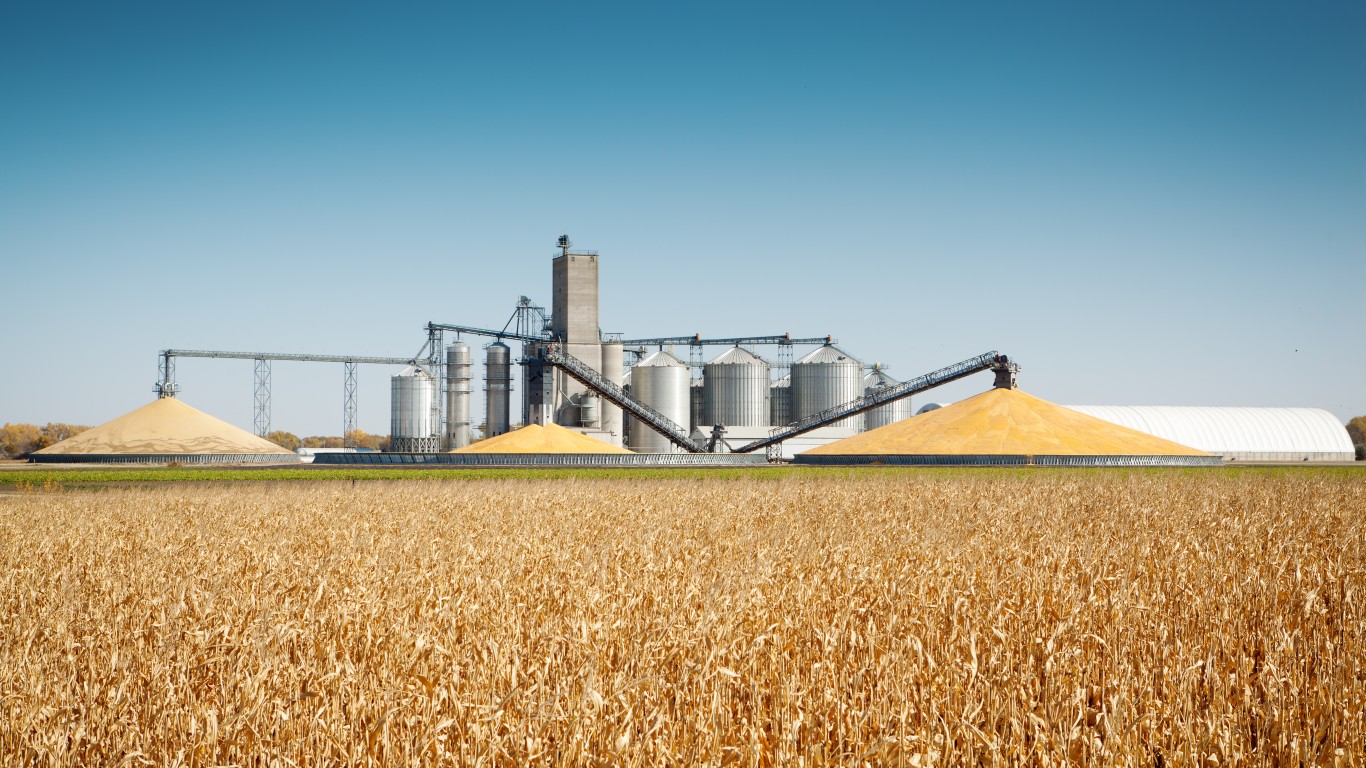
The VanEck Natural Resources ETF (NYSEARCA:HAP) takes a different route. It owns the companies that pull the stuff out of the ground, grow it, refine it, or generate power from it, and it does so across six sub-themes (agriculture, energy, renewable energy, industrial metals, precious metals, and forest and paper products). You get a 1099 instead of a K-1, no futures rolling, and a portfolio that behaves like equities with a commodity tilt rather than a pure spot-price tracker.
The Job HAP Is Hired To Do
HAP fills the “hard assets” slot in a diversified portfolio. The pitch is inflation resilience plus participation in the long structural demand story for energy, metals, and food, without the operational baggage of holding futures. With CPI sitting at 330.3 in March 2026, in the 90th percentile of its 12-month range, that pitch has more weight than it did two years ago.
HAP makes money when the underlying companies generate cash flow from selling commodities at favorable prices, when reserves get repriced higher, and when capital expenditure cycles tighten supply. Renewables sit alongside oil and copper miners, which means the fund captures both the legacy energy complex and the build-out of grid, storage, and electrification. Because it holds equities, you also get operating leverage. A producer with $40 lifting costs earns far more profit per barrel at $100 oil than at $70, and that nonlinearity is exactly what drives the equity beta to commodity prices.
You will not perfectly track spot oil or copper. What you get instead is corporate cash flow, dividends, and balance-sheet quality, which historically smooths some of the wildest moves. Henry Hub natural gas spiking from under $3 to $30.72 on January 23, 2026 before collapsing back below $3 by April is the kind of price action a futures investor lives through directly. An equity holder lives through a muted version of it.
The Numbers Behind The Pitch
HAP trades around $73, with the price track showing a 52% one-year gain, a 21% year-to-date return, and a 216% ten-year return. That ten-year figure is telling because it spans both the dismal 2015-2020 period for natural resources and the inflation-driven recovery since.
The 10-year Treasury at 4% sits in the 83rd percentile of its trailing year. Real assets are competing against a respectable risk-free rate. HAP cleared that hurdle in 2026 because commodity prices ran hard, and resource equities responded with operating leverage. In a regime where rates fall and commodities stagnate, the same math works in reverse.
What You Are Actually Signing Up For
Three honest constraints are worth understanding before you size a position.
- Equity beta still rules in a sell-off. When the broader market panics, resource stocks usually go with it, even when the underlying commodity holds up. HAP is a hard-assets equity sleeve, with correlations that fade when broad markets sell off.
- Concentration in a few mega-producers. Cap-weighted natural resource indexes lean heavily on the largest integrated oil majors and a handful of mining giants. Diversification across six sub-themes is real, but the top names drive most of the variance.
- Cycle sensitivity cuts both ways. The same operating leverage that produced the 52% one-year gain works in reverse during commodity downturns. Sequence-of-returns risk matters if you are pulling income from this position.
HAP fits as a 5% to 10% inflation-resilient sleeve for investors who want broad commodity-linked equity exposure in a 1099 wrapper, and the primary risk is that commodity equities still trade like equities when markets get rough.
Contact [email protected] for any questions or corrections.
Omor Ibne Ehsan is a writer at 24/7 Wall St. He is a self-taught investor with a focus on growth, cyclical, and dividend equities that have strong fundamentals, value, and long-term potential. He also has an interest in high-risk, high-reward investments such as penny stocks.