AMD Price Target Vaults to $460 at Citi on $132 Billion CPU Forecast. So Why Neutral?
An analyst firm just put a much bigger number next to Advanced Micro Devices (NASDAQ:AMD | AMD Price Prediction), yet stopped short of telling clients to buy. Citi raised its price target on AMD to $460 from $358 while keeping…

This post may contain links from our sponsors and affiliates, and Flywheel Publishing may receive compensation for actions taken through them.

An analyst firm just put a much bigger number next to Advanced Micro Devices (NASDAQ:AMD | AMD Price Prediction), yet stopped short of telling clients to buy. Citi raised its price target on AMD to $460 from $358 while keeping a Neutral rating, anchored to a sweeping new CPU forecast that pegs the market at $132 billion by 2030.
The AMD price target raise is one of the more eye-catching calls of the week, but the unchanged rating tells investors that valuation, not opportunity, is the issue. For prudent investors, AMD stock is a textbook case of a bullish thesis already reflected in the tape.
| Ticker | Company | Firm | Action | Old Rating | New Rating | Old Target | New Target |
|---|---|---|---|---|---|---|---|
| AMD | Advanced Micro Devices | Citi | Price target raised | Neutral | Neutral | $358 | $460 |
The Analyst’s Case
Citi’s new total addressable market model for AMD folds in general purpose CPUs, AI head nodes, and agentic CPU applications. The firm now expects the CPU market to expand at 35% annually, with agentic CPU workloads compounding at 185% per year.
The catch for AMD stock is that Citi applied the same framework to Intel (NASDAQ:INTC) and lifted Intel’s target to $130 with a Buy rating. The agentic CPU thesis lifts the whole category, so Advanced Micro Devices doesn’t capture unique upside in the model.
Company Snapshot
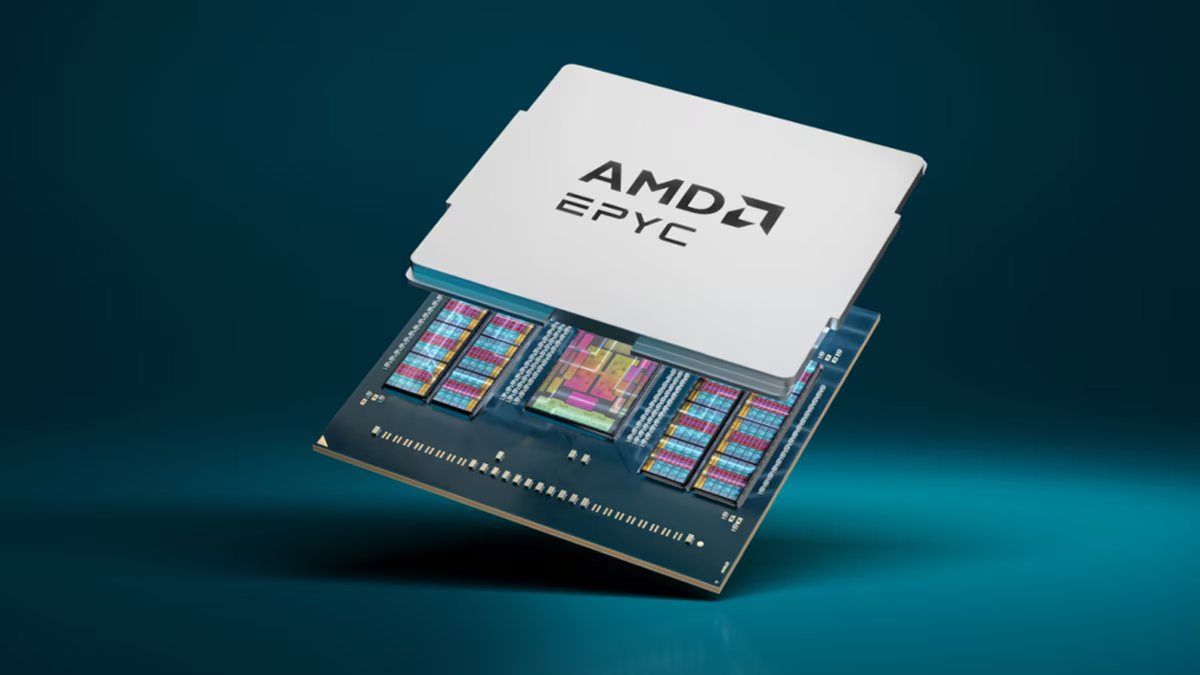
Advanced Micro Devices reported Q1 2026 revenue of $10.25 billion, with the Data Center segment up 57% year over year (YoY) to $5.78 billion on EPYC server CPUs and Instinct GPU shipments. CEO Lisa Su pointed to “accelerating demand for AI infrastructure” and stronger-than-expected customer forecasts for the MI450 Series.
The company carries a market cap of $691.5 billion and trades against NVIDIA (NASDAQ:NVDA) in AI accelerators, where NVIDIA’s $5.38 trillion market cap underscores how steep the GPU competition remains.
Why the Move Matters Now
AMD stock closed at $420.28 on May 15, after rallying 53% in the past month and 88% year to date. The 14-day RSI sits at 67.29, after touching 88.94 on April 24, well into overbought territory.
The valuation tells the same story. AMD trades at a forward P/E ratio of 65x, a price-to-sales ratio of 18.46x, and an EV/EBITDA of 91x. The new $460 target sits almost on top of the $457.83 consensus, leaving little daylight from current levels.
What It Means for Your Portfolio
The bull case for AMD stock is real: the company has been the CPU share-gain leader for a decade, and the MI450/Helios ramp keeps gaining customer commitments, including up to 6 gigawatts of Instinct GPUs with Meta Platforms (NASDAQ:META). The bear case is equally clear: the GPU AI race against NVIDIA is brutal, MI400-class execution risk is rising, and the stock already discounts a lot of good news.
For prudent investors, Citi’s split decision is a useful signal. The analyst upgrade in numbers without an upgrade in rating suggests moderating position sizes and waiting for either a pullback or further evidence that AMD can monetize the agentic CPU opportunity better than peers.
Contact [email protected] for any questions or corrections.
David Moadel is financial writer specializing in stocks, ETFs, options, precious metals, and Bitcoin. David has written well over 1,000 articles for leading online publications, helping investors understand markets, income strategies, and risk.His work has appeared in The Motley Fool, InvestorPlace, U.S. News & World Report, TipRanks, ValueWalk, Benzinga, Market Realist, TalkMarkets, Finmasters, 24/7 Wall St., and others.With a master’s degree in education, David has taught at the elementary, high school, and college levels. That teaching background shapes his writing style: clear, educational, and practical. David has also built a loyal social-media audience by providing trustworthy financial content on YouTube, X/Twitter, and StockTwits.