Former Fed Official: The Fed’s Biggest Mistake Wasn’t Rate Cuts. It Was Keeping Them Low Too Long.
For much of the post-2008 era, Wall Street treated zero interest rates as a permanent feature of the landscape, a kind of monetary gravity that pulled every asset price higher. Stocks ran. Bonds ran. Private credit ran. The benchmark S&P…

For much of the post-2008 era, Wall Street treated zero interest rates as a permanent feature of the landscape, a kind of monetary gravity that pulled every asset price higher. Stocks ran. Bonds ran. Private credit ran. The benchmark S&P 500 vaulted off its 2009 low while the technology-packed Nasdaq Composite did even better. But the man who sat inside the room where those decisions were made spent the entire stretch voting against them, and he is still arguing today that the policy itself was less destructive than the refusal to retire it.
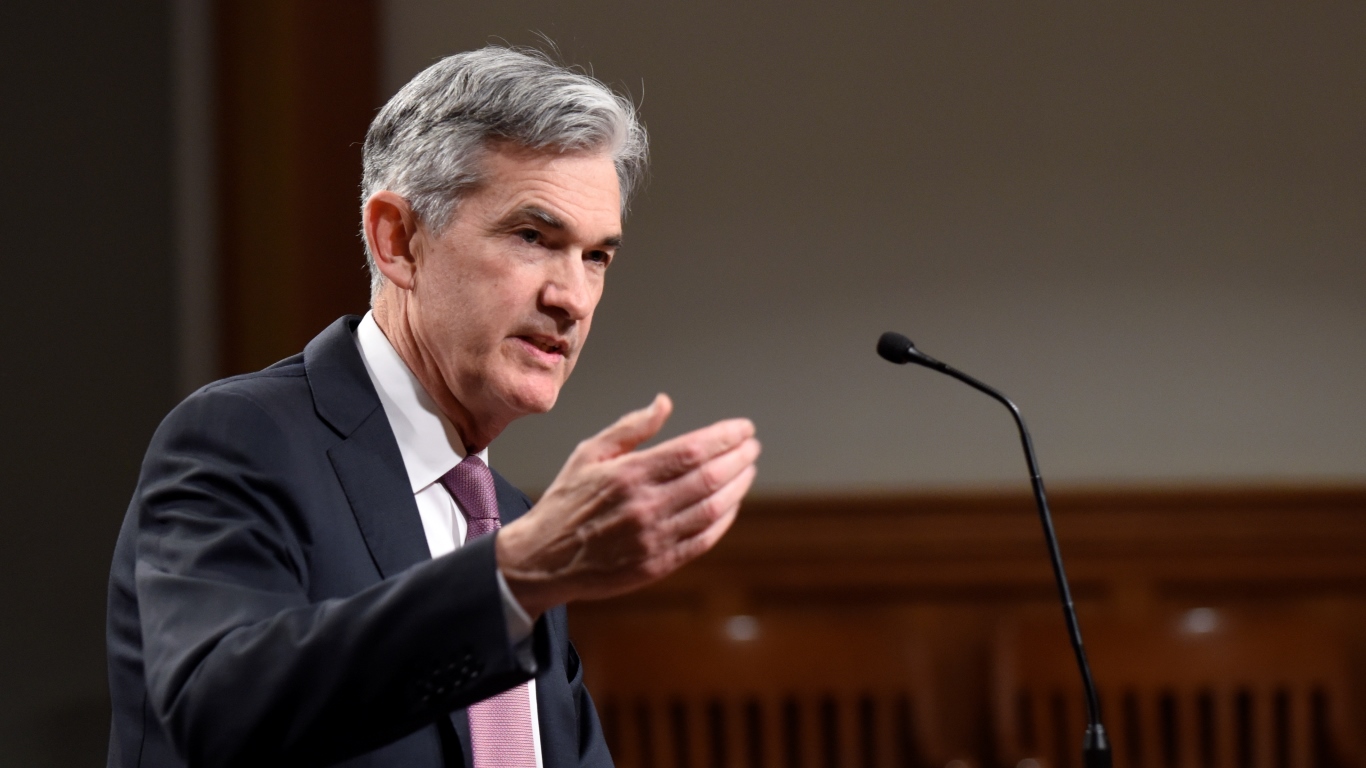
Tom Hoenig, former president of the Kansas City Fed and a sitting member of the FOMC in 2010, dissented at every FOMC meeting in 2010. He sat at the table, raised his hand, and voted no every single time. Now a distinguished senior fellow at the Mercatus Center at George Mason University, Hoenig appeared on a recent episode of Thoughtful Money with Adam Taggart and delivered the line that frames his career-long argument: “It isn’t the crisis. It’s the post-crisis when you don’t adjust your policy back to normal.”
His position is direct. Cutting rates to the floor in 2008 was defensible. Keeping them pinned there through 2016 is what bent the economy out of shape.
The 2010-2016 case study
Hoenig keeps returning to one particular stretch. “While they were doing quantitative easing en masse during those years, real productivity in the economy went flat and real wage increases went flat. You had to have, you had to be an asset holder to be a winner.” The Fed’s balance sheet ballooned, asset markets ripped, and wage earners standing outside the asset economy got nothing for the wait.
History tells us this pattern repeats. The 1970s Fed under Arthur Burns refused to tighten meaningfully, convinced inflation was a transitory cost-push problem rather than a monetary one. The result was a decade of stagflation that took Paul Volcker and a brutal recession to break. Japan, after its 1989 bubble burst, rolled emergency accommodation forward into one lost decade, then a second, then a third, and its equity index spent thirty-four years climbing back to its 1989 high. Post-WWI Europe ran the money printers to paper over war debts and produced the Weimar inflation. The mechanism is the same each time: emergency policy that hardens into permanent policy reliably produces wealth concentration and political fragmentation.
The data today rhymes
M2 money supply climbed to $22.80 trillion in April 2026, up from $22.69 trillion in March, reflecting continued broad liquidity in the system. Corporate profits hit $4,352.1 billion in the fourth quarter of 2025. The personal savings rate stood at 3.7% in the first quarter of 2026, then dropped sharply to 2.6% in April, the lowest reading in over a year. On the inflation front, CPI ran as high as 4.2% year-over-year in May 2026, the highest reading since April 2023, driven largely by an energy price surge tied to the US-Iran conflict and tanker disruptions in the Strait of Hormuz. The June 2026 CPI release then showed the annual rate falling back to 3.5% after gasoline prices tumbled nearly 10% in a single month following a ceasefire. Asset holders kept winning. Wage earners ran on a treadmill.
Hoenig’s deeper claim is about what this gap does to a country over time. “Over time it undermines the very fabric of your society. And then you really find yourself in trouble, and the division becomes quite bitter. And I think, as a nation, you become less of a nation.” That observation carries weight well beyond a market call. It functions as a civic warning, and it lines up with what historians have long observed about monetary debasements: the wealth gaps they produce get metabolized into politics.
He pairs that with a rent-seeking diagnosis. When powerful interests are shielded from market consequences, Hoenig argues, “the rent seekers come out in mass. And if the more powerful that rent seeker is, the more they win versus the rest.” Cheap money is rocket fuel for that dynamic. The biggest balance sheets borrow most cheaply, buy back the most stock, and acquire the most competitors.
Intentions versus outcomes
The framing that has aged best from Hoenig’s long body of work is his line on accountability: “I think what we did in over this period was with all good intentions made these very serious errors. And that’s why I keep telling people it isn’t intentions that matter. It’s the solutions that matter.” Good intentions are how every one of these episodes begins. Burns wanted full employment. The Bank of Japan wanted to avoid a depression. The Bernanke and Yellen Feds wanted to save a financial system that had genuinely seized up in 2008.
The current setup makes Hoenig’s thesis more pointed, not less. The Fed funds rate held at 3.5% to 3.75% through the April 29, 2026 FOMC meeting, the third consecutive hold after three successive quarter-point cuts in late 2025. That April vote landed 8-4, the most divided FOMC decision since October 1992, with one member pushing for a cut and three others objecting to the committee’s dovish-leaning language. Then came June 16-17, Kevin Warsh’s first meeting as chair after his Senate confirmation 54-45 on May 13, 2026, and his swearing-in on May 22. The committee voted a unanimous 12-0 to hold rates steady once again, but the accompanying dot plot told a different story: the median 2026 rate projection shifted to 3.8%, implying the committee now sees at least one hike before year-end, and Warsh stripped the post-meeting statement of its easing bias language entirely. The political pressure on the Fed to resume cutting remains loud and persistent. Hoenig’s entire career is a warning about exactly that kind of pressure.
The lesson the long memory keeps offering is simple. Crises pass. Emergency tools do not retire themselves. Somebody has to put them away, and when nobody does, the bill arrives in a form that nobody priced in: a society that trusts itself less. Intentions do not redeem outcomes.
Editor’s note: This article was updated to reflect Warsh’s swearing-in date of May 22, 2026, and the June 16-17, 2026 FOMC meeting, Warsh’s first as chair, where the committee voted 12-0 to hold rates at 3.5% to 3.75% and the median dot plot projection shifted to 3.8%, implying a rate hike. The CPI figures were also refreshed to include the May 2026 peak of 4.2% year-over-year and the June 2026 reading of 3.5%, which reflected falling energy prices after a US-Iran ceasefire.
Contact [email protected] for any questions or corrections.
I've been writing about stocks and personal finance for 20+ years. I believe all great companies are tech companies in the long run, and I invest accordingly.