After Combing Through the Energy Sector These 3 Oil and Gas ETFs Are Up Over 29 Percent As the Hormuz Crisis Keeps Crude Above $100
Crude was sitting at $112 a barrel, the 98th percentile of the past year, before dropping to $81, but the driver is clear. Tankers are still rerouting around the Strait of Hormuz, the U.S. and Iran are trading threats over…

This post may contain links from our sponsors and affiliates, and Flywheel Publishing may receive compensation for actions taken through them.
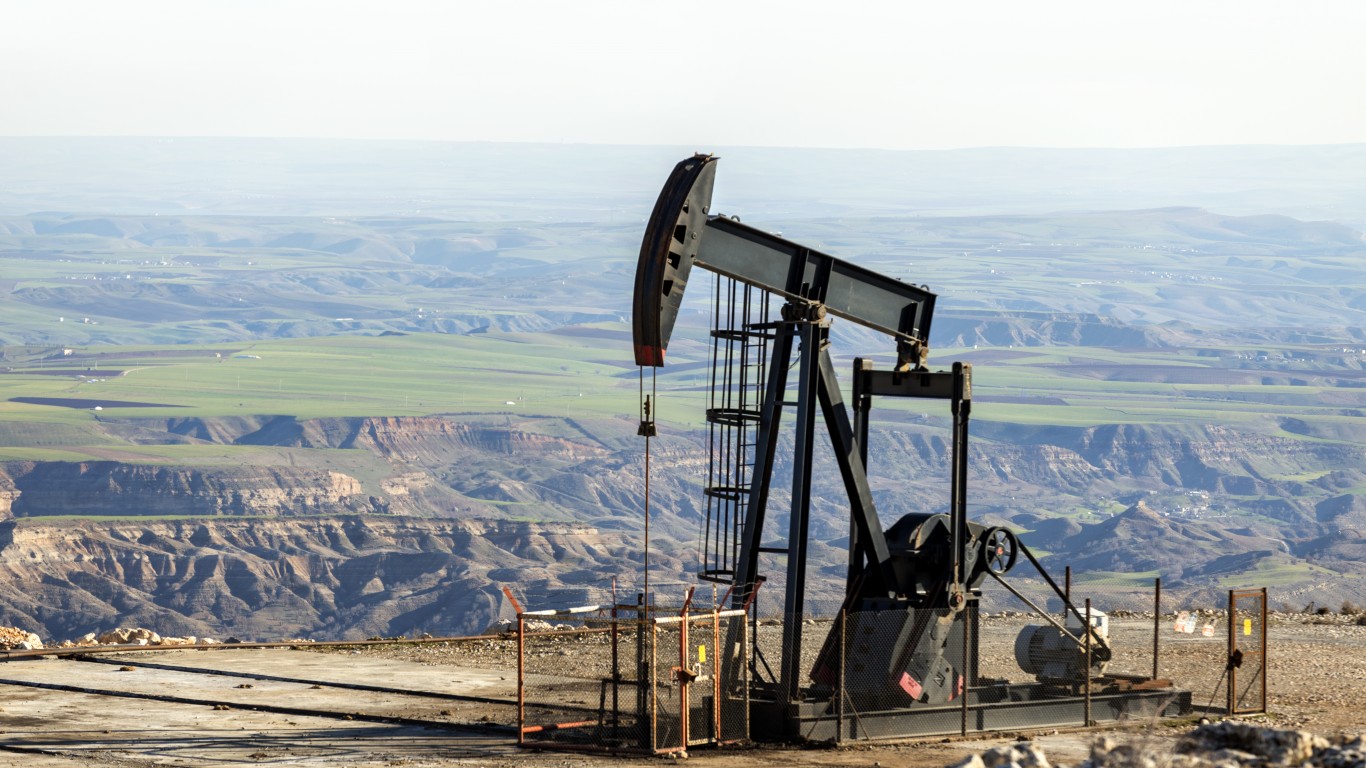
Crude was sitting at $112 a barrel, the 98th percentile of the past year, before dropping to $81, but the driver is clear. Tankers are still rerouting around the Strait of Hormuz, the U.S. and Iran are trading threats over the chokepoint that handles roughly a fifth of global seaborne oil, and traders have spent the year repricing supply risk into every barrel. Three U.S. oil and gas ETFs have captured that move cleanly: iShares U.S. Oil & Gas Exploration & Production ETF (NYSEARCA:IEO), SPDR S&P Oil & Gas Exploration & Production ETF (NYSEARCA:XOP), and iShares U.S. Energy ETF (NYSEARCA:IYE).
All three are up more than 29% year to date, with the spread between them small enough that the more useful question is which fund fits which investor. The answer hinges on a distinction that matters more in a $100-plus oil environment than in any other: pure-play upstream producers, whose earnings move almost dollar-for-dollar with the crude curve, versus integrated majors, whose downstream and chemicals segments absorb some of the price action in both directions.
WTI has moved from $55 in mid-December to current levels, a near-double in five months. Brent followed the same arc, climbing from $62 at the start of January to $110 by mid-May, with a spike to $125 in early April coinciding with the Hormuz escalation. The VIX, meanwhile, has dropped back to almost 17, suggesting equity markets have stopped pricing the crisis as systemic and started treating it as a sector-specific tailwind. That is the setup for these three funds.
IEO: The Highest-Beta Way to Own the Oil Price
IEO is the cleanest expression of the upstream thesis on this list. The fund holds 46 positions tilted heavily toward U.S. exploration and production names, and its market-cap weighting concentrates exposure in the biggest producers. ConocoPhillips alone is 19% of the fund, with EOG Resources at 9% and a roster of Permian and Appalachian pure-plays (Diamondback, Devon, EQT, CoTerra, Expand Energy) filling out the top of the book.
That concentration is the mechanism. When crude moves from $70 to $110, a low-cost Permian producer with breakevens in the $40s sees free cash flow roughly double, and the equity reprices accordingly. IEO is up 30.7% year to date and 40% over the trailing year, which is what high operating leverage looks like when the commodity cooperates.
The fund runs $655 million in net assets at a 0.38% expense ratio. There is real downstream exposure mixed in (Valero at 9.8%, Phillips 66 at 7.7%, Marathon Petroleum at 4%), which softens the upstream beta slightly but also adds refining crack-spread exposure that has been its own story this year. The tradeoff is concentration risk. A bad quarter from ConocoPhillips drags the fund harder than it would a diversified energy product, and that single position is effectively the fund’s largest call.
XOP: Equal Weighting Pulls the Small E&P Names Forward
XOP solves a problem IEO does not: it gives smaller exploration and production companies the same shelf space as the majors. The fund uses an equal-weight methodology, and you can see it in the holdings. HF Sinclair tops the book at 3.30%, with SM Energy and APA Corp. both around 3%, and the next seven positions clustered between 2.76% and 2.9%. Murphy ENergy, Chord Energy, and Viper ENergy get the same weight as the supermajors.
That structure is why XOP is the best performer of the three at 32% year to date. Smaller E&P names tend to be higher-cost producers with thinner balance sheets, which means their equities are more sensitive to crude price moves in both directions. When oil rallies, they catch a bid that mega-caps cannot match on a percentage basis. The Venture Global position adds a separate angle: LNG export economics have improved sharply with European buyers scrambling for non-Middle East cargoes during the Hormuz disruption.
The expense ratio runs 0.35%, slightly under IEO. The tradeoff is symmetry. The same equal weighting that has driven outperformance in 2026 would amplify drawdowns if crude reversed, because the smaller producers in the book have the least margin of safety at lower prices.
IYE: The Integrated Major Tilt for Investors Who Want Cash Flow With Their Oil Beta
IYE is the broadest of the three, covering the full U.S. energy sector. That includes the integrated supermajors (Exxon, Chevron), the large E&P names, midstream pipelines, services companies, and refiners. It is a market-cap-weighted product, so the integrated majors dominate the top of the book by structure rather than choice.
The fund is up 29% year to date and 43% over the past year, the strongest one-year number of the three. That last figure is worth pausing on. Integrated majors have downstream, chemicals, and trading operations that smooth earnings across the cycle, so they should in theory lag pure E&P names when oil spikes. The reason IYE is keeping pace is that the supermajors have used the past two years of elevated prices to buy back stock aggressively, and per-share earnings are compounding faster than the headline crude move would suggest.
The tradeoff is upside compression. If WTI runs higher from here, IYE will not capture as much of that move as IEO or XOP. The flip side is the floor. Integrated dividends and buyback programs put a bid under these names even at lower crude prices, which the pure upstream funds do not have.
Which Fund Fits Which Investor
For an investor who believes the Hormuz crisis stays unresolved and wants maximum operating leverage to crude, XOP is the sharpest tool. Equal weighting plus the small E&P tilt produces the highest beta to oil in this group, and the year-to-date numbers confirm it.
IEO is the choice for investors who want concentrated upstream exposure but prefer the balance sheet quality of the biggest U.S. producers. The ConocoPhillips and EOG weighting means you are effectively making a call on the two best-run independents in the country, with refining exposure mixed in for crack-spread upside.
IYE is the conservative pick. Investors who want energy exposure without betting the entire position on the crude curve get the dividend cushion of Exxon and Chevron, broader sector diversification, and a more durable outcome if the thesis breaks.
The thesis breaks on two scenarios. A diplomatic resolution that reopens Hormuz traffic would erase the geopolitical premium quickly, and traders would price out the supply risk within days. The second is an OPEC+ production increase. Saudi spare capacity remains meaningful, and any signal from Riyadh that the cartel will fill the gap left by disrupted flows would compress prices regardless of the Iran situation. Both risks argue for sizing positions to a thesis that could change on a single headline.
Contact [email protected] for any questions or corrections.
After 15 years on Wall Street with 7 of them as Director of Corporate and Municipal Bond Trading for a NYSE member firm, I started my own project and corporate finance consultancy. Much of the work involves writing business plans, presentations, white papers and marketing materials for companies seeking budgetary allocations for spinoffs and new initiatives or for raising capital for expansion or startup companies and entrepreneurs. On financial topics, I have been published under my own byline at The Motley Fool, 247wallst.com, DealFlow Events’ Healthcare Services Investment Newsletter and The Microcap Newsletter, among others. Additionally, I have done freelance ghostwriting writing and editing for several financial websites, such as Seeking Alpha and Shmoop Financial. I have also written and been published on a variety of other topics from music, audiophile sound and film to musical instrument history, martial arts, and current events. Publications include Copper Magazine, Fidelity (Germany), Blasting News, Inside Kung-Fu, and other periodicals.